You’re probably in one of two spots right now. You’ve either built some trading skill but don’t have enough personal capital to make it matter, or you’ve taken a forex prop firm challenge before and learned the hard way that being “right” on direction isn’t enough.
A forex prop firm challenge rewards the trader who can follow rules under pressure. That’s what this guide is about. Not hype, not shortcuts. Just the process, discipline, and practical decisions that give you a real shot at getting funded.
Free resources: Prop Trading Challenge Survival Guide (the math behind the rules and the habits that get traders through).
What Is a Forex Prop Firm Challenge
A forex prop firm challenge is a structured evaluation. A firm gives you a demo account with defined risk rules and profit objectives. If you meet those rules, you qualify for a funded account and receive a share of the profits you generate under that model.
For most traders, the appeal is simple. You may have a workable edge, but your own account is too small to scale. A prop challenge sits in the middle between skill and larger capital.

Why firms use challenges
Firms aren’t looking for the trader who can hit one lucky runner. They’re looking for someone who can operate inside risk constraints.
That changes how you should view the challenge. It’s closer to a professional qualification than a lottery ticket. The trader who survives drawdown, sizes positions correctly, and avoids emotional mistakes is far more valuable than the trader who swings for a fast target.
A challenge doesn’t test whether you can make money once. It tests whether you can follow a process when profit pressure starts to distort your decisions.
Why most traders fail
The hard truth is that the pass rate is low. Industry estimates place forex prop firm challenge pass rates at 5 to 10%, and roughly 90% of participants fail due to risk rule violations rather than failing to hit the profit target alone, according to High Strike’s review of prop challenge pass rates.
That lines up with what experienced traders see in practice. Most failures don’t come from a terrible strategy. They come from:
- Oversizing trades after a few losses
- Moving stops because the setup “should come back”
- Trading too often out of impatience
- Ignoring the daily loss line until the account is already close to breach
- Changing strategy mid-challenge when pressure rises
What the challenge is really measuring
A good forex prop firm challenge measures three things more than anything else:
- Risk control. Can you protect the account first?
- Consistency. Can you repeat the same process over multiple sessions?
- Emotional stability. Can you trade the same way when you’re up, flat, or down?
If you approach it like an audition for disciplined risk management, your behavior changes. You stop trying to impress the account. You start trying to preserve it.
That mindset shift matters more than most traders think.
Decoding Challenge Rules and Parameters
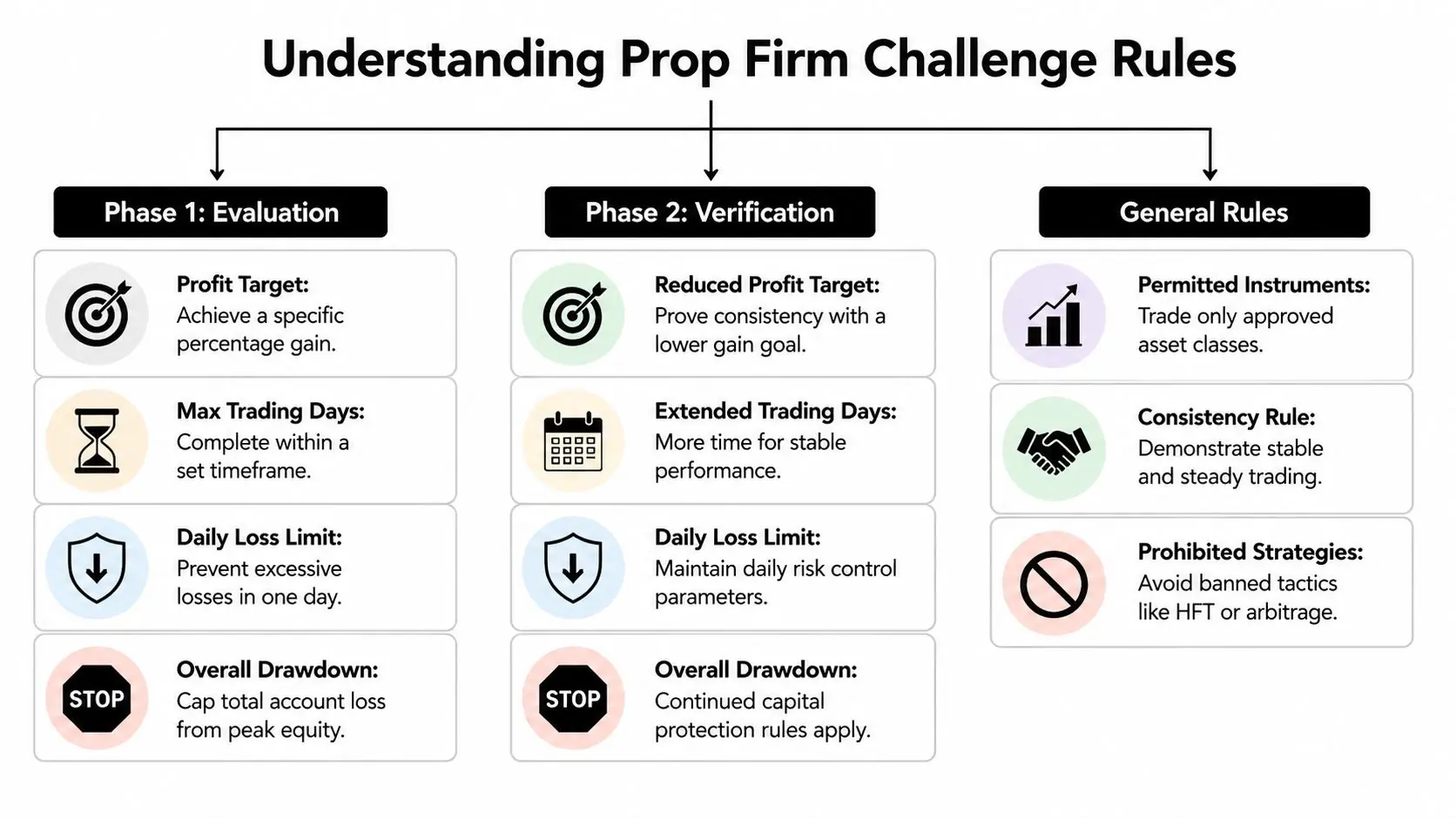
Most challenge failures happen because traders misunderstand the rules, not because they can’t read a chart. You need to know exactly what each limit means, how it’s calculated, and how your open trades affect it during the day.
The three rules that matter most
Most forex prop firm challenges revolve around the same core structure:
- Profit target. You usually need to make 8 to 10% on the evaluation account.
- Daily loss limit. You must stay within a 5% maximum daily loss.
- Maximum drawdown. You must stay within a 10% overall drawdown.
Those figures are standard enough that they’re worth treating as your operating environment. DailyForex’s breakdown of prop firm challenges notes that traders typically need to hit 8 to 10% while respecting a 5% daily loss and 10% overall drawdown.
A simple $100K example
On a $100K account, those rules shape every decision you make.
| Rule | What it means on a $100K account |
|---|---|
| Profit target | You need to generate $8,000 to $10,000 |
| Daily loss limit | You can’t lose more than $5,000 in a day |
| Overall drawdown | You can’t let the account fall more than $10,000 below the allowed threshold |
That sounds straightforward until live trades are open and floating P&L starts moving quickly.
Daily loss usually includes both closed and open losses for the day. A trade that’s still running against you can count toward the limit before you exit it.
Maximum drawdown is your hard floor. Once equity breaches it, the challenge is done, even if price later rebounds.
Why traders misread daily loss
The daily loss rule catches traders because they think in closed trades only. Firms often calculate the rule using current equity. That means a floating drawdown during a volatile session can be enough to fail the account.
This is why traders blow up around major news, correlated positions, or revenge entries late in the day. The market doesn’t need to stay against you for long. It only needs to push your equity through the line.
A practical fix is to create your own tighter buffer. If the firm allows a certain daily loss, stop trading well before that level. Professional behavior starts where your personal cutoff is stricter than the official one.
Static and trailing drawdown are not the same
A lot of traders treat “10% max drawdown” as one universal rule. It isn’t. There’s a major difference between static and trailing drawdown, and you need to know which one applies to your account.
- Static drawdown stays fixed from the starting balance or defined baseline.
- Trailing drawdown can move upward as your account grows, which can make trade management tighter.
If you’re not clear on that distinction, review this explanation of trailing drawdown before you start any evaluation.
Rules are there to filter behavior
A prop firm isn’t trying to stop you from trading. It’s trying to stop account behavior that looks unstable.
That’s why you should read every challenge rule through one question: what kind of trader is this rule designed to eliminate?
Usually the answer is the same. The trader who overextends positions, clusters risk, and loses control when pressure builds.
MyFundedCapital Challenge Programs Explained
Challenge structure matters because it shapes how you trade. Some traders do better with a simpler one-phase target. Others prefer a staged process that asks for consistency over more than one phase.
MyFundedCapital offers both paths, plus an instant funding route for traders who want a different format.
MyFundedCapital challenge models at a glance
Here’s the practical comparison for a $100k account.
| Feature | 1-Step Challenge | 2-Step Challenge |
|---|---|---|
| Structure | Single evaluation phase | Evaluation plus verification phase |
| Profit target | One larger target in a single phase | Split targets across two phases |
| Drawdown style | Depends on program terms | Depends on program terms |
| Complexity | Simpler to track | More process-driven |
| Best fit | Traders who want one clean objective | Traders who prefer a staged path |
| Trading style fit | Often attractive for swing and selective traders | Often attractive for traders who like measured progression |
Who usually prefers the 1-Step model
The 1-Step challenge suits traders who want less moving parts. You have one phase, one set of objectives, and a cleaner mental framework.
That can help if you trade fewer but higher-conviction setups. It can also fit traders who don’t want their attention split across multiple phases or changing targets. The trade-off is psychological. A single-phase model can tempt people to force trades because there’s no second stage to smooth out the process.
Who usually prefers the 2-Step model
The 2-Step challenge often fits traders who value pacing. Instead of treating the evaluation like one sprint, you treat it like two separate jobs.
That can reduce pressure for traders who perform better when they don’t need to push aggressively in one phase. It also rewards people who can repeat a process, not just catch one strong stretch of market conditions.
The right challenge model isn’t the one that looks easier. It’s the one that matches how you already trade when you’re at your best.
What to look at beyond the headline target
Most traders compare challenges by profit target only. That’s too shallow. You also need to look at:
- Drawdown mechanics. Static and trailing limits create different decision pressure.
- Trading restrictions. News rules, holding rules, and platform support matter.
- Phase design. Some traders stay composed in a multi-stage process. Others don’t.
- Your natural tempo. If your edge comes from patience, don’t choose a structure that makes you feel rushed.
A trader who forces a mismatch usually starts bending their own rules. That’s where challenge failures begin.
Where instant funding fits
Instant funding is a separate path for traders who don’t want a traditional evaluation format. It can suit experienced traders who already know their process and want immediate access to a funded-style environment.
That doesn’t make it easier. It just changes the path. The same underlying issue still decides outcomes. Can you manage risk under rules without drifting into emotional trading?
If the answer is no, the challenge format wasn’t the problem.
Essential Tools and Platforms for Your Challenge
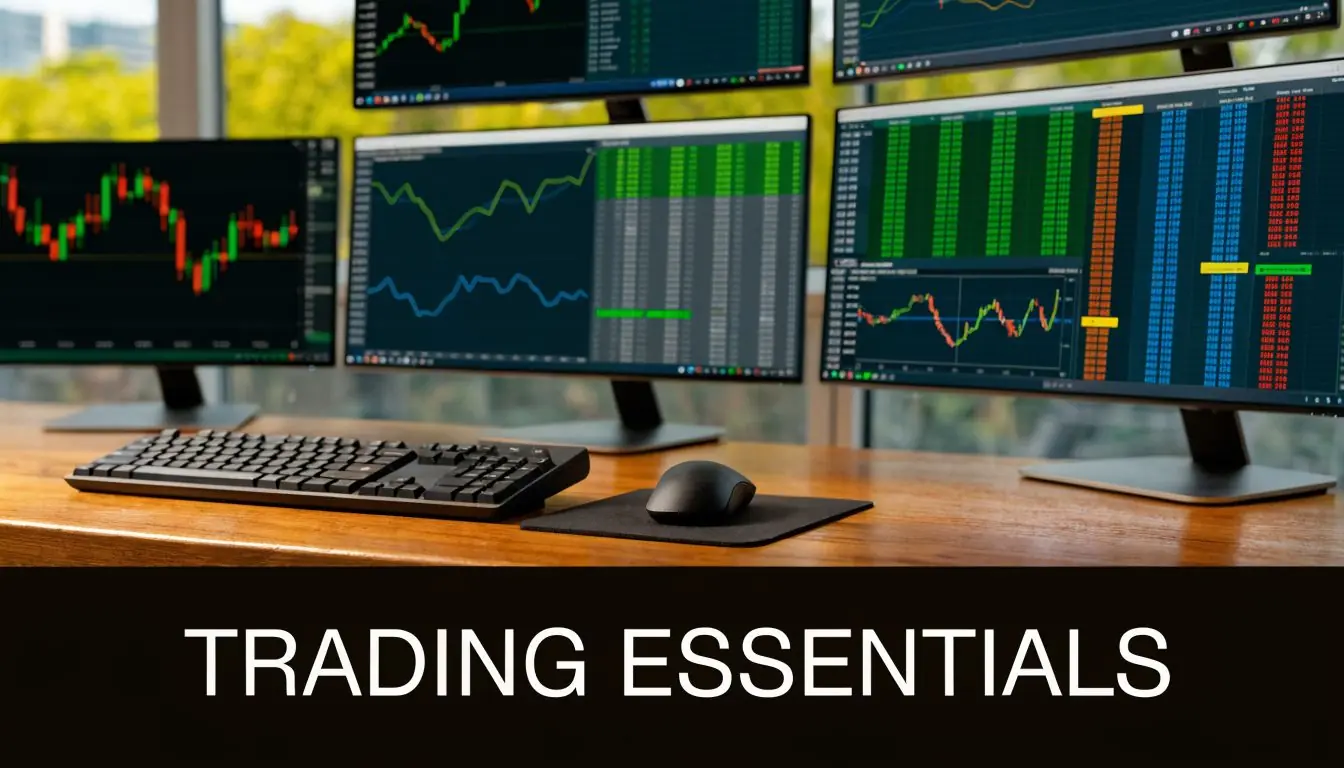
The platform you choose affects execution, workflow, and how cleanly you can follow your plan. That’s why traders should stop treating platform choice like a minor detail.
Pick a platform that matches how you trade
Some traders want a stripped-down interface and fast manual execution. Others need better support for automation, trade management, or workflow customization.
Two common choices in this space are DXtrade and cTrader.
- DXtrade tends to suit traders who want a direct interface and straightforward manual execution.
- cTrader often appeals to traders who use algorithmic systems, advanced charting, or more detailed order management.
If you’re comparing those environments, this overview of FX trading platforms is a useful starting point.
Instruments matter more than traders admit
A good challenge environment should let you trade the market you understand, not force you into someone else’s favorite setup.
MyFundedCapital supports 350+ instruments across forex, crypto, and commodities, based on the publisher information provided for this article. That matters because traders often perform better when they stay inside familiar markets instead of jumping into whatever seems active that day.
A few examples of how that plays out:
- Forex traders may stick to a small watchlist of major pairs where spreads, session behavior, and news patterns are familiar.
- Index traders may prefer cleaner intraday movement around major opens.
- Crypto traders often care more about holding flexibility and weekend exposure.
- Commodity traders may want setups tied to macro themes rather than short intraday noise.
Add-ons can reduce friction
Optional rules can shape whether your strategy fits the account.
If your setup depends on holding through major news, then a news-trading add-on can remove a major point of friction. If your edge includes swing holds into the weekend, a weekend holding option matters for the same reason.
Those features don’t improve a weak strategy. They prevent a good strategy from being distorted by avoidable account restrictions.
Build a challenge-ready setup
Keep your environment simple enough that you can execute without hesitation.
Use a setup that includes:
- One primary platform you already know well
- A small instrument list you track
- A written rules sheet beside your screen
- A journal or tracker for every trade
- A pre-session routine so you don’t start the day reacting emotionally
Too many traders buy a challenge and then start experimenting with tools, symbols, or workflows. That’s backward. Your environment should be boring by the time the evaluation begins.
Building Your Strategy to Pass the Challenge
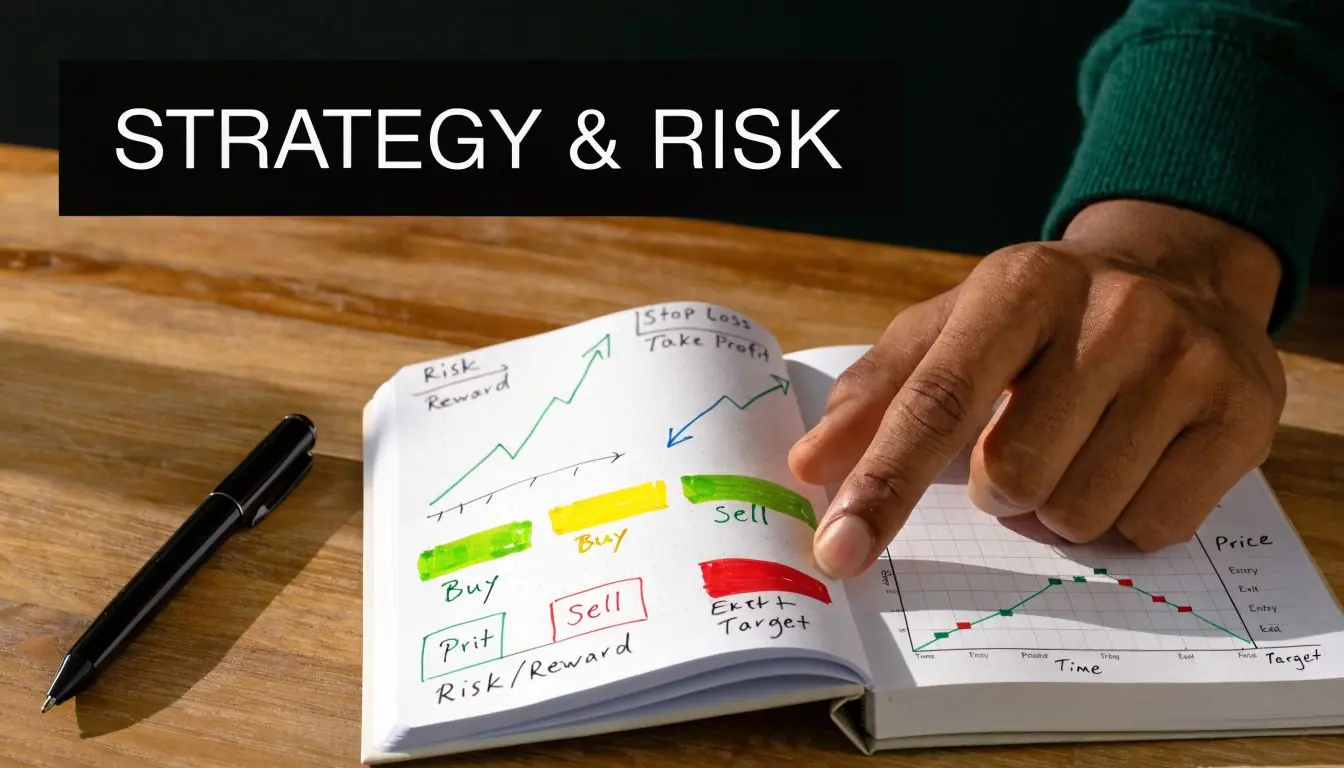
Passing a forex prop firm challenge isn’t about finding a magical setup. It’s about building a strategy that can survive the rules.
Most traders sabotage themselves because they focus on how to hit the target. The better question is how to stay alive long enough for your edge to work. Capital preservation comes first. Everything else sits on top of it.
Position sizing is the backbone
If your position sizing is loose, nothing else will save you.
A core rule in these evaluations is keeping position sizing capped at 1 to 2% risk per trade. On a $100K account, risking 1% with a 20-pip stop on EUR/USD equates to a position size of approximately 5 lots, according to QuantVPS’s prop challenge discussion. The point isn’t the lot number by itself. The point is that sizing must be derived from risk, not from how strongly you feel about the trade.
What works and what does not
The traders I’ve seen pass consistently usually do a few things the same way every time.
What works:
- Risking small and repeating it. They don’t need one trade to do heavy lifting.
- Taking fewer setups. They wait for trades that fit their written plan.
- Reducing size after poor execution. They protect the account when they’re off rhythm.
- Quitting for the day when focus slips. They know tired trading is expensive.
What doesn’t work:
- Doubling after a loss
- Opening correlated trades without counting total exposure
- Pushing size because the account is near target
- Changing entry rules mid-challenge because the last setup lost
Practical rule: If one loss makes you feel urgency, your size is too big.
Build your plan before you pay for the challenge
Do the work first. Then pay.
A written plan is essential. If you need a structure to build yours, use a trading plan template and fill it in with rules that are specific enough to follow under stress.
Your prep checklist should include:
Define one setup family
Don’t trade everything. Pick the pattern or market condition you already understand.Write fixed entry and exit conditions
If your rule says “strong momentum,” that’s too vague. You need criteria you can repeat.Set your risk per trade in advance
Decide your standard risk and your reduced-risk mode for rough sessions.Create a daily stop point
Don’t trade until the firm forces you to stop. Stop when your own process starts degrading.Review challenge-specific restrictions
Confirm whether your strategy depends on news trading, overnight holding, or automation.
Use a pre-trade filter
Before every trade, run the same short filter. It should take less than a minute.
- Is this one of my approved setups
- Where is the stop
- What is the exact account risk
- Am I already exposed to a correlated move
- Would I still take this trade if I were down on the day
If you can’t answer those cleanly, skip the trade.
Think like a professional, not a hopeful trader
The traders who pass treat the challenge like a job. They protect mental bandwidth. They avoid unnecessary screen time. They don’t try to manufacture opportunity.
That usually means accepting a slower pace than your ego wants. Some days the right move is no trade. Some days the right move is one clean trade and done.
That restraint feels unproductive in the moment. In challenge conditions, it’s often the exact behavior that keeps the account alive long enough to win.
After the Challenge What Happens When You Get Funded
Getting funded feels like a finish line when you first pass. It isn’t. It’s the point where the actual work starts.
You receive account credentials, log in, and quickly realize the same habit that got you through the challenge is still required. Funded traders lose accounts for the same reasons challenge traders do. The rules don’t stop mattering because you’ve crossed one threshold.
What funded trading actually changes
The big change is economic, not psychological. Once funded, you’re working inside a profit-sharing structure instead of just trying to clear an evaluation.
By 2026, prop firms were paying out millions per month in trader profits, but only about 7% of funded accounts ultimately received a payout, with profit splits ranging from 80/20 to 100%, according to YourPropFirm’s overview of prop trading challenges.
That number is worth paying attention to. Passing the challenge is one filter. Staying disciplined after passing is another.
The first payout mindset
A lot of traders become less disciplined after funding because they start thinking in withdrawals instead of execution. That usually creates one of two mistakes:
- They get conservative in the wrong way and stop taking valid setups.
- They get aggressive because the profits now feel “real” in a different way.
Neither helps. The funded phase still rewards routine more than excitement.
The trader who earns payouts isn’t usually the one who trades hardest. It’s the one who keeps trading the same way after the novelty wears off.
Scaling is a process
The long-term attraction of funded trading is the ability to grow into larger allocation without using your own capital. That path only works if your performance stays stable enough to justify it.
Think of scaling like a career path, not a bonus level. A trader who can follow rules, produce steady returns, and protect downside becomes more useful over time. A trader who swings between hot streaks and breaches does not.
That’s why the funded phase should feel familiar. Same process. Same risk discipline. Same review routine.
What successful traders do after passing
The traders who last tend to make a few smart adjustments right away:
- They keep the same risk model that got them funded
- They avoid increasing size too quickly
- They track payout eligibility and rules carefully
- They treat the funded account like professional capital, not personal gambling money
That last point matters. If you start trading funded capital like house money, your edge usually disappears fast.
FAQs About Forex Prop Firm Challenges
Why do most traders fail a forex prop firm challenge
Most failures come from poor risk behavior, not from a lack of market knowledge. Traders often trade with excessive exposure, force trades when they’re behind, or break rules while trying to recover quickly. A decent strategy can survive mediocre market conditions. It usually can’t survive emotional position sizing.
Can I use EAs or automated trading in a challenge
That depends on the firm’s rules and platform support. Some firms allow algorithmic or copy trading if it follows their policy and doesn’t use prohibited tactics. Before starting, check whether the account permits automation, what platform it runs on, and whether your execution style conflicts with challenge restrictions.
What happens if I fail the challenge
Usually, the evaluation ends and you need to purchase a new attempt or use a reset option if the firm offers one. The practical move isn’t to jump straight into another account. Review exactly where the failure happened. If the answer is sizing, discipline, or rule confusion, another attempt without changes usually leads to the same result.
Are prop firms reliable enough to trust
That’s a fair concern. Traders have become more cautious because of recent regulatory shifts and firm shutdowns. As Atlas Funded’s discussion of prop firm reliability notes, some firms have collapsed, while established firms with transparent simulated capital models and proven payout histories offer a more stable path.
You should look for clear rule definitions, transparent payout processes, and a business model that doesn’t rely on ambiguity.
Is passing mostly about strategy or psychology
Both matter, but psychology usually decides whether a good strategy gets executed properly. Most traders don’t fail because their chart analysis is worthless. They fail because pressure changes their behavior. If your process is solid and your emotional control is weak, the challenge exposes that quickly.
If you want a structured path to funding, review the account options at MyFundedCapital. Compare the challenge models, check the platform and rule fit for your strategy, and only start when your plan is already tested. Trading involves risk of loss. This content is educational only and not financial advice.