Utilize Expert Traders: Your Guide to Copy Trading
Want to mirror the strategies of seasoned traders but don't know where to start? The gap isn't finding a platform. It's figuring out which copy trading setup fits your goal, whether that's passive retail investing, systematic MT4 execution, or prop-style trading with strict risk limits. This guide cuts through the noise and reviews the best copy trading platforms based on how they work in practice, what trade-offs matter, and who each one suits.
Disclaimer: Trading involves a substantial risk of loss and is not suitable for all investors. This content is for educational purposes only and does not constitute financial advice. Past performance is not indicative of future results.
1. MyFundedCapital
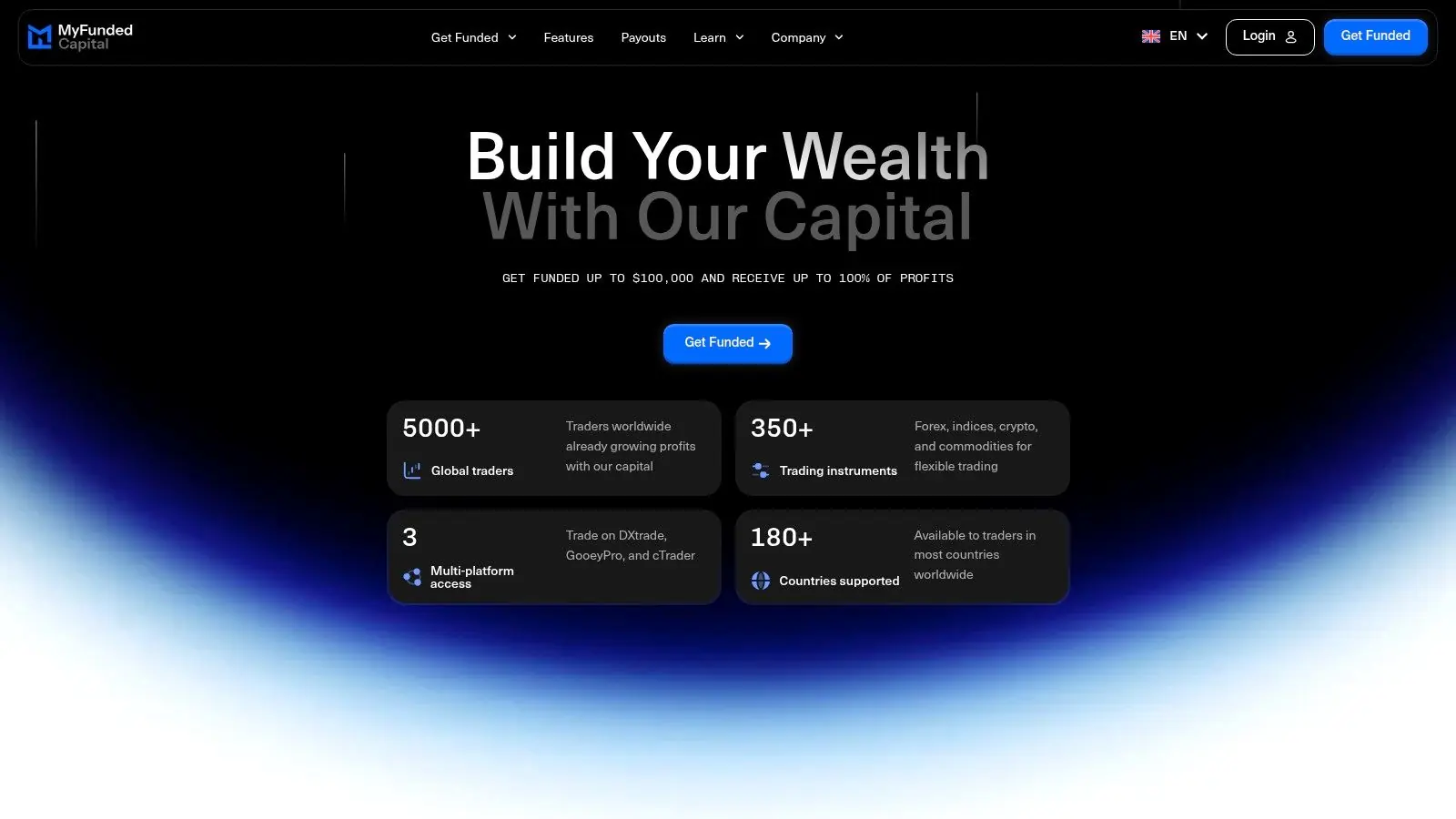
Want a copy trading setup that can work beyond a retail app and inside a prop-style workflow? MyFundedCapital is one of the few names on this list that points in that direction. The focus here is funded trading, platform flexibility, and account management rules, not just browsing a leaderboard and copying a personality.
That changes how you should judge it. Traders using EAs, trade copiers, or multi-account execution usually care less about social features and more about whether the setup works on the platforms they already use. MyFundedCapital supports manual, algorithmic, and copy trading across forex, indices, crypto, and commodities on DXtrade, cTrader, and GooeyPro. For prop-minded traders, that matters more than having the prettiest feed.
The practical question is simple. Can you run a copier setup without tripping account rules?
Why it stands out for prop-minded traders
MyFundedCapital offers Instant Funding, plus 1-Step and 2-Step evaluation paths for traders trying to qualify for more capital. The firm also states that its evaluation and funded programs operate in demo environments using real market quotes. Traders should understand that before treating it like a standard brokerage copy setup, because the operating rules and expectations are different.
Practical rule: In a prop context, check loss limits, drawdown rules, platform support, and copier permissions before you look at past returns. A strong signal provider is useless if the trade size, latency, or risk model breaks your account terms.
This is also where MyFundedCapital fits the article's main divide between retail copy trading and funded-account use. If your goal is passive investing, there are simpler options later in this list. If your goal is to copy or distribute trades across accounts while staying inside a prop-style structure, this category makes more sense.
What works and what doesn't
What works:
- Multiple funding paths You can start with instant access or choose an evaluation route, depending on whether speed or lower upfront cost matters more.
- Platform flexibility DXtrade, cTrader, and GooeyPro give traders more room to match an existing workflow than a closed social app would.
- Copy-trading relevance The firm supports setups suited to traders exploring a copy trading app for funded traders.
- Clearer rule-based environment Daily loss limits, max drawdown, and payout terms are part of the decision, which is exactly how serious prop traders should assess a copier setup.
- Broad instrument coverage The offering spans major asset classes, which helps if your strategy is not limited to one market.
What doesn't:
- Program details need close reading Terms can change by account type and add-ons. Rushing through that is how traders end up with payout rules or holding restrictions they did not expect.
- It is not a standard live brokerage account Some traders want direct live-market brokerage conditions. This setup is structured differently.
- Copy trading does not remove execution risk A copier can still create slippage, sizing mismatches, or rule breaches if you set it up badly.
- Less beginner-friendly than social investing apps Traders who want a plug-and-play feed with minimal account oversight may find this heavier to manage.
MyFundedCapital makes the most sense for traders who already know why they want copy trading. It suits funded-account workflows, account scaling, and stricter risk control. For that job, it is more practical than many retail-first platforms, provided you treat the rules as part of the strategy instead of an afterthought.
2. eToro CopyTrader
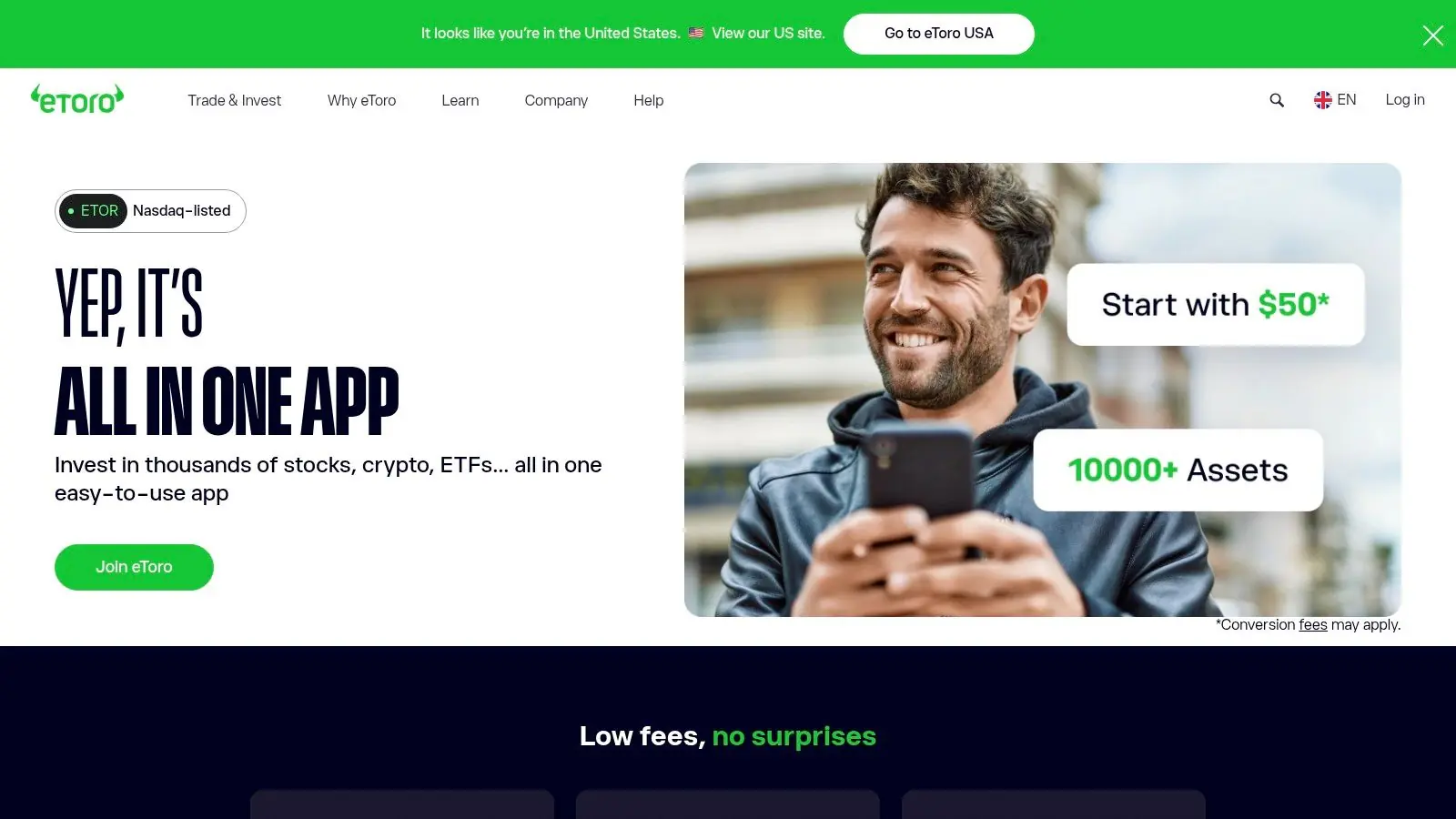
For most beginners, eToro is the platform they picture when they hear "copy trading." That's for good reason. ForexBrokers.com's 2026 social and copy trading guide identifies eToro as its top copy-trading pick for the year and notes that the platform has long been a copy-trading innovator.
eToro is strongest when you want everything in one place. Discovery, trader profiles, copy controls, and position management all sit inside a single interface. That lowers friction for newer traders who don't want to bolt together a broker, a signal network, and a terminal.
Best use case
eToro fits traders who want a retail-friendly social layer with multi-asset exposure. It's especially useful if you like the idea of copying several investors at once and adjusting allocations without touching a separate terminal.
In practice, the convenience comes with trade-offs. Existing open positions are replicated at current market prices, not historical fills. That means your result can differ from the trader you're copying even if you start on the same day.
When allocations are too small, minimum trade sizes can distort the copy. That's one of the most common reasons beginners think the platform is broken when the real issue is position sizing.
Pros and limits
- Good for discovery The social layer is strong. You can browse traders, compare styles, and manage copied allocations in-app.
- Simple control set You can pause copying without automatically closing positions, and you can use equity stop thresholds.
- Cleaner fee logic than many people expect There isn't a separate copy fee. You pay normal trading costs.
The downsides are practical, not fatal. Feature availability can differ by jurisdiction, and some instruments may not be copiable everywhere. It's also less suited to traders who need MT4, MT5, EAs, broker portability, or a prop-firm workflow.
If your goal is easy entry and broad retail usability, eToro remains one of the best copy trading platforms. If your goal is execution flexibility, it's not the strongest fit.
Website: eToro
3. ZuluTrade

ZuluTrade makes more sense once you've outgrown app-first copy trading. Its biggest advantage is infrastructure. Instead of forcing you into one closed broker environment, it connects with supported brokers and keeps you closer to the execution stack many active traders already use.
That matters if you're attached to MT4 or MT5, or if changing broker would break your workflow. Independent comparisons noted by Goat Funded Trader's platform roundup highlight ZuluTrade's MT4 and MT5 compatibility and its multi-provider social-trading model.
Where ZuluTrade earns its place
ZuluTrade is one of the better choices for traders who want provider choice without abandoning their existing terminal. That's a major difference from retail-first social apps. You can keep your charting habits, broker relationship, and in some cases other operational workflows while adding copy functionality on top.
It also gives you public leaderboards and risk-management tools, which helps if you're comparing providers more like systems than influencers.
The real trade-offs
- Strong broker flexibility This is the main reason to choose it.
- Better fit for active operators Traders who understand execution, slippage, and provider rotation will get more out of it.
- Useful risk controls Capital protection and portfolio settings are valuable if you don't want blind mirroring.
The drawback is cost layering. Depending on the account structure, you may face both platform-level costs and strategy-level costs, on top of broker spreads or commissions. Net performance depends on all of those pieces working together.
Execution quality can also vary by broker and liquidity conditions. That's not unique to ZuluTrade, but it's more visible here because the whole point is broker choice. If you're copying fast strategies, slight differences in execution can change outcomes enough to matter.
ZuluTrade is one of the best copy trading platforms for traders who care more about compatibility and control than beginner simplicity.
Website: ZuluTrade
4. MetaTrader Signals MQL5
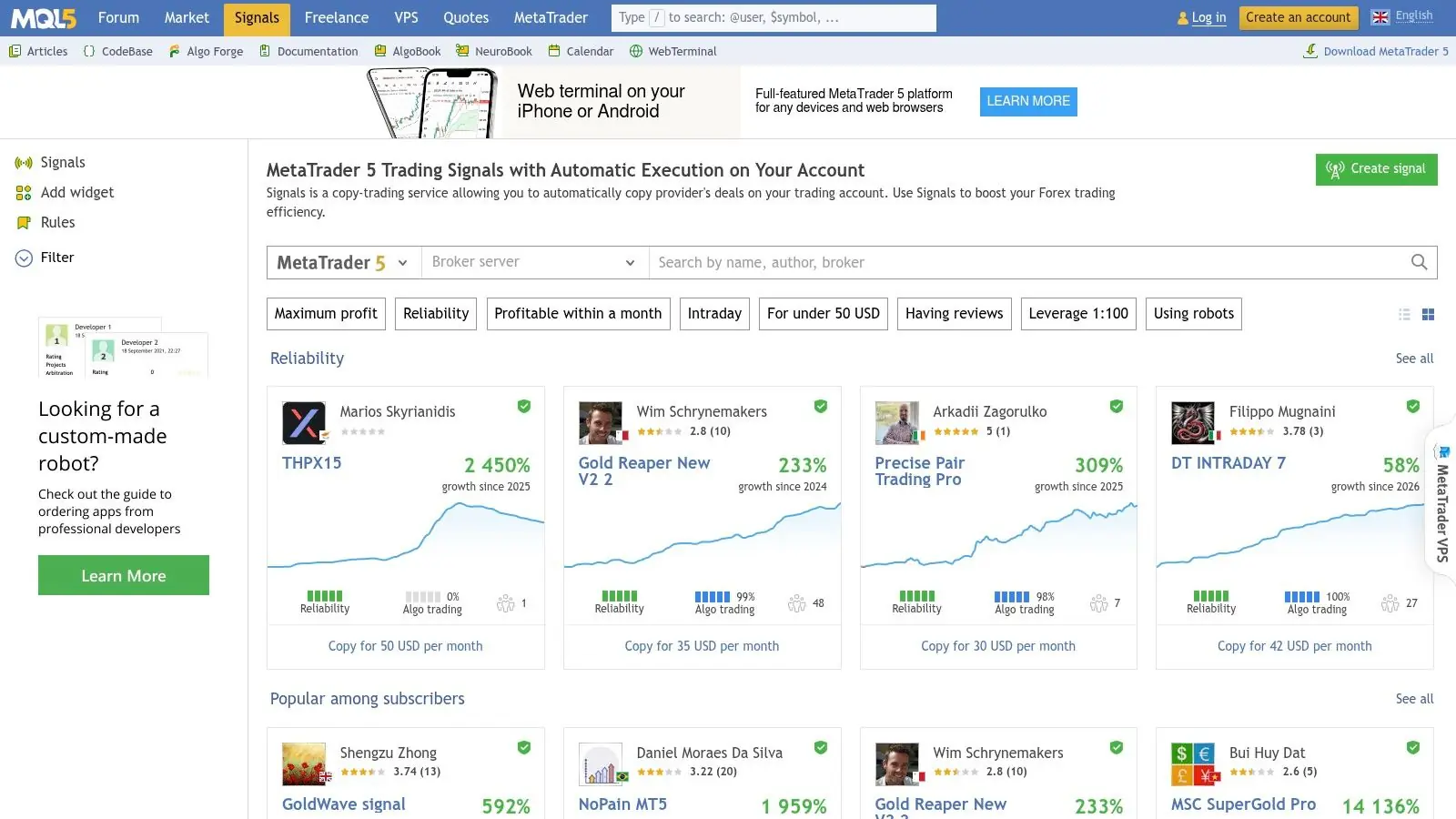
MetaTrader Signals is the obvious choice if your trading world already runs through MT4 or MT5. You subscribe to signal providers inside the platform ecosystem, adjust risk settings, and let the terminal handle copying.
I like it best for traders who don't want a separate social app at all. If your broker supports MetaTrader properly and your routine already lives inside that terminal, native copy functionality is usually cleaner than adding extra middleware.
Why traders still use it
The core benefit is direct integration. You can manage signals where you already place trades, review charts, and monitor positions. That reduces operational clutter, which matters more than people think once you start following multiple systems.
If you're still deciding between terminals, it's worth reviewing the practical differences in MT4 vs MT5 for funded and systematic traders.
Native integration doesn't remove risk. It removes one layer of friction. You still have to vet the provider.
What to watch closely
AvaTrade's copy trading guidance isn't available in the provided URL set, so I won't cite it directly. But the broader verified point from the source set is clear: serious users should focus on maximum drawdown, risk level, trade frequency, profit history, and stop-loss tools when evaluating traders. That same logic applies hard here.
Provider quality on MQL5 varies a lot. Some signal pages look excellent until you examine trade duration, risk style, and whether the equity curve depends on aggressive recovery behavior. The marketplace gives you access. It doesn't do due diligence for you.
MetaTrader Signals is one of the best copy trading platforms for terminal-native execution. It's less appealing if you want social interaction, simplified onboarding, or built-in hand-holding.
Website: MetaTrader Signals on MQL5
5. cTrader Copy
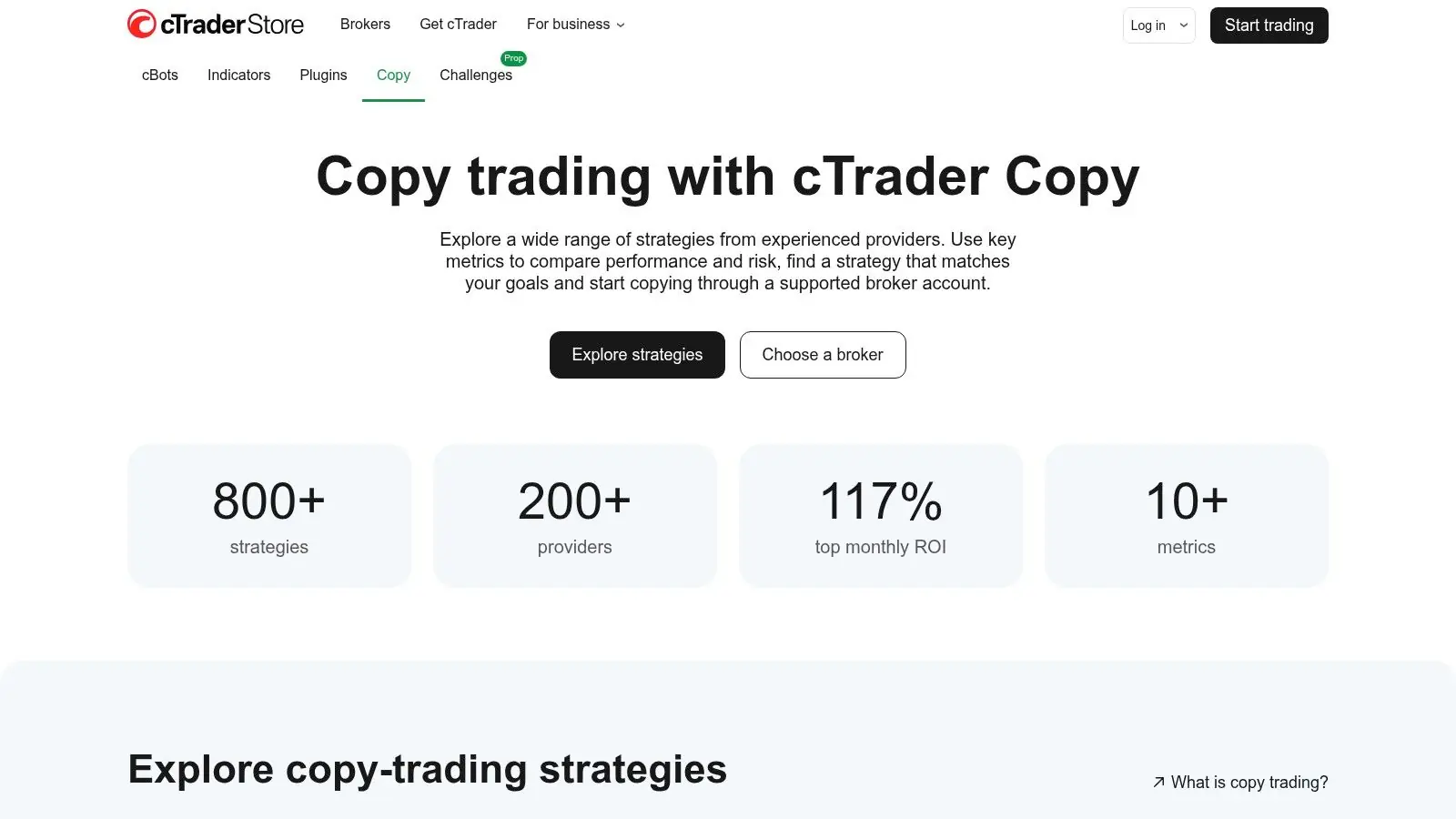
cTrader Copy feels more serious than most retail copy environments. That's not hype. It's just a platform design choice. Strategy pages, fee handling, and reporting are all built natively into the cTrader ecosystem, which gives it a cleaner, more professional workflow than many bolt-on copy systems.
For traders who already like cTrader's interface, order management, and execution environment, that's a big plus. You don't need extra plugins to understand what's happening.
Why cTrader Copy works well
Strategy providers publish investable strategies with visible performance pages, fee structures, and risk-related information. Investors can copy with proportional or balance-based allocation, and the platform handles fee calculations natively.
That creates fewer moving parts than third-party signal networks. It's a better fit for traders who care about clean reporting and in-platform transparency.
If you're specifically trying to match a funded-account workflow, review which prop firms allow copy trading on supported platforms before you commit your whole setup to one terminal.
Where it falls short
- Execution and reporting are clean This is the main appeal.
- Fee presentation is clearer than on many alternatives You can see how a strategy charges before you allocate.
- Good fit for platform-loyal traders If you're already a cTrader user, adoption is easy.
The limitation is access. cTrader availability depends on broker support, and not every jurisdiction has easy access to brokers that offer it. That can make the platform feel perfect on paper and awkward in practice.
Strategy quality also varies. Native integration doesn't fix weak provider discipline. You still need to review how the trader behaves during rough conditions, not just when the curve is rising.
For traders who want one of the best copy trading platforms with a more professional platform feel, cTrader Copy is a strong option.
Website: cTrader Copy
6. Darwinex DARWINs Marketplace
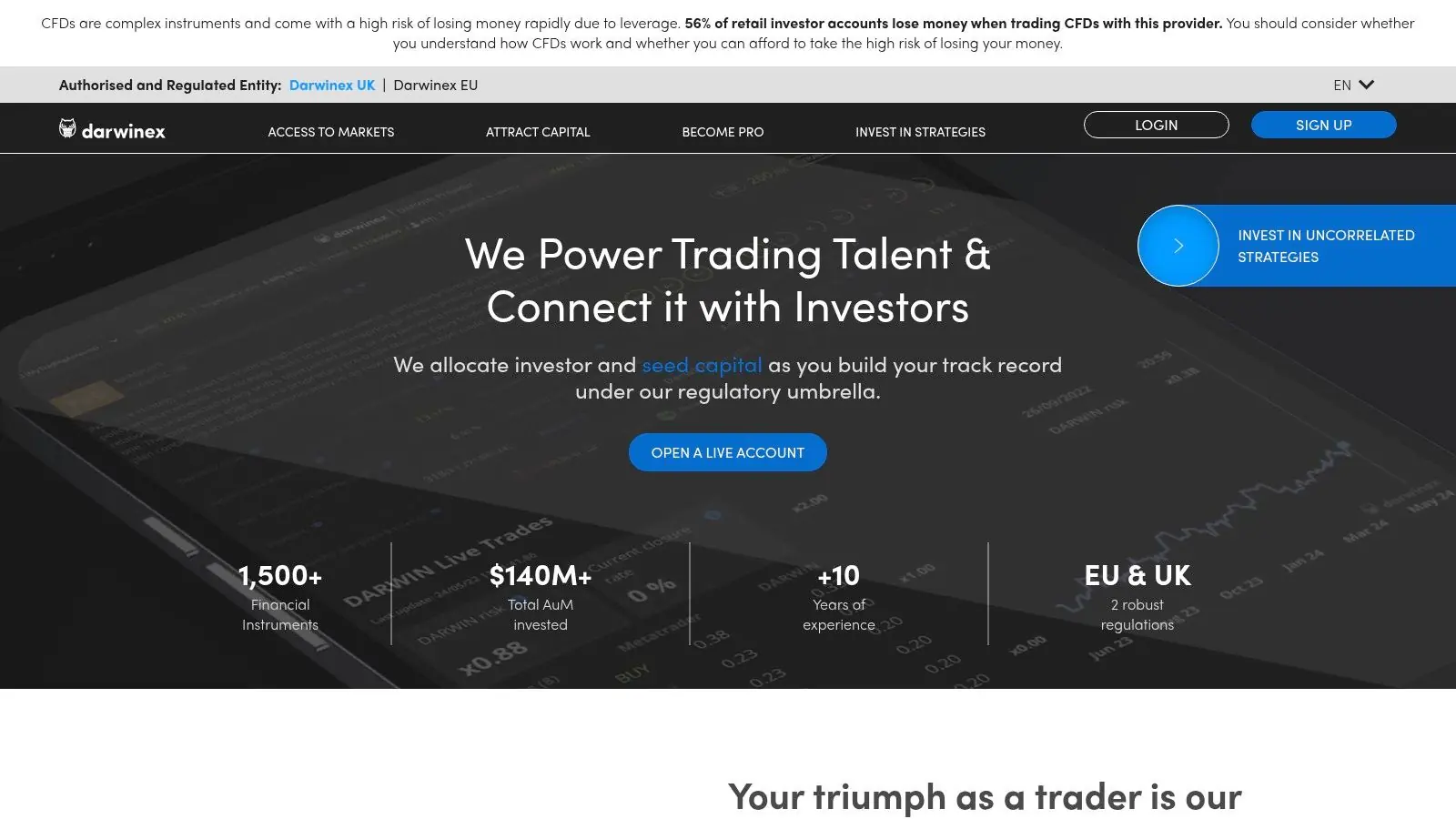
Darwinex is not the easiest platform on this list. It's one of the most interesting.
Instead of a simple "copy this trader" model, Darwinex turns trading strategies into investable assets called DARWINs. That changes the user experience. You're not just choosing a personality to follow. You're evaluating a structured product built around an underlying strategy.
Why some traders prefer it
The big attraction is risk normalization. Darwinex standardizes strategy risk so investors can compare very different trading approaches on a more consistent basis. That is valuable if you've spent any time sorting through social leaderboards full of incompatible styles.
It also uses a high-water-mark performance fee structure. That won't make a bad strategy good, but it does create a more professional framework than many casual copy apps.
Some traders don't want social feeds and influencer-style profiles. They want risk-adjusted exposure to a system. Darwinex is built for that mindset.
Who should avoid it
If you want a beginner-friendly app, skip it. Darwinex works better for traders and investors who are comfortable doing real due diligence and understanding that marketplace design is different from direct retail copy trading.
Availability can also vary by entity and residency. That's another reminder that some of the best copy trading platforms are only "best" if you can access them under your local rules.
Darwinex is a better fit for analytical traders than casual followers. If that's you, it's one of the more thoughtful options in this space.
Website: Darwinex
7. Collective2 AutoTrade
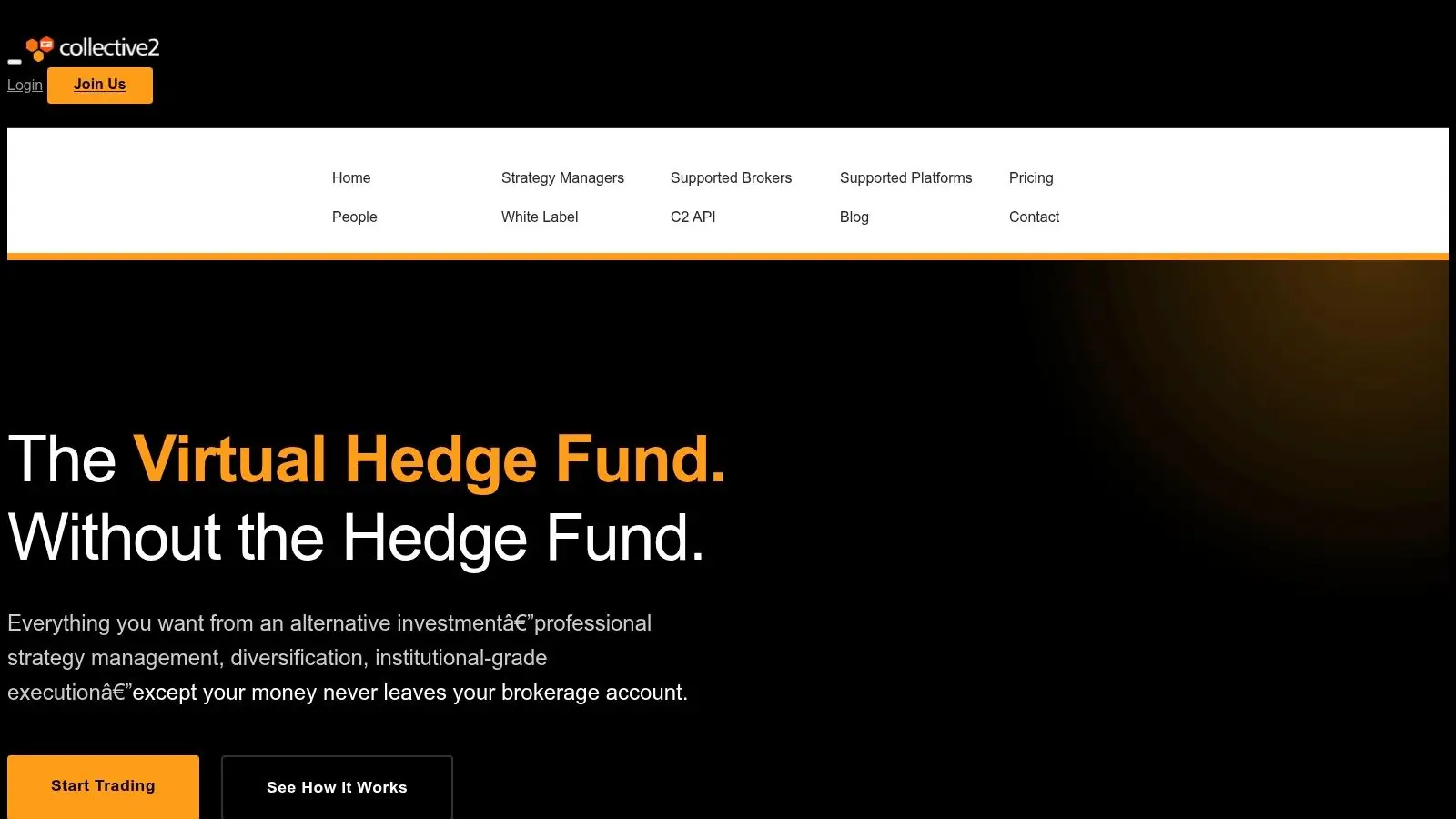
Collective2 is one of the few copy trading platforms that feels built around broker-executed automation first, community second. That's why it still has a loyal audience.
It supports a marketplace of trading systems and lets investors route signals into supported brokerage accounts using AutoSync. For traders in the US or those who prefer a more brokerage-centric setup, that's a practical distinction.
Where Collective2 is strong
Collective2 makes sense when you want transparency around system stats and you care about routing into a live broker account rather than parking capital inside a social trading app. It also covers multiple asset types, which broadens the kinds of systems you can evaluate.
The AutoSync model is especially useful if you want your brokerage account reconciled against a strategy's model portfolio rather than manually chasing alerts.
What to watch before subscribing
- Broker integration is the main edge This is what makes the platform worth considering.
- Public stats help with screening You can review system history and badges, though that doesn't replace independent judgment.
- Multi-strategy use is possible That helps if you want exposure to different styles.
The downside is layered costs. You may pay a platform plan, a strategy subscription, and normal broker commissions. That's manageable if the strategy is durable. It's painful if you're testing weak systems.
Latency-sensitive approaches can also struggle through broker APIs. If a strategy depends on ultra-fast entries or exits, real-world tracking may disappoint. Collective2 is strongest with strategies that can tolerate some execution friction.
For traders who want a US-oriented, broker-linked alternative to app-based social copying, Collective2 earns its place among the best copy trading platforms.
Website: Collective2
Top 7 Copy Trading Platforms Comparison
Which platform fits the job you are trying to do? That matters more than the headline feature list. A retail investor copying stock traders on a mobile app has very different needs from a prop trader trying to route trades through MT5, respect drawdown rules, and keep execution consistent across accounts.
This comparison focuses on the practical fit: setup friction, fee structure, execution reality, and whether the platform works better for casual copying, broker-linked automation, or funded-trader workflows.
| Platform | Setup and Workflow | Cost Profile | Best Fit | What It Does Well | Where It Falls Short |
|---|---|---|---|---|---|
| MyFundedCapital | Low to medium. Onboarding is straightforward, and traders can work through supported platforms such as DXtrade, cTrader, and GooeyPro depending on account type. | Moderate. There are entry fees, optional add-ons, and the normal cost of building a stable platform setup. | Traders whose end goal is funded capital, especially those testing copy trading or account mirroring inside a prop-style structure. | Useful for traders who need copy-friendly conditions, multiple platform choices, and a path that aligns better with funded-account workflows than retail social apps do. | Rules still matter. Drawdown limits, plan differences, and add-on costs need to be checked before copying any strategy across accounts. |
| eToro CopyTrader | Low. Open an account, choose a trader, allocate capital, and monitor inside one interface. | Low to moderate. Copying is built into the brokerage experience, but minimum allocations and trading costs still affect results. | Retail users who want a simple social investing app for stocks, ETFs, and some crypto exposure. | Discovery is the main strength. The interface makes it easy to filter traders, review public stats, and copy without extra software. | It is not built for prop workflows. Asset access and features also vary by region, and minimum copy amounts can create tracking gaps in smaller accounts. |
| ZuluTrade | Medium. You need to connect a broker, configure risk settings, and verify how your broker handles execution. | Moderate. Platform fees, provider fees, and broker spreads can all hit net performance. | Traders who want broker-linked copy trading and more flexibility than an app-based social platform offers. | Good broker compatibility and public strategy listings make it easier to compare providers across different styles. | Execution quality depends heavily on the connected broker. That can be a real problem for fast systems or tight-risk strategies. |
| MetaTrader Signals (MQL5) | Low. It runs inside MT4 or MT5, which keeps setup simple for traders already using MetaTrader. | Low to moderate. You usually pay a subscription, then absorb normal trading costs through your broker. | Traders already operating in MT4 or MT5, including prop traders testing signal-following on a familiar terminal. | Native integration is the edge. You can subscribe, size the allocation, and manage everything from the terminal. | Provider quality is uneven. Broker restrictions, VPS needs, and slippage can also turn a good backtest-looking signal into a mediocre live result. |
| cTrader Copy | Low to medium. It is built into the cTrader environment, so setup is cleaner than patching together third-party tools. | Moderate. Strategy providers set their own fee models, and you still need a broker that supports cTrader. | Traders already committed to cTrader who want integrated copying without leaving that ecosystem. | Reporting and fee visibility are usually clearer than on older signal marketplaces. Execution also tends to feel more controlled inside one platform stack. | Broker availability is narrower than MetaTrader. The provider list is also smaller, so strategy selection can be more limited. |
| Darwinex DARWINs Marketplace | Medium to high. The structure is more involved because the platform standardizes strategy risk before investors allocate. | Moderate to high. Fees are meaningful, and the process is more formal than a retail copy app. | Traders and investors who care more about risk-adjusted strategy allocation than social trading features. | Strong fit for traders who want a more disciplined framework. The standardized risk layer helps when comparing traders with very different raw styles. | It is less intuitive for beginners, and it does not behave like simple one-click copying. Traders looking for direct prop-style account mirroring may find it too structured. |
| Collective2 AutoTrade | Medium. You subscribe to a system and sync it to a compatible broker account. | Moderate. Platform charges, strategy subscription fees, and broker commissions can stack up. | Traders who want broker-routed automation, especially in a US brokerage context. | Public system records and broker integration make it easier to evaluate live tradability instead of just app-level performance. | API routing and broker execution can create drift. Strategies that need precise fills often suffer the most. |
The main split is simple. eToro fits retail users who want convenience. MetaTrader Signals, ZuluTrade, and cTrader Copy fit traders who care more about terminal compatibility and execution control. Darwinex suits traders who evaluate systems through a risk-allocation lens. MyFundedCapital stands out for traders trying to use copy methods inside a funded-trader path rather than inside a consumer investing app.
How to Choose Your Platform and Get Started
Most traders pick the wrong copy platform for one simple reason. They choose based on popularity, not workflow. A beginner who wants a simple mobile experience shouldn't force themselves into a broker-linked signal network. A prop trader who needs platform compatibility and rule compliance shouldn't build their process around a social investing app.
The smart way to choose is to match the platform to the job. eToro is easier for retail users who want integrated social discovery. ZuluTrade and MetaTrader Signals make more sense if terminal compatibility matters. cTrader Copy suits traders who already like that ecosystem. Darwinex is better for people who think in terms of structured strategy allocation. MyFundedCapital is the obvious standout if your actual goal is funded trading with copy-friendly conditions.
Run through this checklist before you commit:
- Fees and costs Do you prefer a subscription model, performance fees, or standard trading costs built into the broker setup?
- Regulation and access Is the platform, or the connected broker, available and regulated where you live?
- Asset support Does it cover the forex pairs, indices, crypto markets, or commodities you want exposure to?
- Risk controls Can you pause copying, cap allocation, or stop the strategy without creating operational chaos?
- Technology fit Does it work with your preferred environment such as MT4, MT5, cTrader, or a prop-compatible platform?
- Track record quality Verified guidance from PU Prime on selecting traders to copy recommends looking for traders with at least 6 to 12 months of verified trading history and notes that stronger candidates often keep maximum drawdown under 30%.
A final point that gets ignored too often: copy trading doesn't remove responsibility. It changes where your responsibility sits. You may not be clicking every trade, but you are still choosing the provider, setting the allocation, deciding when to stop, and absorbing the losses if things go wrong.
Frequently Asked Questions
Is copy trading a guaranteed way to make profit?
No. Copy trading carries the same core risk as manual trading. You're following another trader's decisions, and that trader can lose. This is educational content only, not financial advice.
Can I use copy trading with a prop firm?
Yes, in some cases. Modern firms such as MyFundedCapital support copy trading, but you still have to follow the firm's risk rules, platform rules, and account-specific limits.
How much money do I need to start copy trading?
It depends on the platform, the provider, and the minimum trade sizes involved. Some platforms allow relatively low starting amounts, but small balances often create tracking issues and make diversification harder.
Ready to Put Your Skills to the Test?
Knowing the best copy trading platforms is useful. Knowing how to operate inside risk limits is what keeps you in the game. Whether you trade manually, use EAs, or build copier workflows, the traders who last are the ones who treat risk control as part of the strategy, not as an afterthought.
If you're ready to move beyond retail copying and test your process in a funded environment, MyFundedCapital gives you a clear path. You can compare account types, choose an Instant Funding or challenge model, and trade with transparent rules built for disciplined operators.
Explore Our Funding Programs and Compare Account Types
If you want a prop-friendly environment that supports manual, algorithmic, and copy trading, take a closer look at MyFundedCapital. Compare the available programs, check the risk rules carefully, and choose the setup that matches how you trade.