You're probably comparing prop firms through the wrong lens. Instagram ads emphasize 90% profit splits, instant funding, and oversized account labels, while the rules that decide whether you keep the account sit in the fine print. This guide shows how to match your strategy, risk tolerance, platform, payout needs, and tolerance for enforcement against the firm behind the offer.
What Matching With a Prop Firm Actually Means
You've opened several challenge pages, saved a few discount codes, and watched one more video promising same-day funding. The offers look nearly identical until you read the drawdown language, news restrictions, payout conditions, and support policy. That's where the decision begins.
Prop firm matching isn't a directory search. It's an operational fit test between your trading process and a firm's enforcement system. You're checking whether the firm's drawdown type, breach logic, platforms, permitted strategies, scaling path, and payout cadence suit the way you trade.
A 90% split can look attractive, but it doesn't compensate for a trailing drawdown that rises behind every profitable trade if your strategy needs room to hold positions. A lower headline split may produce a better working relationship if the account has clearer rules, a static loss floor, and a payout schedule you can plan around.
Practical rule: Treat a prop firm like a counterparty you're hiring, not a coupon you're redeeming.
Screen the operating rules first
Before looking at price, answer these questions:
- Drawdown logic Is the limit static, trailing, daily, or a combination?
- Breach calculation Does floating loss count? When does the daily limit reset?
- Trading permissions Can you hold through news, keep positions over the weekend, use an EA, or copy trades?
- Execution environment Does the platform support your order workflow, indicators, and automation?
- Payout terms When can you withdraw, what conditions apply, and how does the firm handle disputes?
- Support quality Can you get a clear answer before purchasing?
Most firms use a daily loss limit alongside a maximum overall drawdown. Independent guidance describes daily limits often near 5% and account-wide floors commonly near 10%, with the daily calculation resetting at the firm's server reset while maximum drawdown remains in force. Read the technical explanation of daily and maximum drawdown mechanics before you risk an evaluation fee.
You should also check independent operational signals. Community-driven coverage has described delisting QT Funded after reports involving payout denials, failed payouts, and poor support. Similar complaints about Smart Prop Trader included delayed payouts, alleged unjustified breaches, bans after users raised concerns, and pending withdrawals lasting more than 30 days, as documented in coverage of prop-firm payout complaints. Those reports don't automatically determine your decision, but they show why a feature list isn't enough.
For a broader starting point, review prop trading firm selection criteria and build your own shortlist. Your goal isn't to find the most exciting offer. It's to find the firm whose rules you can follow repeatedly.
Evaluation Models Compared
The evaluation model changes the pressure placed on your strategy. A one-step challenge compresses the path into one target, while a two-step challenge spreads the process across separate phases. Instant funding removes the evaluation stage, but it usually changes the balance between access, account size, and risk limits.
| Feature | 1-Step Challenge | 2-Step Challenge | Instant Funding |
|---|---|---|---|
| Evaluation structure | One profit target | Initial target plus verification phase | No evaluation phase |
| Speed | Faster if your strategy reaches the target without breaching | Slower, with another consistency test | Immediate access |
| Main risk | Pressure to reach one target quickly | More time exposed to rule fatigue and repeated execution | Smaller runway or tighter risk conditions |
| Cost consideration | Often a higher entry price | Often a lower per-account price | Premium for immediate access may apply |
| Best fit | Experienced traders with a controlled process | Traders who prefer staged validation | Traders who value access over larger starting capital |
| Payout planning | Begins after passing and meeting payout rules | Begins after both phases and payout rules | Depends on the account's withdrawal conditions |
One-step challenges
A one-step model gives you a single target and a direct route to funded status. That can suit a trader with a stable setup, but the concentrated objective can encourage oversized positions or unnecessary trades. The model is only faster if your normal process already produces the required progress without forcing a change in behavior.
Two-step challenges
A two-step structure gives the trader more than one checkpoint. The first phase may use a target around 6% to 10%, according to funded trader challenge guidance, followed by a verification stage. The lower initial hurdle can make the first phase feel manageable, but the second phase adds time and another opportunity to breach a rule.
Instant funding
Instant funding removes the challenge, which makes it appealing to traders who already have a tested process or want to avoid evaluation pressure. The trade-off is usually a smaller initial balance and tighter daily risk conditions, so immediate access shouldn't be confused with unrestricted access.
Before paying, compare refund rules, retry pricing, scaling eligibility, and the conditions for moving from a starter account to a larger allocation. Some firms, including MyFundedCapital, offer multiple routes, so compare prop firm instant funding with the staged options rather than assuming one model fits every strategy.
Profit Splits, Drawdowns, and Payout Cadence
Your real outcome depends on three connected mechanics: how much of the profit you retain, how much loss the account can absorb, and when you're allowed to withdraw. Separating those items is a mistake because a generous split is useless if the drawdown structure regularly stops your strategy before payout.
Funded traders typically retain 70% to 90% of profits, and some firms increase the share after performance or payout milestones, as described in post-evaluation profit-split structures. The percentage should be evaluated beside withdrawal timing and fees. An 80% share available every two weeks can be more useful than a 90% share that remains locked behind a monthly window and extra charges.
Drawdown is your actual trading runway
A static drawdown stays at a defined account level. A trailing drawdown moves upward as the account makes gains, which can reduce the distance between your current equity and the breach line. Daily loss is a separate control, and industry guidance commonly places it around 4% to 5%, while overall drawdown often sits around 8% to 10%, according to prop-firm evaluation and payout rules.
On a hypothetical $100K account, a 10% static drawdown would create a $10K account-wide loss boundary before considering the firm's daily limit. If the account also has an 80% split, a $5,000 eligible profit would mean $4,000 to the trader before any applicable fees or conditions. Those figures are illustrations of the mechanics, not a promise of performance.
Trailing rules require a different calculation. You need to know whether the firm tracks balance or equity, whether floating losses count, and whether the threshold stops moving after a particular point. A strategy that tolerates temporary open losses may fit a static account but fail under a tight trailing structure.
Payout timing changes the value of the split
Payout schedules are usually conditional. Common structures require a first withdrawal after a minimum trading period such as 5 to 14 days, followed by recurring payout windows, as outlined in funded account payout FAQs. Check whether the clock counts calendar days or trading days, whether a minimum profit is required, and whether consistency rules apply.
Use profit-sharing examples to model the full flow. Write down the split, drawdown, first eligible withdrawal, recurring cadence, fees, and any add-on cost. If you can't explain the account in one page, you haven't matched it yet.
Self-Assessment Before You Shortlist
Don't start with a challenge page. Start with your own trade history. A firm can publish clear rules, but you still need to know whether your normal holding time, instrument selection, and loss distribution fit those rules.
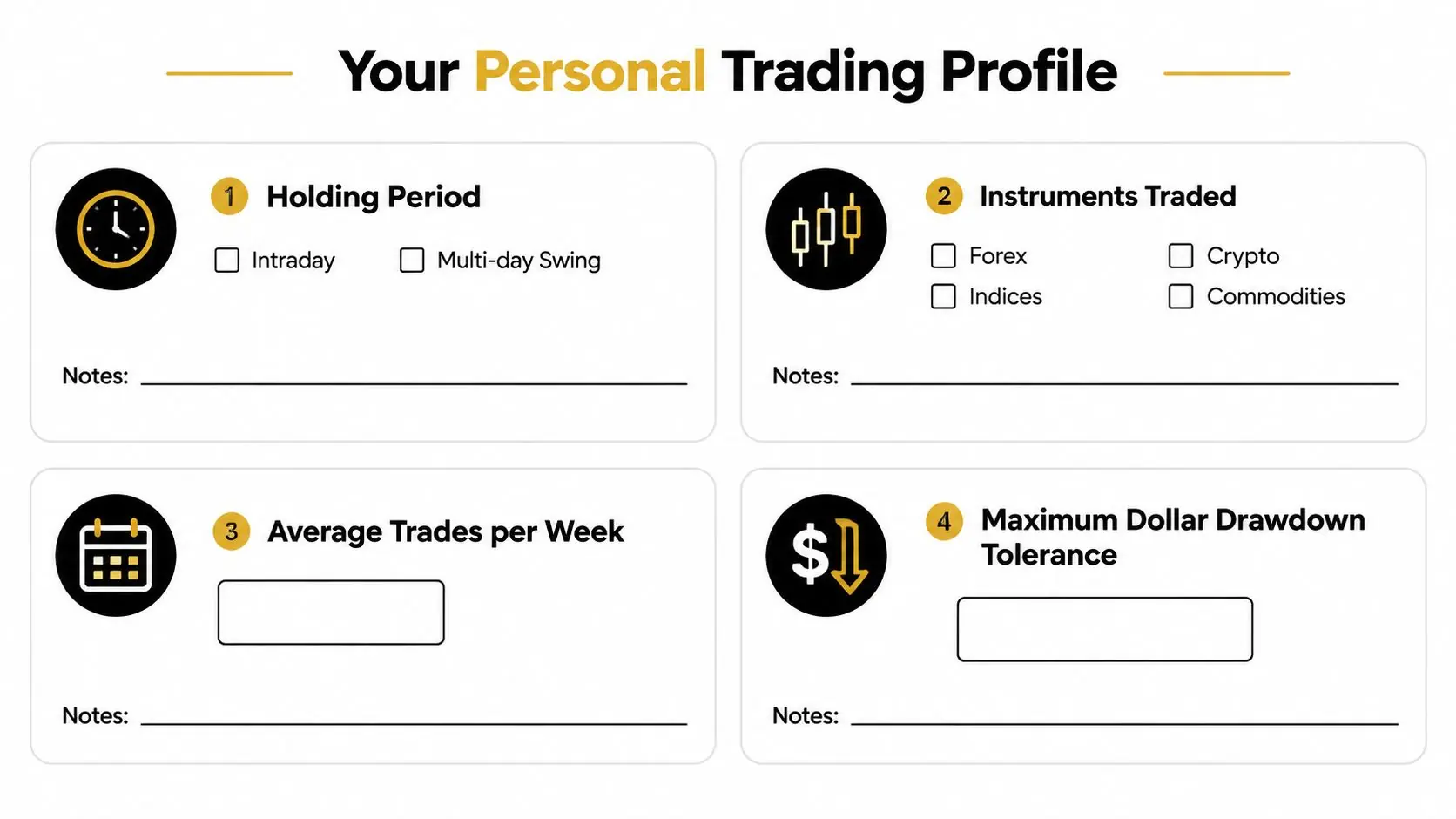
Create a one-page profile with these fields:
- Holding period Mark intraday, multi-day swing, or both.
- Instruments Record whether you trade forex, indices, crypto, commodities, or another permitted market.
- Trade frequency Write your average trades per week from your actual journal.
- Drawdown tolerance Identify the largest dollar drawdown you've survived in your last 50 trades.
- Platform Specify whether you need MT4, MT5, cTrader, TradingView integration, DXtrade, or another environment.
- Minimum workable account Note the smallest account size that lets you execute your setup without changing position logic.
The holding-period question matters more than many traders expect. A short-term index trader and a multi-day gold trader may use the same entry model, but weekend exposure, rollover, news, and floating-loss rules affect them differently.

Turn preferences into hard filters
Print the rulebook checklist and mark each item pass or fail:
- Can I follow the daily loss limit after a losing morning?
- Can I tolerate the stated trailing threshold without closing trades early?
- Do I hold through major news?
- Do I need weekend exposure?
- Does the platform support my execution and automation?
- Can I trade the firm's permitted instruments without changing my edge?
- Can I meet the payout waiting period without forcing trades?
A failed answer should remove the firm from your list. Don't rationalize a mismatch because the account size or split looks attractive. Your shortlist should contain firms that support the behavior your strategy already requires, not firms that require you to become a different trader.
Matching Strategy Type to Firm Rules
A swing trader offers a useful test. Assume the trader holds positions for 3 to 5 days, avoids most news events, occasionally keeps gold exposure over the weekend, and needs MT5 execution. The trader shouldn't begin by comparing profit splits. The first question is whether the firm permits the trading behavior.
Consider three hypothetical profiles:
| Rule Dimension | Firm A | Firm B | Firm C, MFC-style |
|---|---|---|---|
| Holding period | Allows swing trades | Allows shorter holding patterns | Supports multi-day holding |
| News trading | Permitted | Restricted | Available through an applicable add-on |
| Weekend positions | Permitted | Prohibited | Available through an applicable add-on |
| Drawdown | Tight trailing structure | Rule set incompatible with the swing plan | Flat daily limit with maximum drawdown parameters |
| Platform | Not the trader's required platform | Not the trader's required platform | Platform compatibility must be confirmed before purchase |
| Result | Rejected because drawdown conflicts with open-loss behavior | Rejected because weekend holding is banned | Shortlisted for detailed rule and cost review |
Firm A appears flexible because it allows news and weekend trading, but its tight trailing drawdown can still force the swing trader out of valid positions. Firm B is eliminated immediately because the trader occasionally needs weekend exposure. Firm C remains in contention because its structure can accommodate the holding pattern and offers an applicable weekend option.
Apply filters in the right order
Use this sequence:
- Allowed strategy first Remove firms that ban your trading style, news exposure, weekend holding, EAs, or copy trading.
- Platform second Eliminate any account that can't support your required execution environment.
- Drawdown third Compare static and trailing logic against your historical open-loss behavior.
- Add-ons fourth Check whether news or weekend permissions are available and calculate their cost.
- Split last Use the payout share only after the account survives the earlier filters.
MyFundedCapital supports manual, algorithmic, and copy trading across a broad instrument selection, while its published platform and MT5 availability need to be checked against your current requirements before purchase. The important point is methodological: compatibility disqualifies candidates faster than a headline split rewards them.
Operational Due Diligence Beyond the Marketing
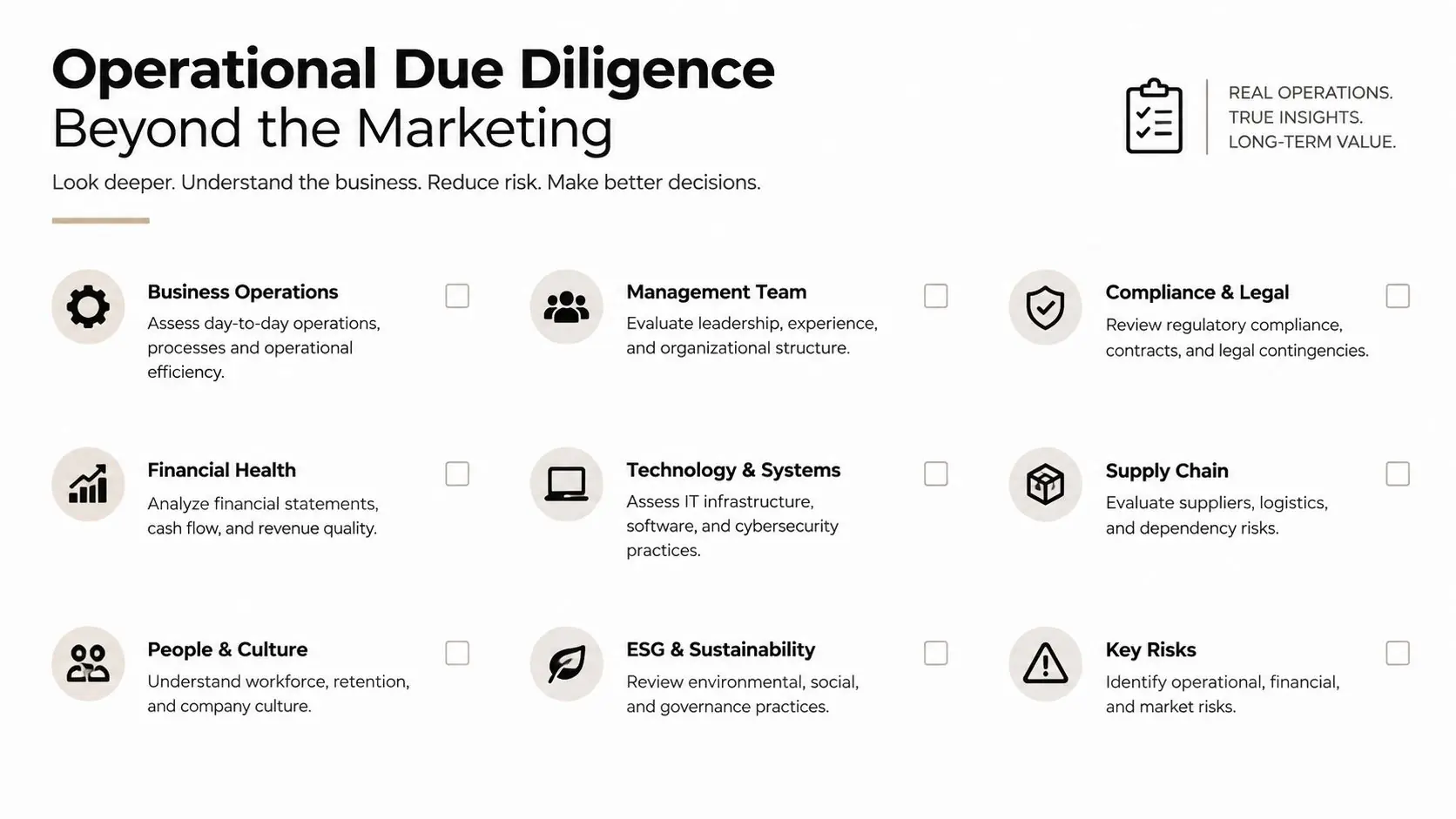
Marketing pages show what a firm wants you to notice. Due diligence focuses on what can stop you from trading or withdrawing. A polished dashboard and an attractive split don't answer the questions that matter after a breach or payout request.
Start with evidence. Look for public payout records that include dates and account identifiers, rather than anonymous testimonials or cropped screenshots. Read the full rulebook, including definitions for prohibited behavior, maximum lot exposure, news restrictions, latency trading, copy trading, and “irregular trading patterns.” Vague wording deserves a written clarification before you pay.
Test the firm before buying
Send support a specific question that requires a precise answer. Ask how floating loss is calculated, when the daily reset occurs, whether a pending order counts toward exposure, or how weekend holding is treated. Record the response and compare it with the rulebook.
- Support test Measure whether the answer is direct, consistent, and delivered by a real support channel.
- Platform test Confirm the data feed, order types, execution environment, and login process.
- Payout test Check the first withdrawal condition, recurring schedule, required trading activity, and dispute process.
- Add-on test Price news access, weekend holding, faster payouts, resets, retries, and scaling as part of the account cost.
- History test Search for repeated complaints about denied payouts, unexplained breaches, or disappearing support.
A free retry may sound valuable, but its value depends on how often the underlying rules cause failure. A daily reset option may help an intraday trader, yet it won't solve a maximum drawdown breach. A scaling plan matters only if the starting rules let you reach payouts consistently.
The best due-diligence question is not “What split do I get?” It's “What exact event can deny my payout, and where is that rule written?”
Trading involves a risk of loss, and simulated funded programs still expose you to fees, rule breaches, and the pressure of performance conditions. Treat every promotional claim as unverified until the written terms and operating history support it.
When a Transparent Firm Like MyFundedCapital Fits
A transparent firm fits when its operating model is easy to map to your trading process. You should be able to identify the evaluation route, account conditions, drawdown limits, payout timing, platform, permitted styles, and add-on costs without relying on a salesperson to interpret vague language.
MyFundedCapital offers Instant Funding, 1-Step Challenge, and 2-Step Challenge routes, with account sizes from $5K to $100K and scaling paths described as reaching $500K in the publisher information. Its program supports manual, algorithmic, and copy trading across 350+ instruments, with DXtrade and cTrader listed as supported platforms and MT5 described as coming soon. Verify current terms before purchasing because platform availability and product conditions can change.
| Framework Criteria | MFC Offering | Why It Matters |
|---|---|---|
| Evaluation path | Instant Funding, 1-Step, and 2-Step routes | Lets traders choose access speed versus staged validation |
| Account range | $5K to $100K, with scaling paths up to $500K | Gives traders room to match account size to tested position logic |
| Trading styles | Manual, algorithmic, and copy trading | Helps traders check whether their execution method is permitted |
| Instruments | Forex, indices, crypto, and commodities among 350+ instruments | Supports different market specializations |
| Risk parameters | Flat 5% daily loss limit and up to 10% maximum drawdown | Makes the core loss boundaries easier to model |
| Add-ons | News trading, weekend holding, and faster payouts | Allows some strategy requirements to be priced explicitly |
| Profit share | Starts at 80/20, with upgrade paths described as 90/10 or 100% | Connects account economics to payout expectations |
| Payout access | Every 7 to 14 days or on demand, through bank or crypto | Gives traders a defined withdrawal framework |
| Support | 24/7 multilingual support and Discord community | Provides channels for rule clarification and operational questions |
The sensible use of this information is not to declare a universal winner. It's to check fit. A trader who needs weekend gold exposure should inspect the relevant add-on. An algorithmic trader should confirm automation rules and platform support. A trader focused on fast withdrawals should verify the exact payout conditions rather than relying on a marketing label.
The program operates with simulated capital and real market quotes, so passing an evaluation isn't the same as receiving a personal brokerage account. You still need discipline, risk control, and enough financial resilience to accept that trading can result in loss.
Your Matching Checklist and Next Steps
A useful shortlist should fit on one page. If you need multiple browser tabs to remember which firm permits news, which one trails drawdown, and which one pays after a minimum trading period, you're not comparing accounts. You're collecting marketing claims.
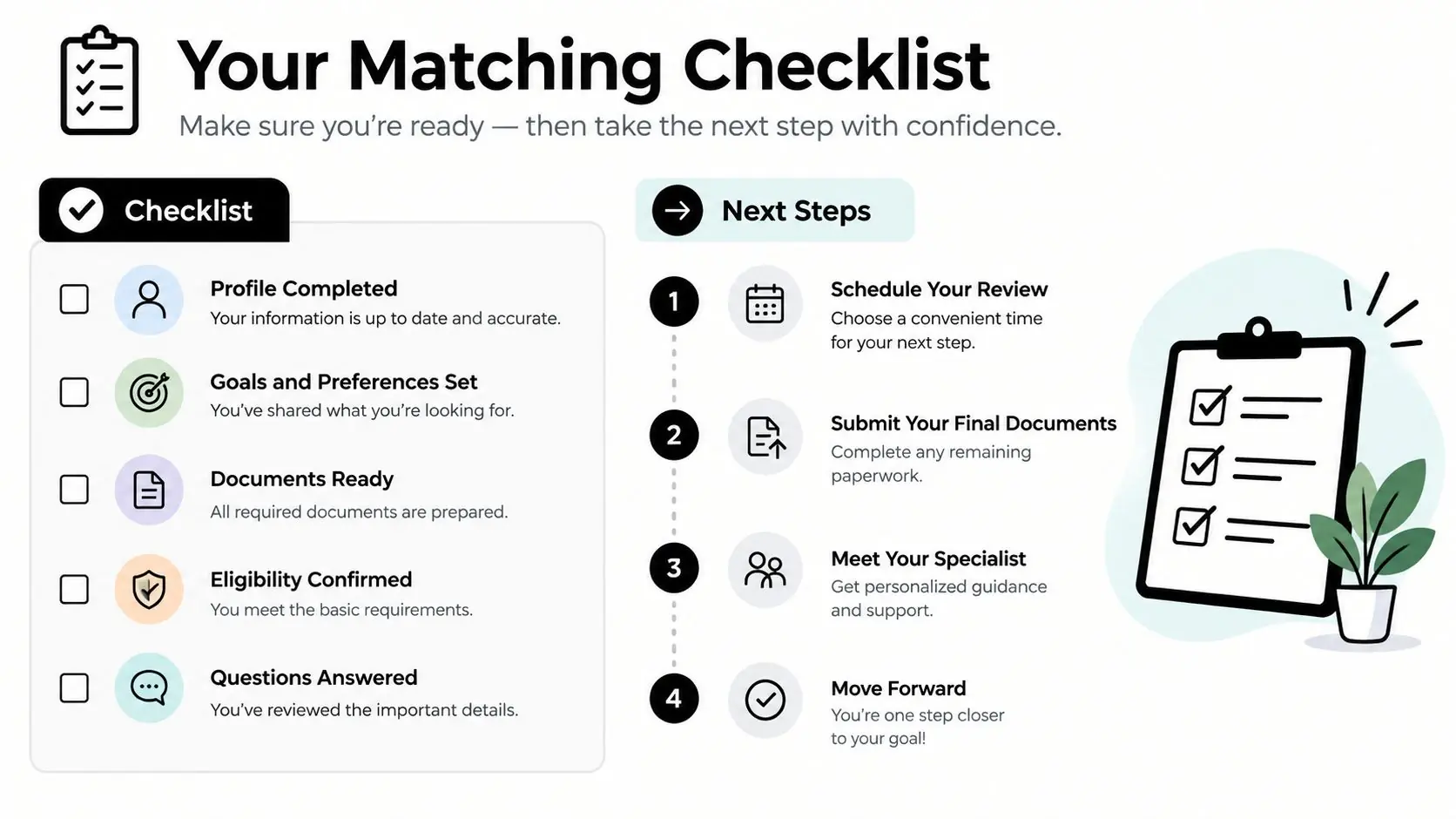
Use this checklist before you buy:
- Evaluation type: Choose one-step, two-step, or instant funding based on your normal process, not urgency.
- Drawdown type: Identify whether the account uses static, trailing, daily, or combined limits.
- Loss calculation: Confirm whether equity, floating loss, open orders, and server reset time affect compliance.
- Strategy fit: Check news trading, weekend holding, scalping, EAs, copy trading, and position duration.
- Platform: Confirm that your execution tools, indicators, automation, and data feed work on the listed platform.
- Payout cadence: Write down the first eligible withdrawal, recurring window, minimum trading period, and fees.
- Profit split: Calculate your expected take-home share only after considering the drawdown and payout conditions.
- Add-ons: Price each permission or speed upgrade across your likely holding period.
- Operational evidence: Review dated payout proof, rule clarity, support responses, and complaint patterns.
- Loss budget: Risk only money you can afford to lose on challenge fees and related costs.
Make the decision testable
Take your last 50 trades and compare the largest losing sequence, average holding time, typical open drawdown, and instruments traded against the firm's rules. Don't change your strategy to pass a challenge unless you've tested that modified process separately. A target can be reached quickly through excessive risk, but a funded account is retained through controlled loss distribution and repeatable execution.
Then compare the available MyFundedCapital account types directly. Select the route that matches your experience and trading tempo, verify current platform and add-on conditions, and save the written rules before checkout. If support gives you an answer that conflicts with the published terms, pause the purchase until the discrepancy is resolved.
The purpose of matching is simple. You're looking for a funded environment where your strategy can operate normally, the breach rules are understandable, and payouts aren't treated as an afterthought. No prop firm removes market risk, and no split guarantees income. This is educational information, not financial advice.
MyFundedCapital offers Instant Funding alongside 1-Step and 2-Step Challenge paths, with published risk parameters, strategy-related add-ons, and defined payout options to compare against your trading profile. Visit MyFundedCapital to review the account types, verify the current rules, and choose a challenge only after the operational fit makes sense.