Most traders find the opening range breakout after taking a few ugly false breaks in the first hour and wondering why a setup that looks simple can wreck a funded account so fast. The strategy can work, but only when you stop treating the open like a free-for-all and start trading it like a rules business.
This guide gives you a practical opening range breakout plan built for prop firm conditions. You'll learn how to choose the timeframe, define entries and exits, size risk under a daily loss cap, and filter out the kind of low-quality breaks that usually do the damage.
What Is the Opening Range Breakout and Why It Works
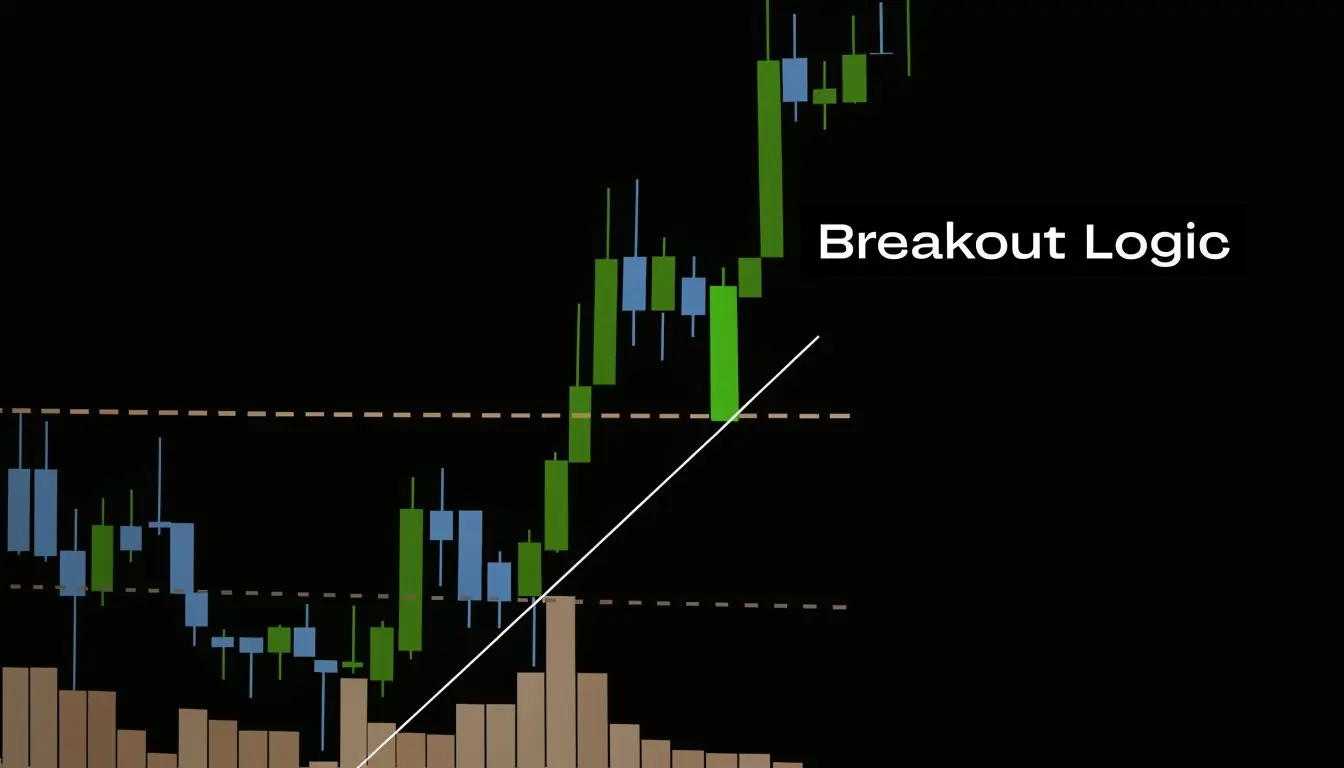
The opening range breakout uses the price range formed right after the session opens. You mark the highest price and the lowest price during a fixed window, then trade a break above or below that range once it's established.
Those two levels matter:
- Opening Range High (ORH) means the highest price printed during your chosen opening window.
- Opening Range Low (ORL) means the lowest price printed during that same window.
- The space between them is your opening range.
Why traders keep coming back to it
The logic is straightforward. The open is when overnight information gets priced in, liquidity surges, and larger participants commit early. If buyers or sellers can force price outside that initial balance area and hold it there, you often get the cleanest move of the day.
The strongest fact behind the setup is this: approximately 35% of a trading day's high or low extremes occur within the first 30 minutes after market open, according to LuxAlgo's ORB strategy research. That doesn't mean every first-hour break trends. It does mean the first half hour deserves your attention because it often contains the day's most important information.
What the setup is really measuring
An opening range breakout isn't magic. It's a practical way to measure whether the market is accepting higher prices or lower prices after the open.
Think of it in three phases:
Discovery
The market opens and tests where buyers and sellers are willing to do business.Definition
Your opening range forms. Now you have a clear box with a high and a low.Decision
Price either breaks and accepts outside the box, or it fails and rotates back inside.
Practical rule: The range is your map. If you don't know the exact ORH and ORL before you enter, you're not trading opening range breakout. You're improvising.
Why beginners misuse it
Newer traders often assume any touch of the high or low is a signal. It isn't. The opening range breakout works best as a structured process, not a reflex.
A sound ORB approach needs:
- A fixed timeframe so your range doesn't change mid-session
- A clear trigger so you're not entering on noise
- A stop method that matches the size of the range
- A trade management plan before the order is placed
That's what separates a disciplined intraday method from gambling on the first candle that moves fast.
Defining Your Opening Range Timeframe and Instrument
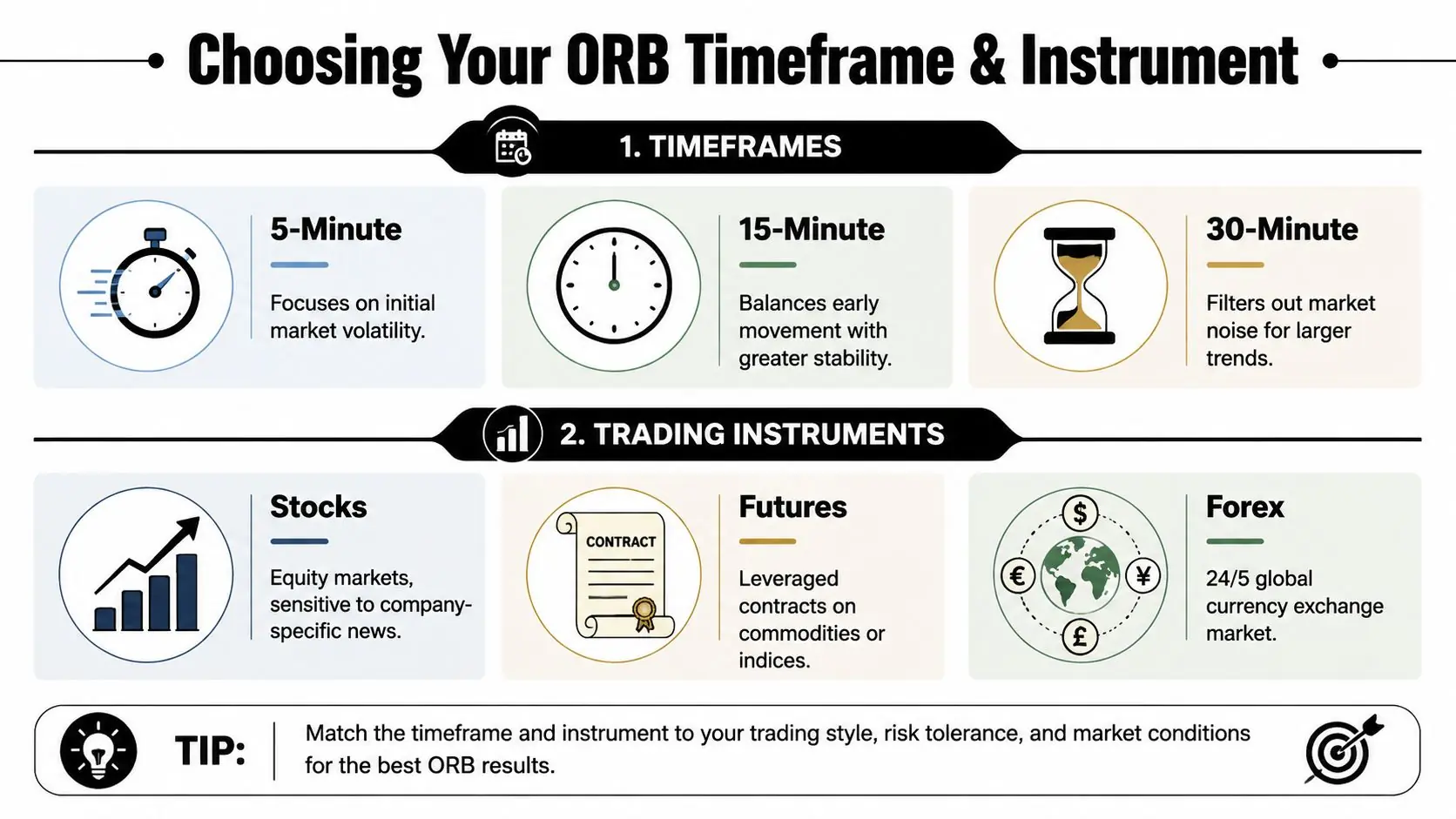
The timeframe you choose changes the whole character of the trade. A 5-minute opening range breakout is a different animal from a 30-minute one. One gives faster signals and more noise. The other gives slower signals and can miss the most explosive early move.
The real trade-off between 5, 15, and 30 minutes
A large backtest covering over 1 million trades found that the 5-minute ORB had the highest win rate at 53.78%, the 15-minute ORB had the strongest expectancy at $0.044 per trade, and the 30-minute ORB had a 49.38% win rate, based on Option Alpha's ORB backtest.
Here's the clean comparison.
| Timeframe | Win Rate | Average Expectancy (per trade) |
|---|---|---|
| 5-minute | 53.78% | Qualitatively positive |
| 15-minute | 46% | $0.044 per trade |
| 30-minute | 49.38% | Qualitatively lower than 15-minute in the cited test |
That table tells you something important. Highest win rate doesn't automatically mean best choice. A setup that wins more often can still be harder to execute if it whips around right after entry.
How to choose the timeframe by trading style
If you're trying to force one ORB template on every instrument, you'll get chopped up. Match the timeframe to how you trade.
The 5-minute opening range breakout
This suits traders who can make decisions fast and accept more early-session noise.
Best fit:
- Index traders who want the immediate open
- Scalpers comfortable with quick stop-outs
- Traders at the screen with full focus during the first minutes
Weak spot: the signal comes fast, and bad entries happen even faster.
The 15-minute opening range breakout
This is the most balanced version for many developing traders. You still catch early momentum, but you avoid some of the chaos from the first few candles.
Good fit for:
- Forex and index day traders
- Traders who want cleaner structure
- Anyone still building execution discipline
The 15-minute range often gives fewer impulsive entries because you're forced to wait. That delay helps more traders than they want to admit.
The 30-minute opening range breakout
This version is slower and more selective. It's useful when you prefer patience over frequency and you don't mind giving up the first move to get a more defined range.
It tends to make more sense when:
- The instrument is unstable right at the open
- News has just hit and the first wave is messy
- You trade fewer, higher-conviction setups
Which instruments make the most sense
Some markets produce cleaner opening range behavior than others.
- Futures often fit ORB well because the session open is highly watched and reacts quickly to order flow.
- Stocks can work, especially when there's a clear catalyst, but they can also gap and whipsaw hard.
- Forex requires more care because the concept of “the open” depends on which session you're trading.
- Crypto can still use ORB logic, but you need a defined session start. Otherwise the range is arbitrary.
A practical way to start is simple:
- Trade one instrument
- Use one timeframe
- Journal only that version
- Don't optimize anything until you've seen enough live samples
If you keep changing from a 5-minute Nasdaq setup to a 30-minute forex setup to a stock open, you won't know whether the strategy is failing or your consistency is.
Precise Entry and Exit Rules for the ORB Strategy
The opening range breakout needs fixed rules. If your entry changes day to day, your results won't mean anything. Keep it mechanical.
The base rule set
Use this as a clean starting framework.
Entry rules
For a long trade:
- Mark the opening range high and low after your chosen window ends.
- Wait for price to close above the ORH.
- Enter only if the breakout candle looks decisive and not like a weak poke through resistance.
For a short trade:
- Mark the same range.
- Wait for price to close below the ORL.
- Enter only when price is accepting below the low, not just tagging it.
If price keeps dipping above and below the level without commitment, leave it alone.
Stop-loss choices
Your stop should come from the structure of the range, not from hope.
Three practical methods:
Conservative stop
Put the stop at the opposite side of the opening range. This gives the trade room but reduces size.Moderate stop
Put the stop near the midpoint of the range. This works when the range is wide enough to matter but not so wide that the trade becomes inefficient.Aggressive stop
Place the stop just back inside the breakout side of the range. This improves reward-to-risk but increases the odds of getting clipped.
Don't choose the stop that gives the biggest size. Choose the stop that still makes sense if price retests the level once before moving.
Profit target and trade management
The cleanest target for a newer trader is a fixed 1:2 risk-reward ratio. It removes a lot of bad decision-making.
You can also manage the trade this way:
- Take partial profit at the first clean expansion away from the range
- Move the stop only after price proves the breakout is holding
- Exit if the market stalls and keeps rotating back toward the range
- Close the trade if the setup loses momentum and your original premise is gone
A time-based exit also helps. ORB trades usually show intent early. If the move drifts, the quality often drops.
A simple example with ES-style pricing
Suppose the first range forms with:
- ORH at 5250.00
- ORL at 5244.00
That gives you a clearly defined box.
A long version could look like this:
- Entry on a candle close above 5250.00
- Stop below the midpoint of the range or at the opposite boundary, depending on your plan
- Target set at 2R if you're using a fixed reward model
A short version is the mirror image:
- Entry on a close below 5244.00
- Stop above the structure you've defined in advance
- Target managed the same way every time
The exact stop placement depends on your chosen model. The important part is consistency. If one day you use midpoint stops and the next day you use opposite-boundary stops because you “feel better” about the setup, your journal becomes useless.
Rules that keep execution clean
Use this checklist before any order goes live:
- Range fixed and clearly marked
- One direction only unless your plan explicitly allows re-entry or reversal
- Candle close confirmation required
- Stop and target entered immediately
- No chasing if price has already expanded too far from the breakout point
That last one matters. A lot of bad ORB trades come from entering late because the move looks exciting after it already left the level.
Risk Management for Prop Firm Traders
In a prop environment, the opening range breakout is less about finding a signal and more about surviving your own execution. A setup can be valid and still be a bad trade if the position size is wrong.
The first rule is simple. Build every trade around the daily loss cap, not around the profit target. If your firm has a flat daily limit, treat that as the hard wall.
Keep one trade small enough to survive
A professional ORB trader knows the breakout can fail fast. Your trade size has to assume that possibility before you click buy or sell.
A practical framework:
- Risk a small fixed fraction per trade
- Use the stop distance from your ORB plan
- Reduce size when the opening range is wide
- Skip the trade if the proper size becomes too small to justify the setup
The goal is to make a stopped trade annoying, not catastrophic.
Work backward from the daily loss limit
If the account has a 5% daily loss limit, your intraday risk plan should be tighter than that. The cap exists to stop the day. It is not a target for “how much room you have.”
A sensible approach is to define before the session:
- Your maximum number of ORB attempts
- Whether you allow one direction only or a reversal trade
- The point at which you stop for the day after losses
- What counts as a valid setup versus emotional revenge trading
That structure matters more than the entry pattern itself.
A funded trader keeps risk boring. The challenge account gets lost when a trader says, “I'll just make it back on the next break.”
Use tools that force clarity
Before the session starts, write down the exact distance between entry and stop, then calculate position size from that number. If you review your trades afterward, a profit and loss analysis tool can help break down where execution drifted from plan.
For broader discipline around drawdowns, exposure, and session rules, review a dedicated guide to forex risk management strategies. The principles carry over directly to opening range breakout trading.
Rules that fit a prop-style environment
Use a simple operating checklist:
- Predefine max loss for the day before the market opens
- Size each trade from stop distance, never from desired payout
- Avoid adding to losers inside or near the opening range
- Stop trading after plan-defined damage, even if the platform still lets you trade
- Journal every breach of process, not just every losing trade
Trading involves risk of loss. ORB can be a sharp tool, but in a prop account, discipline is the edge. Not the pattern alone.
Common Pitfalls and Advanced Filtering Techniques
The biggest lie traders tell themselves about the opening range breakout is that the first break should be trusted by default. It shouldn't.
Research from Edgeful on opening range breakout behavior found that double breaks occur on 66.93% of trading days. That means price tags both the opening range high and the opening range low in the same session more often than most traders expect. If you trade every first break mechanically with no filter, you're walking straight into the most common trap.
What usually goes wrong
Most ORB losses come from one of these mistakes:
- Trading the first touch instead of the first accepted break
- Ignoring context and taking a breakout in chop
- Entering late after the move is already extended
- Revenge trading the opposite side after getting stopped
- Treating all opens the same, even when the range is narrow and weak
That's why basic ORB videos look easier than live execution.
Filters that actually improve the setup
You don't need ten indicators. You need a few conditions that remove bad environments.
Volume confirmation
A breakout with obvious participation is different from a thin push through the level. If the move clears the range but volume doesn't support it, be skeptical.
Range quality
Very small opening ranges tend to produce messy breaks. If the range feels trivial relative to the instrument's usual movement, the setup often lacks substance.
Higher-timeframe bias
A long breakout that aligns with the broader trend usually has a better case than one fighting clear pressure from higher up the chart. That doesn't guarantee success, but it keeps you out of more low-quality countertrend ideas.
Time cutoff
Late entries are a common leak. If price hasn't broken cleanly within your planned trade window, the setup may no longer be an ORB trade. It may just be intraday noise.
Good ORB traders don't ask, “Did price break the range?” They ask, “Is this a session I should be trading at all?”
One useful combination
A practical filter stack looks like this:
- Breakout closes outside the range
- Volume supports the move
- The opening range is meaningful
- The trade aligns with the broader bias
- The entry happens inside your allowed time window
If one of those is missing, the trade quality drops.
For traders who want another way to judge whether price is trading with acceptance or stretching too far from fair value, a VWAP trading strategy guide pairs well with ORB logic. VWAP can help you decide whether the breakout has support or is already too extended.
Setting Up Your ORB Workspace on cTrader and DXtrade
A sloppy platform setup creates avoidable mistakes. With opening range breakout trading, the work should be done before the market opens, not while the candle is moving.
Pre-market workspace checklist
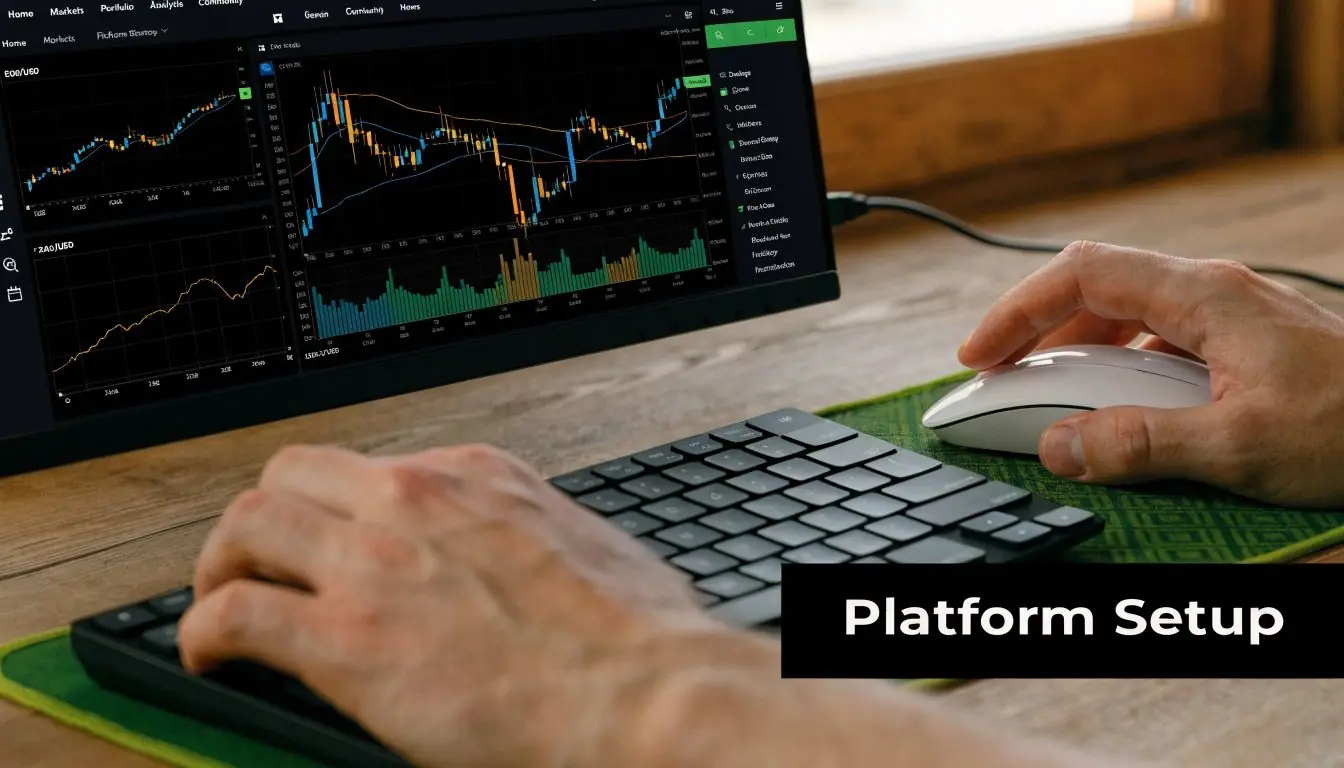
On cTrader or DXtrade, keep the layout simple:
- Open your primary instrument and chosen timeframe.
- Add a higher-timeframe chart beside it for bias.
- Mark the session open clearly.
- Prepare horizontal lines for the ORH and ORL.
- Set price alerts above and below the range.
- Open the order ticket before the breakout happens.
- Confirm the stop-loss and take-profit fields are ready.
That setup reduces hesitation.
What to keep on screen
You don't need a cluttered dashboard. You need the minimum information required to execute without guessing.
Keep visible:
- One execution chart
- One context chart
- Your marked range
- Alerts
- The order panel
- Your daily P&L
If you're comparing platforms, this overview of the best FX trading platform is useful for understanding how different execution environments fit different trading styles.
A clean routine beats a fancy layout
Label the opening range the same way every day. Use the same colors. Put alerts at the same relative distance. Save the template.
Small platform habits matter because ORB trades happen fast. If you're resizing windows or typing order values while price is breaking out, you're already behind.
Frequently Asked Questions about Opening Range Breakouts
Should I trade an opening range breakout on major news days
Be careful. News can create sharp movement that looks like a clean break, then snaps back through the range just as fast. If you trade news-active sessions, use stricter confirmation and smaller size, or stand aside if the move is too disorderly.
Does the opening range breakout work in forex and crypto
Yes, but only if you define the session open consistently. In stocks and many futures markets, the open is obvious. In forex and crypto, you need a fixed session start or the range loses meaning.
What if price stays inside the opening range for hours
That's information. It usually means the market hasn't committed. Don't force a breakout trade when there isn't one. If your plan includes a time cutoff, honor it and move on.
Should I hold ORB trades into the end of the day
Usually, ORB is best treated as an intraday trade. If the breakout hasn't delivered by the time your session plan says it should, flatten the position. Carrying a weak ORB trade longer often turns a structured setup into a hope trade.
Trading involves risk of loss. This article is educational only and isn't financial advice.
If you want to apply a disciplined opening range breakout strategy in a funded environment, explore the account options at MyFundedCapital. Compare the challenge models, review the risk rules, and choose the setup that fits your trading style before you start.