ES
ES
 DE
DE
 FR
FR
 AR
AR
 IT
IT
 NL
NL
 PL
PL
 SV
SV

You've found a platform offering the CFDs, forex pairs, or commodity derivatives you want to trade. The marketing looks professional, but you can't tell whether the firm holds permission for the exact activity it performs. This guide explains how instrument license requirements work, how prop firm structures differ from retail brokers, and how to verify permissions before risking capital or an evaluation fee.
Why Instrument License Requirements Matter for Traders
A trader usually discovers the licensing problem too late. You open an account, deposit margin, and place trades on a platform that lists the right markets. Only after a withdrawal delay, account restriction, or regulatory warning do you check whether the firm was authorised to offer that product to your type of client.
That assumption is dangerous. A platform offering an instrument doesn't prove that the firm is legally permitted to intermediate it. Licensing determines whether a business can deal with customers, execute orders, arrange transactions, hold client money, or provide exposure. It also helps define which protections should apply when markets move sharply.
A leveraged CFD and a direct purchase of an asset can look similar on a trading screen. Legally, they can be very different. A derivative creates exposure through a contract, often involving margin, borrowed capital, and a counterparty. Regulators therefore focus on the firm's role, the product class, the client category, and the way orders are handled.
Practical rule: Check the permission behind the product, not just the product displayed in the trading terminal.
This matters even more for active traders. Borrowed funds can magnify losses, and operational problems can prevent you from closing positions or withdrawing funds. Regulation won't make a losing strategy profitable, and trading always involves the risk of loss, but proper authorisation gives you a more credible framework for complaints, supervision, reporting, and client protection.
The first question to ask
Don't begin with “Does this company have a licence?” Ask a more precise question:
Is this company authorised to perform this exact activity, with this exact instrument, for this exact client type, in my jurisdiction?
A firm may be authorised to arrange transactions but not deal as principal. It may serve professional clients but not retail customers. It may offer one product under a regulated permission while presenting another product through a separate entity or overseas affiliate.
Those distinctions aren't technical trivia. They determine whether the firm can legally stand between you and the market, provide the stated services, receive your money, or execute your orders. Treat instrument license requirements as a capital-protection issue, not as a corporate formality.
How Regulators Classify Financial Instruments
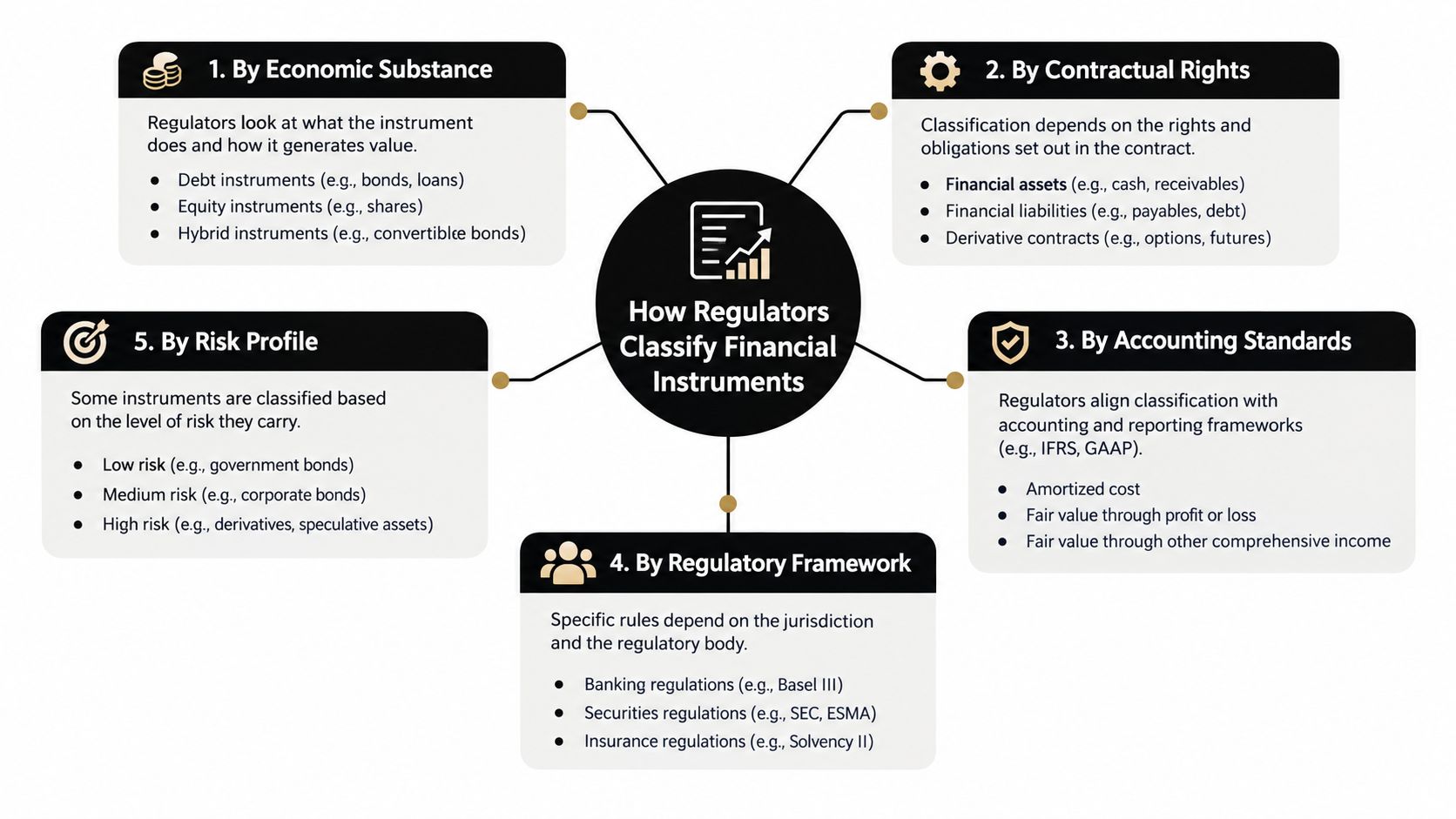
Regulators don't issue one universal “trading licence.” They classify the instrument and the activity separately, then decide which permissions a firm needs.
Start with the product. A spot transaction may involve the direct exchange or purchase of an asset, while a derivative creates a contract whose value depends on an underlying asset, rate, index, or commodity. CFDs and derivative forex therefore receive closer scrutiny than a simple non-leveraged purchase because the customer's exposure depends on contractual terms, margin, pricing, and the counterparty.
Next, identify the firm's role. Use this sequence before trusting a licence claim:
- Identify the instrument. Is it spot FX, derivative FX, a CFD, a futures contract, an option, a commodity derivative, or an emission allowance derivative?
- Identify the service. Is the firm executing client orders, arranging deals, giving advice, managing portfolios, or dealing on its own account?
- Identify the counterparty structure. Does the firm act as agent, matched principal, or unmatched principal?
- Identify the client. Retail and professional clients can fall under different conduct and protection requirements.
- Identify the money flow. Check whether the firm receives, holds, transfers, or controls client funds.
Why the firm's role changes the answer
A company that merely introduces customers to another authorised firm isn't performing the same activity as a broker that executes orders or takes the other side of a trade. A business that gives investment advice isn't automatically permitted to hold client assets. A principal dealing model creates different capital, conflicts, and supervision questions from an agency model.
That's why “the firm has a financial licence” is an incomplete answer. The register entry must match the actual service. A useful overview of the broader concept is this securities license definition explained, but you still need to inspect the relevant regulator's own register and permission categories.
Product labels can also mislead. A platform may call an instrument “forex” even though the legal product is a derivative. It may advertise “commodities” while providing a cash-settled contract rather than delivery of the physical asset. Before comparing spreads or leverage, compare the legal classification.
For a practical explanation of how CFDs differ from futures, review this CFD versus futures comparison. The key point is simple: the asset name on the screen doesn't determine the licence by itself. The contract and the firm's conduct do.
The correct licence is the one that matches the business activity, not the one that sounds closest to the marketing language.
License Requirements Across Major Asset Classes
Different instruments create different regulatory burdens. Retail forex and CFDs usually raise more conduct concerns because customers can gain exposure through a broker or other intermediary. Commodity derivatives bring another layer of analysis because authorisation can depend on proprietary trading scale, client order execution, group-level activity, and algorithmic behaviour.
The United States provides a clear example for retail forex. The CFTC's retail forex framework requires counterparties offering retail foreign currency contracts to register as futures commission merchants or retail foreign exchange dealers. Related intermediaries, including introducing brokers, commodity trading advisors, commodity pool operators, and associated persons, may also need registration when they solicit orders, exercise discretion, or operate pools.
That framework also sets a minimum net-capital requirement of $20 million plus 5% of retail-forex liabilities above $10 million for the relevant retail forex dealers, alongside risk disclosure, recordkeeping, reporting, and business-conduct obligations. This isn't a marketing badge. It's a threshold that affects whether a firm can legally intermediate retail forex at all.
Regulatory intensity by asset class
| Instrument Class | Typical Regulatory Intensity | Key Consumer Protections Required |
|---|---|---|
| Spot FX or other spot assets | Depends on the jurisdiction, asset, service, and whether the firm provides a regulated investment service | Clear product terms, transparent counterparty identity, and accurate disclosure of what the customer is buying |
| Retail forex contracts | High where the firm intermediates leveraged retail exposure | Registration, risk disclosure, recordkeeping, reporting, and conduct controls |
| CFDs | High, particularly for retail clients | Leverage controls, margin close-out rules, negative-balance protection, restrictions on inducements, and standardised risk warnings where required |
| Commodity derivatives | Activity-based and potentially high | Authorisation analysis, exposure monitoring, client-order controls, and scrutiny of algorithmic or high-frequency activity |
| Futures and other exchange-traded derivatives | Usually high | Appropriate execution permissions, margin disclosures, exchange or venue controls, and regulated intermediary oversight |
The United Kingdom illustrates how product regulation can sit directly inside the retail protection framework. FCA retail CFD rules require ratios between 30:1 and 2:1 depending on the underlying asset, require positions to close when funds fall to 50% of margin, provide negative-balance protection, restrict inducements, and require a standard risk warning that states the percentage of retail client accounts that lose money. These requirements are described in the CFTC's summary of the UK retail CFD framework.
For commodity derivatives, don't assume proprietary trading removes the licensing question. The AFM's MiFID II guidance explains that the ancillary-activity exemption can be unavailable where trading isn't ancillary at group level, the party executes client orders, or it uses high-frequency trading. The guidance also describes a de minimis test using annual outstanding notional exposure below EUR 3 billion.
Your product choice should therefore include a regulatory check. Use this instrument selection criteria guide to think beyond volatility and spreads. The right question is whether the product's legal structure, risk controls, and trading conditions fit your strategy.
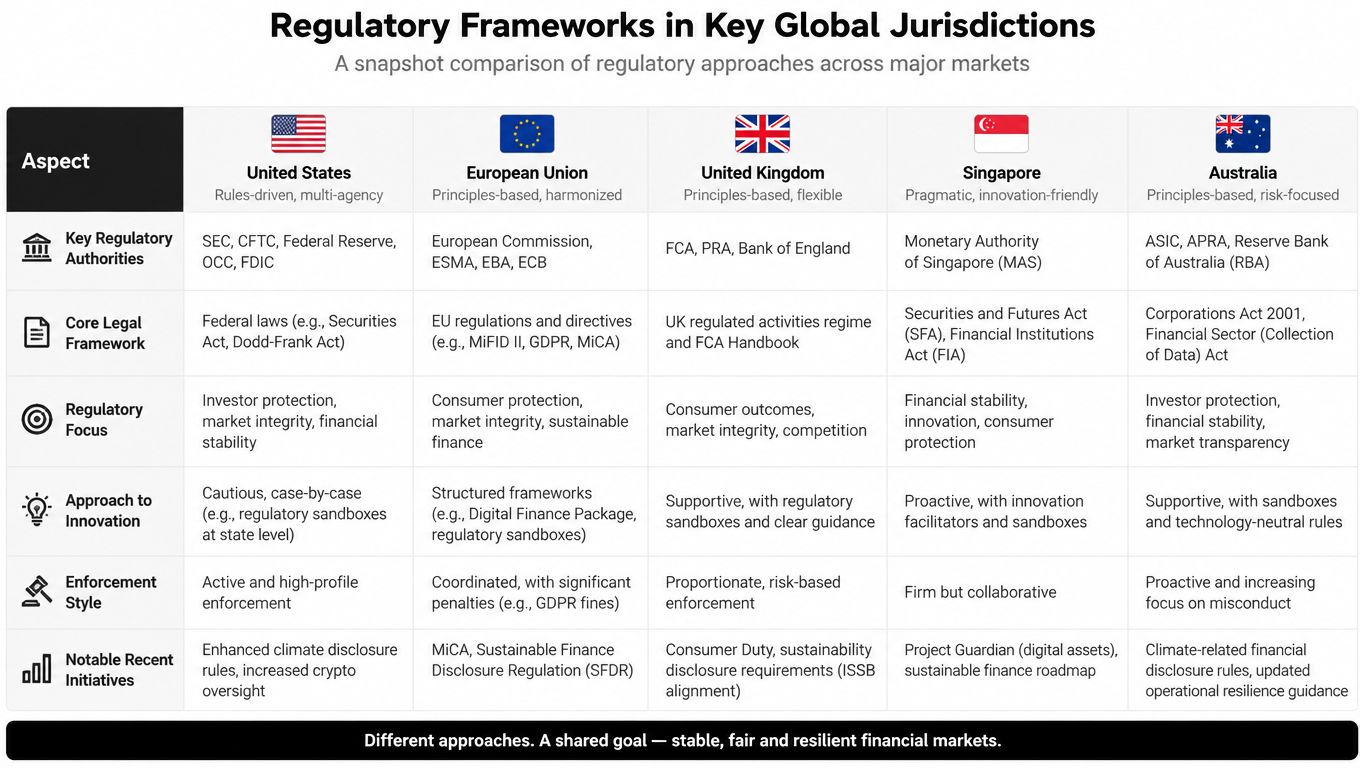
Regulatory Frameworks in Key Global Jurisdictions
Geography changes the answer. A firm authorised in one country doesn't automatically have permission to solicit customers, execute trades, or provide the same product in another country. The governing regulator will usually focus on where the firm operates, where the customer lives, and what service the firm provides.
United States
The US retail forex model places a substantial barrier around customer-facing intermediation. Under the CFTC framework, counterparties offering retail foreign currency contracts must register as FCMs or RFEDs, and relevant intermediaries must register when their activities trigger the rules. The $20 million minimum net-capital standard, plus 5% of retail-forex liabilities above $10 million, is especially important because it separates a regulated dealer from a lightly capitalised marketing operation.
The same framework also requires risk disclosures, reporting, recordkeeping, and business-conduct controls. For a US retail trader, a foreign company's claim that it is “regulated abroad” doesn't answer whether it can lawfully offer the relevant product to US customers.
European Union
MiFID II focuses heavily on the activity and instrument. Firms dealing on their own account in commodity derivatives, emission allowances, or related derivatives generally need a licence unless they qualify for the ancillary-activity exemption. The exemption can fail when the activity is not ancillary at group level, when the firm executes client orders, or when it uses high-frequency trading.
That approach makes the scoping exercise essential. A firm can't rely on a broad corporate description if its actual conduct involves client execution, proprietary dealing at material scale, or algorithmic activity. Derivative forex and CFDs also require analysis of the relevant investment service and product permissions.
Japan
Japan uses a hard registration gate for regulated financial-instruments business. The Japanese FSA explanation of Article 29 of FIEA states that a Financial Instruments Business Operator must be registered under Article 29 to conduct Financial Instruments Business.
The practical lesson is direct. If the business activity falls within the regulated category, the firm needs registration before operating legally. The trigger depends on the nature of the activity, not merely the label attached to the product or the fact that the business describes itself as technology, education, or an evaluation service.
Norway
Norway shows how capital requirements can vary with the service performed. The Finanstilsynet investment-firm licensing information states that firms dealing on own account, underwriting or placing with firm commitment, or operating an MTF or OTF may need EUR 730,000 in initial capital. Firms limited to order reception and transmission, execution, portfolio management, investment advice, or non-firm-commitment placing may need EUR 50,000, while other investment firms may need EUR 125,000.
That comparison reinforces the central point: the licence follows the activity. A trader who uses an international platform should verify the legal entity, regulator, service category, client permission, and territorial scope. Don't treat a foreign licence as a universal passport.
What This Means for Prop Firm Traders
A proprietary trading evaluation firm isn't automatically the same business as a retail CFD broker. The legal analysis depends on what the firm does with customer funds, orders, and market exposure.
A traditional broker typically intermediates customer trades. It may execute orders, hold margin, extend credit for trading, or act as the counterparty. A simulated evaluation model operates differently when traders receive demo accounts with real market quotes and the firm uses the environment to assess trading behaviour rather than accept and execute the trader's live orders in the same way as a retail broker.
The operating model matters
A prop firm's terms, account type, technology provider, order handling, payout arrangement, and relationship with any introducing broker all matter. The fact that a platform displays forex, indices, crypto, or commodities doesn't by itself establish that customers are trading live positions through a regulated brokerage account.
That distinction can explain why a simulated evaluation environment may offer conditions that differ from a retail broker, including weekend holding or news trading. Those features describe the trading rules of the evaluation or funded-account programme. They don't mean the trader has received a retail brokerage account, and they don't remove the need to read the firm's terms carefully.
Read the account description literally: A simulated account is an assessment environment, not proof that you own or control a live market position.
The model still carries meaningful risk. You can lose an evaluation fee, breach a daily loss or drawdown rule, misread the payout conditions, or trade a product whose pricing and execution terms don't suit your strategy. A simulated account also doesn't turn leveraged trading into a safe activity. Trading involves risk of loss, and no firm can guarantee that a trader will qualify or receive profits.
Questions to ask before joining
Check whether the firm clearly states:
- Account status Is the account simulated, live, or a combination of both?
- Market data Are quotes real market quotes, and how are spreads, slippage, and execution defined?
- Counterparty role Does the firm execute your orders for you, or does it evaluate simulated activity?
- Fees and payouts What event triggers a payout, and what conditions can delay or refuse it?
- Risk rules Are daily loss, maximum drawdown, news trading, and weekend holding rules written clearly?
- Legal entity Which company provides the service, and where is that company established?
The important comparison isn't “licensed broker versus unlicensed prop firm.” It's regulated live intermediation versus a clearly described simulated assessment service. If the website blurs those categories, avoid relying on assumptions and ask for the written terms before paying.
How to Verify a Firm's Licensing and Permissions
Marketing pages often display regulator names, registration numbers, and flags without explaining what the permission covers. Your job is to confirm the underlying record and match it to the activity you plan to use.
A repeatable verification process
Copy the exact legal name. Record the company name from the terms, not only the brand name shown in advertisements. Group companies and trading brands can be different entities.
Search the regulator's register. Use the official register for the jurisdiction where the firm claims authorisation. Don't rely on a logo, screenshot, or third-party directory.
Match the registration details. Compare the legal name, registration number, address, status, and website or trading name. A small mismatch can indicate an unauthorised clone firm or a different company.
Read the permission categories. Look for the actual activity, such as dealing on own account, execution of client orders, arranging deals, investment advice, custody, or portfolio management.
Match the product and client type. Confirm that the permission covers the instrument class, retail or professional customers, and the territory where you live.
Check the dates and warnings. Look for an active status, restrictions, cancellation notices, and regulator warnings. Save the register page for your records before you deposit money.
What a mismatch looks like
A common mismatch occurs when a firm is authorised to arrange transactions but advertises itself as the principal taking the other side of your trades. Another occurs when an entity has permission for professional clients but markets CFDs with borrowed funds to retail customers. A third appears when the register covers one legal entity while the website's terms name another.
For a prop firm, add a separate check. Determine whether the service is a simulated evaluation, a live brokerage account, an introducing arrangement, or a combination. This distinction affects which regulatory permissions are relevant, but it doesn't excuse unclear terms. A firm should explain who provides the service, what the account represents, and how payouts are calculated.
Review this prop firm regulation guide alongside the firm's own terms. Then ask support direct questions in writing. If the answer avoids the account structure, changes between representatives, or depends on a badge rather than a register entry, treat that as a warning.
Verification standard: If you can't explain the legal entity, the account type, and the permission that matches the service, you haven't completed due diligence.
Common Misconceptions and Next Steps
The biggest misconception is that every trading platform must hold the same retail broker licence. That's wrong. A firm that executes live customer orders, holds margin, or deals as principal faces a different regulatory analysis from a firm that provides a simulated evaluation environment.
The opposite misconception is just as dangerous. A prop firm doesn't become risk-free because it isn't operating like a retail broker. You still need to understand the fee, drawdown rules, payout terms, market data, prohibited strategies, and account status. If the firm's language suggests live execution while its terms describe simulation, ask for clarification before paying.
Keep your final check simple
Use this shortlist:
- Product What instrument are you trading?
- Activity Is the firm executing, arranging, advising, or evaluating?
- Entity Which legal company provides the service?
- Permission Does the regulator's register match that activity?
- Protection What happens to your money, data, and complaints?
- Risk Can you afford to lose the fee or trading capital?
This content is educational only and isn't financial advice. No licence removes market risk, and no evaluation programme guarantees a payout. Choose a structure you understand, use sensible risk limits, and stop if the legal or operational details remain unclear.
MyFundedCapital offers simulated trading evaluations and funded-account programmes, including 1-Step and 2-Step challenges, Instant Funding, and access to more than 350 instruments with stated risk parameters. Review the account types and terms, then visit MyFundedCapital to choose a programme that matches your trading style and verify the rules before starting.