Diving into crypto trading can feel overwhelming with all the hype and complex jargon. This guide cuts through the noise, explaining the cryptocurrency trading basics you need to start navigating the market. You'll learn core concepts, practical steps for your first trade, and how to manage risk effectively.
Disclaimer: This content is for educational purposes only and is not financial advice. Trading involves a high risk of loss, and you should never invest more than you are willing to lose.
Free resources: Forex & Prop Trading Glossary (drawdown, breach, lot, pip and the rest in plain words).
Understanding the Crypto Landscape
Before placing a trade, you need to understand the environment. The core concepts are simpler than they seem. The blockchain is a secure, shared digital ledger, and cryptocurrencies like Bitcoin are the assets recorded on it. If you're new to the space, the guide "What Is Cryptocurrency" by EndureGo Tax provides a solid foundation.
Core Asset Types
Thousands of coins exist, but they generally fall into two main categories:
- The Majors (BTC & ETH) Bitcoin (BTC) is known as "digital gold" due to its fixed supply of 21 million coins, creating digital scarcity. Ethereum (ETH) functions as a decentralized computer running "smart contracts," giving it utility beyond being just a currency.
- Altcoins This category includes every other cryptocurrency. Some, like Solana (SOL), are serious projects with unique tech. Others, known as "memecoins," derive their value primarily from social media hype.
Understanding what drives a coin's value—scarcity, utility, or pure speculation—is a crucial first step in your trading journey.
Spot vs. Derivatives Trading
You can trade these assets in two primary ways:
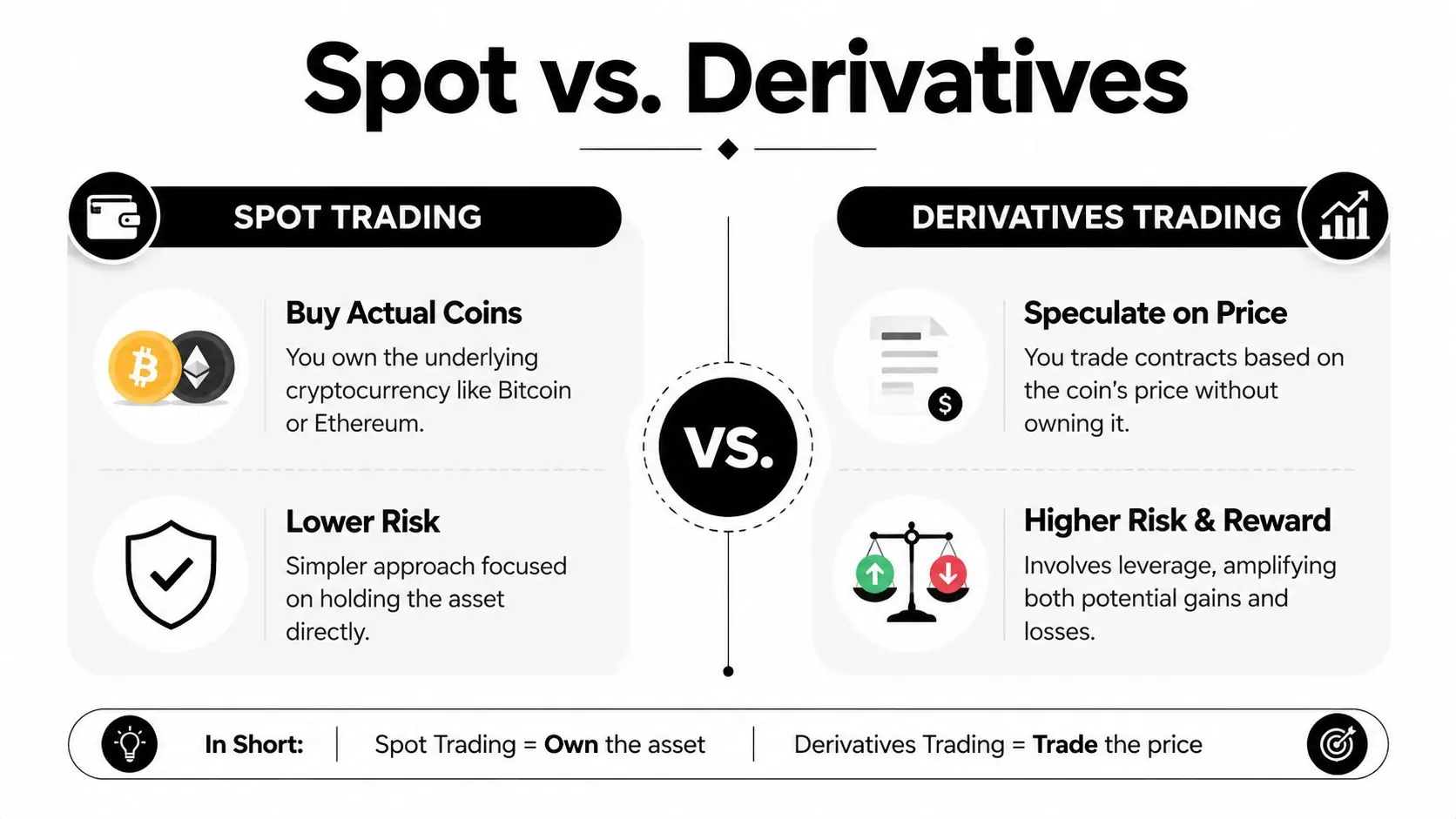
- Spot Trading: This is the most direct method. You buy the actual cryptocurrency (e.g., Bitcoin) and hold it in your wallet. The strategy is simple: buy low and sell high. This is ideal for beginners and long-term investors.
- Derivatives Trading: This involves speculating on price movements without owning the coin. You trade contracts (like futures) whose value is derived from the crypto's price. This allows for leverage, which can amplify both profits and losses, making it better suited for experienced traders. Our guide on what liquidity means in crypto explains how these markets influence overall prices.
Your Essential Crypto Trading Toolkit
Having the right digital tools is crucial. Your setup can make or break your initial trading experience.
Choosing an Exchange
A cryptocurrency exchange is your marketplace. When choosing one, focus on these practical factors:
- Security Non-negotiable. Look for mandatory two-factor authentication (2FA) and cold storage for funds. If security seems weak, move on.
- Fees Check both trading fees (typically 0.1% to 0.5% per trade) and withdrawal fees. These small costs add up and impact your profitability.
- Available Coins Ensure the exchange lists the assets you want to trade, including majors like BTC and ETH.
For beginners, sticking to well-known, established exchanges is the safest bet due to their better security and user-friendly interfaces.
Hot Wallets vs. Cold Wallets
Once you buy crypto, you need a wallet to store it securely.
- A hot wallet is connected to the internet (e.g., a mobile app). It’s like a checking account, perfect for small amounts you plan to trade actively.
- A cold wallet is an offline physical device (e.g., a USB drive). It’s like a safe deposit box, ideal for storing the majority of your assets long-term.
Serious traders use both: a hot wallet for active trading capital and a cold wallet for long-term holdings.
Actionable Step: Never store your life savings on an exchange. If you are not actively trading it, move your crypto to a personal cold wallet where you control the keys.
Mastering Basic Order Types
Using the right order type gives you precise control over your trades. Here are the three you must know:
- Market Order Tells the exchange to buy or sell immediately at the current best price. It's fast, but you don't control the exact price. Use when speed is essential.
- Limit Order Lets you set your desired price. For example, "Buy Bitcoin only if it drops to $60,000." Your order only executes if the price reaches your target. This gives you price control but no guarantee of execution.
- Stop-Loss Order A crucial risk management tool. You set a price that, if reached, triggers a sell order to limit your losses. For example, if you buy at $60,000, you can set a stop-loss at $59,500 to automatically sell if the trade moves against you.
Getting comfortable with these orders is a game-changer. To see what kind of assets you can trade, you can review a detailed list of our symbols of trade.
Developing a Trading Strategy
The best strategy is one that fits your personality, risk tolerance, and time commitment.
The Patient Investor: HODLing
HODLing is a simple, long-term strategy. You buy a cryptocurrency you believe in and hold it through all market cycles, based on the fundamental belief that its value will grow significantly over time.
The Mid-Term Opportunist: Swing Trading
Swing traders aim to profit from price "swings" over several days or weeks. The process is straightforward:
- Identify the Trend Find a coin in a clear uptrend.
- Time Your Entry Buy during a temporary dip ("swing low").
- Plan Your Exit Sell after the next price rally ("swing high").
For example, a swing trader might buy Ethereum at $3,400 with a plan to sell it around $3,800 within the next few weeks.
The High-Frequency Specialist: Scalping
Scalpers execute dozens or hundreds of trades per day to capture tiny profits, such as 0.1% per trade. This high-intensity strategy requires extreme focus and is not recommended for beginners.
Risk Management: Your Key to Survival
The most important skill in trading is not winning big, but surviving to trade another day. Ignoring risk management is the fastest way to lose your capital.
The 1-2% Rule
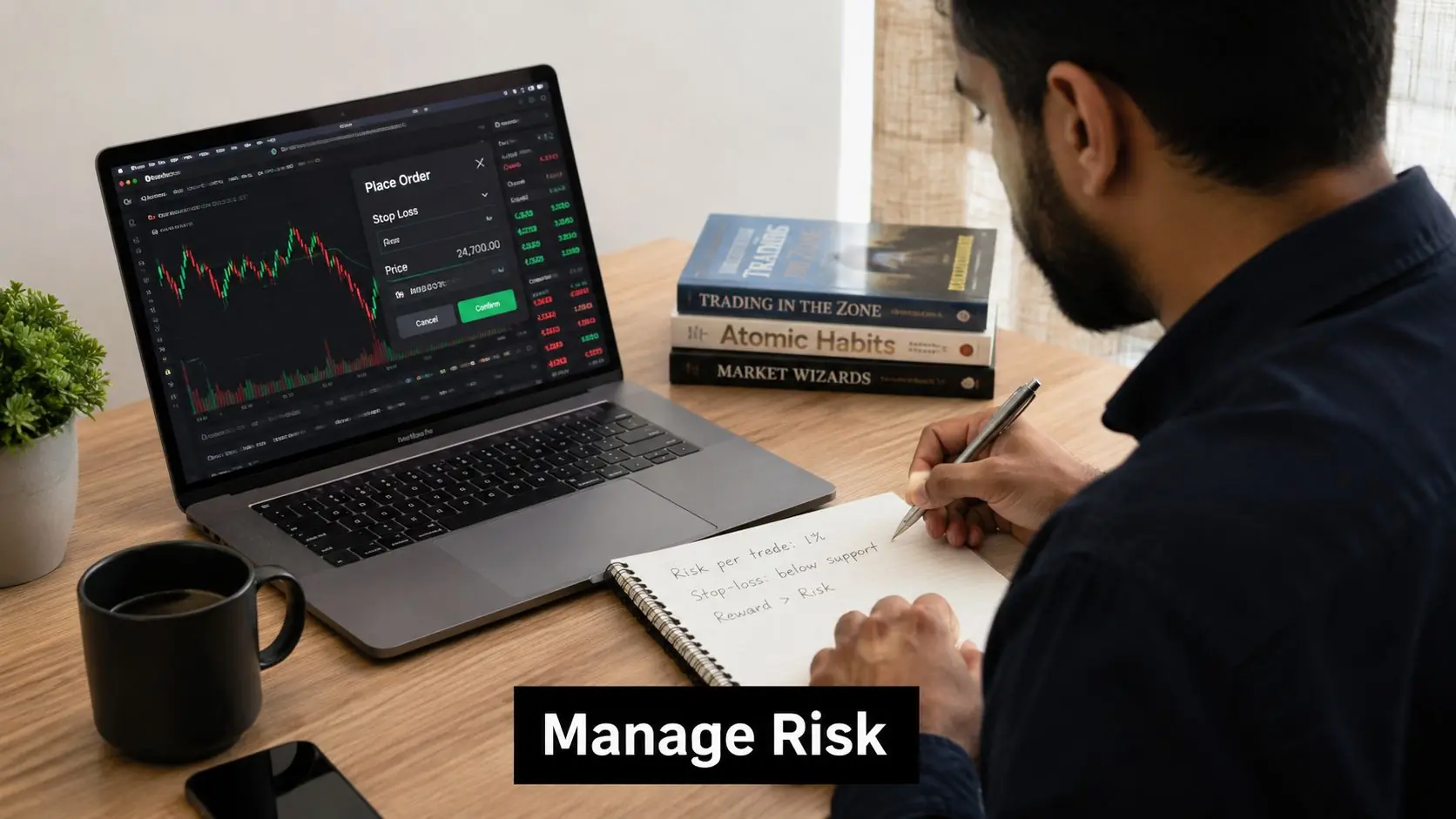
The cornerstone of risk management is position sizing. A professional standard is to never risk more than 1-2% of your total trading capital on any single trade.
- Concrete Example: With a $5,000 account, a 1% risk rule means your maximum acceptable loss on one trade is $50.
This rule prevents a few bad trades from wiping out your account and helps keep emotions out of your decisions.
Using Stop-Loss Orders to Enforce Discipline
A stop-loss order automatically enforces your risk limit. It's an order placed in advance to sell your position if the price hits a predetermined level. Trading without a stop-loss is like driving without a seatbelt—it's a risk not worth taking, especially in volatile crypto markets. Our guide on take-profit and stop-loss orders explains the mechanics in detail.
Watching Your Maximum Drawdown
Maximum drawdown is the largest drop your account has experienced from a peak to a low. A large drawdown is psychologically difficult and mathematically hard to recover from. If your account drops by 50%, you need a 100% gain just to break even.
Actionable Step: Set a hard limit for yourself, such as pausing all trading if your account falls by 10% in a month. This forces you to step back, analyze your strategy, and prevent a temporary setback from becoming a permanent failure.
From Theory to Practice: Your First Steps
The real learning begins when you apply these concepts in a controlled environment.
Step 1: Start with Paper Trading
Paper trading uses a simulator with fake money but real-time market data. This is an essential first step. Use it to:
- Test your strategy See if your trading plan works in live market conditions.
- Master your platform Get comfortable placing limit and stop-loss orders.
- Keep a trade journal Track and analyze every trade to learn from your mistakes.
Spend at least a few weeks paper trading until you can consistently follow your plan.
Step 2: Graduate to a Prop Firm
Once you've proven your strategy in a simulated environment, a proprietary (prop) trading firm offers a structured path to trade with significant capital without risking your own savings.
A prop firm like MyFundedCapital provides access to simulated company capital. You trade on one of our accounts, and if you generate profits, you keep a large share—often 80% or more. Your personal financial risk is limited to the one-time evaluation fee. This model is a powerful way to gain experience and build a track record.
FAQ: Common Cryptocurrency Trading Questions
How much money do I need to start trading crypto?
While you can start with a few dollars, a realistic starting capital is between $500 and $1,000. This amount is large enough to allow you to place small trades while adhering to the 1-2% risk rule, giving you a practical learning experience without blowing out your account on a single trade.
What is the difference between crypto trading and investing?
Investing (HODLing) is a long-term strategy based on the belief that a project's fundamental value will grow over months or years. Trading is a short-term strategy focused on profiting from price volatility over minutes, days, or weeks. It’s crucial to know which approach you are taking.
Can I make a living from trading cryptocurrency?
It is possible, but it is extremely difficult and not a realistic goal for a beginner. Professional trading requires expert-level knowledge, a proven strategy, and immense emotional discipline. A much healthier goal is to focus on learning the process and aiming to build a secondary income stream over time.
Ready to apply your skills in a real-world trading environment without risking your own savings? Explore our funding programs at MyFundedCapital and start your journey toward becoming a funded trader today.