Most traders who fail a prop challenge don't fail because they can't find entries. They fail because they can't control damage. A decent setup with sloppy risk will still blow up under firm rules.
If you're trying to pass or keep a funded account at MyFundedCapital, the unspoken rules are simple: protect the downside first, stay inside the hard limits, and trade in a way you can repeat under pressure. These 10 best practices for risk management are built for that environment. This is educational only, not financial advice, and all trading involves a substantial risk of loss.
Free resources: the free Drawdown Calculator.
1. Position Sizing and Leverage Management

Most bad trading days start before the entry. They start with size that's too big for the account and too big for the trader's nerves.
At a prop firm, position sizing isn't a side note. It's your first control. MyFundedCapital accounts run under a 5% daily loss limit on its Challenges (3% on Instant Funding) and up to 10% maximum drawdown, so every trade has to fit inside those boundaries. If one position can seriously damage the day on its own, your sizing is wrong.
How to size like a funded trader
A practical ceiling is simple. Never risk more than 2% on a single trade, and many traders do better below that. On a $10K account, 1% risk is $100. That leaves room for normal variance without forcing you into panic decisions after a small losing streak.
Use fixed fractional sizing instead of gut feel. To calculate the number instead of estimating it, use the lot size calculator with your equity, stop distance, and account-risk limit.
- Pick the account risk first Decide the dollar amount you're willing to lose before you look at lot size.
- Build from stop distance If the stop has to be wider, the size must get smaller.
- Reduce size early in the evaluation You don't need to trade big to prove skill. You need to stay alive long enough to show consistency.
- Adjust for volatility If ATR expands during news or session overlap, cut size. Don't pretend the same lot size fits every market condition.
Practical rule: If the stop placement forces a position size that feels disappointingly small, that's usually a sign the market is too volatile for your normal trade, not a reason to oversize.
Algorithmic traders should encode this logic directly into the system. Copy traders should check whether the source strategy's sizing maps to their own account. A signal that looks reasonable on one balance can be reckless on another.
2. Stop-Loss and Take-Profit Implementation
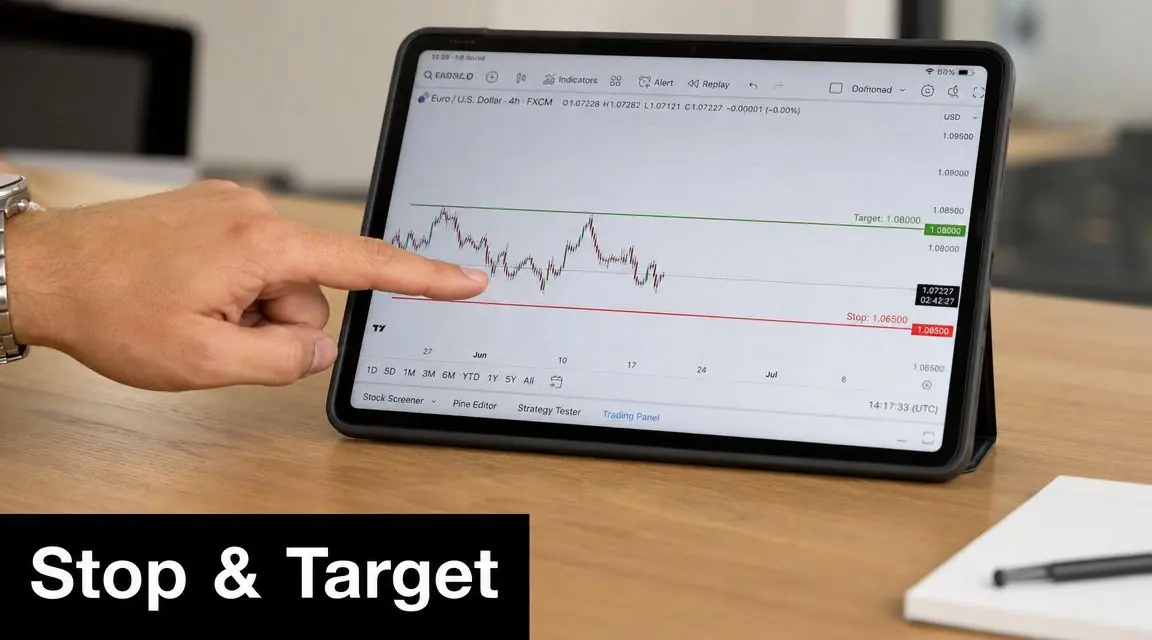
A stop-loss isn't there to make you feel safe. It's there to define the trade before the market does it for you.
Too many newer prop traders place a trade, watch it go against them, and start negotiating with price. That's how a planned loss turns into a rule breach. In a strict evaluation or funded account, that habit ends careers fast.
What good stop placement looks like
Stops should sit where the trade idea is invalidated, not where the dollar loss feels comfortable. That means beyond structure, beyond liquidity that gets tapped constantly, and far enough away that normal noise doesn't knock you out for no reason.
If you're still fuzzy on the mechanics, review how stop-loss and take-profit orders work in trading and then simplify your execution rules.
A few habits matter more than fancy tactics:
- Never widen a stop after entry If price proves you wrong, take the loss.
- Use OCO orders when available If the target hits, the stop should cancel automatically, and vice versa.
- Place targets before emotions kick in A good trade can still become a loss if you don't define the exit.
- Code hard stops into EAs Manual overrides under stress usually make automated systems worse, not better.
For a EUR/USD scalper, a tighter stop may make sense during active sessions. For crypto or weekend holds, wider percentage-based or volatility-based stops can be more realistic. The key is that the stop matches the instrument and the setup.
Traders don't usually blow up because they used a stop. They blow up because they didn't respect the one they had.
Take-profit logic matters too. Partials can help if they stop you from snatching at every small move. But if partials ruin your average winner and leave you with tiny gains against full losses, they aren't helping.
3. Risk-Reward Ratio Optimization
Win rate gets too much attention. Expectancy keeps traders in business.
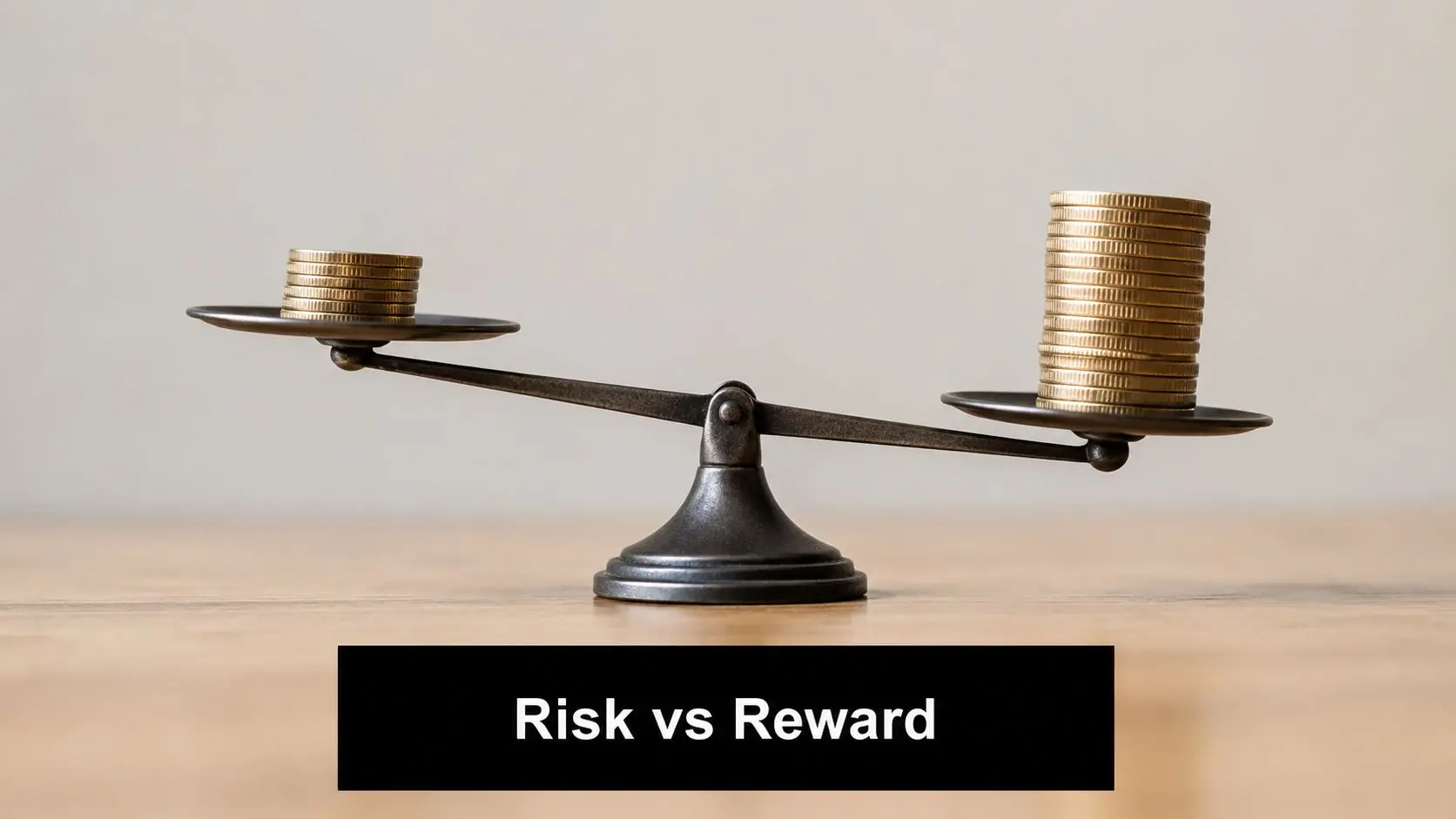
A trader can win often and still fail a prop challenge if the average loser is too big or the average winner is too small. That's why one of the best practices for risk management is setting a minimum acceptable risk-reward ratio before you enter, not after the trade starts moving.
Build trades around asymmetric outcomes
If you risk 30 pips to make 30 pips, you need a very clean execution profile to make that work after spreads, slippage, and mistakes. If you risk 30 to make 60 or 90 when structure supports it, the pressure drops. You don't need to be right all the time.
If you need a clean refresher, use this guide to calculate risk-reward ratio and make it part of your pre-trade routine.
Use the break-even formula in plain terms: win rate must exceed 1 divided by 1 plus your reward multiple. That helps stop you from taking trades that look busy but don't pay enough when you're right.
A few practical filters help:
- Set a floor If the chart doesn't offer at least your minimum acceptable ratio, skip it.
- Don't lower standards in chop Reduce size or stay flat instead of forcing low-quality 1:1 trades.
- Let structure decide the target Use prior highs, lows, extensions, and trend context, not wishful thinking.
- Track your actual average Planned R:R and realized R:R are often very different.
A swing trader buying support with a stop under structure and a target at the next major resistance often has a cleaner profile than an intraday trader forcing trades in the middle of a range. The point isn't to chase giant winners. It's to stop risking a lot for too little.
4. Daily Loss Limits and Intraday Risk Management
The daily loss limit is one of the few rules you cannot negotiate with. At MyFundedCapital, that hard limit is 5% for the day. If your process allows you to walk right up to it regularly, your process is broken.
Smart traders don't use the firm's hard stop as their working limit. They create a tighter personal stop and protect a buffer.
Trade with a personal shut-down point
Set your own daily cutoff below the firm threshold. Many traders function better when they stop early, review, and come back the next session with a clear head. The point is to prevent the emotional spiral that follows the second or third bad trade.
The broader risk discipline here mirrors formal risk programs. The Australian Bureau of Statistics guide recommends a documented cycle to identify each risk, rate the inherent risk, identify and rate controls, then rate the current risk again after controls are applied, with a target rating tied to risk appetite and support from a bowtie method in analysis (ABS risk management process guide). That's exactly how a prop trader should think about a trading day. Initial market risk, then controls, then residual risk.
Your intraday controls can be simple:
- Use loss alerts Set warnings before your stop day level, not at it.
- Count total open exposure Several small trades can still add up to one oversized mistake.
- Reduce risk after early losses Don't keep size unchanged just because the next setup looks familiar.
- Stop after emotional degradation If you feel the urge to win it back quickly, you're done for the day.
A professional trading day isn't judged only by P&L. It's judged by whether you stayed inside the rules you said you'd follow.
One trader might stop after two clean losses because execution was fine and conditions are poor. Another might continue because the losses were small and the tape still fits the plan. The key is that the decision is rule-based, not emotional.
5. Maximum Drawdown Management and Recovery Planning
Daily loss resets. Drawdown doesn't. That's why max drawdown is the rule that traps traders who think they have time to fix things later.
At MyFundedCapital, up to 10% maximum drawdown means you need to know your peak equity and how far you've slipped from it. A trader who was up nicely last week can still violate the account later by giving back too much from the high-water mark.
How to trade when you're behind
The worst response to drawdown is aggression. Traders start increasing size, loosening filters, and calling it confidence. It's not confidence. It's account damage wearing a motivational quote.
Recovery mode should look different from normal mode:
- Cut size when drawdown deepens If you're not in rhythm, smaller risk buys time.
- Take only A setups No boredom trades, no revenge trades, no experimental trades.
- Protect rebounds A good recovery day matters only if you keep it.
- Review source of damage Was it one market, one session, one setup type, or repeated rule-breaking?
A trader down from peak should become harder to trigger, not easier. That's one of the least glamorous best practices for risk management, but it's one of the most important. Survival is a skill.
For swing or weekend holding traders, gap risk needs extra respect. If you hold through thinner liquidity or event risk, use smaller size and wider technical invalidation levels. Don't pretend a normal weekday stop behaves the same way over a gap.
6. Correlation and Portfolio Diversification Across Instruments
Taking three trades that all depend on the same dollar move isn't diversification. It's one idea split into three tickets.
Many traders fool themselves. They buy EUR/USD, buy GBP/USD, and sell USD/CHF and think they're spreading risk. In reality, they've stacked a single macro view.
Read exposure, not just symbols
MyFundedCapital gives access to a broad instrument list, but more choices don't automatically reduce risk. You need to judge how positions interact.
A useful framework from enterprise risk management is to assess all storage, processing, and transmission points, including third-party systems, then prioritize mitigation by business impact rather than raw risk count. Fortra's guidance also highlights practical controls such as least-privilege access, multi-factor authentication, encryption, audits or penetration testing, and documented incident response workflows, while noting that mature programs outgrow spreadsheets and need policies, accountability, escalation paths, and technology for monitoring (Fortra data risk management best practices). In trading terms, don't count positions. Measure combined impact.
Use that logic on your book:
- Map the common driver Is this really a USD trade, a risk-on trade, or a rates trade?
- Limit clustered entries If several positions would lose together on the same catalyst, treat them as one larger risk unit.
- Diversify by behavior Mixing indices, FX, commodities, or crypto can help if the drivers differ.
- Reassess around major events Correlations often tighten when volatility hits.
A forex trader long EUR/USD and short USD/CAD may have more balanced dollar exposure than someone long three major pairs that all lean the same way. An indices trader holding both S&P 500 and DAX may still be carrying one broad risk sentiment view.
If you can't explain the shared driver behind your positions in one sentence, you're probably more concentrated than you think.
7. Backtesting and Strategy Validation Before Live Trading
Most traders don't need a new strategy. They need proof that the current one actually works under realistic conditions.
Backtesting won't make a weak method strong, but it will expose whether you even have a method. That's critical before you pay for a challenge or attach size to an EA.
What useful testing actually includes
A lazy backtest is worse than no backtest because it gives false confidence. Scroll a chart, mark a few perfect entries, and everything looks profitable. Real validation is slower and more annoying. That's why it works.
If you're building a rules-based process, start with a practical overview of backtesting for traders, then tighten your test conditions.
Good validation includes:
- Multiple market conditions Your strategy should face trend, chop, expansion, and event-driven volatility.
- Realistic execution assumptions Include spread, commissions, and the fact that live fills aren't perfect.
- Walk-forward logic Test what happens after optimization, not just inside the data used to tune it.
- Forward testing A demo or simulated environment can reveal behavior that historical testing hides.
A scalper might find the edge disappears during news bursts. A swing system may look excellent on one pair and mediocre on the next. An EA can show smooth equity until you notice every strong month came from one narrow market regime.
The lesson is simple. Don't bring an unvalidated process into a prop environment and call the account your test lab.
8. Real-Time Monitoring and Alert Systems
You don't need to stare at the screen all day. You do need to know when risk is changing.
Monitoring is where disciplined traders separate from reactive traders. Manual traders need alerts so they don't drift into negligence. System traders need them because automation fails imperceptibly until it doesn't.
Build a warning system before you need one
Modern risk guidance keeps returning to the same point. Risk management works best as a continuous cycle of monitoring, feedback loops, and regular updates, not a static review. One summary of current framework best practices notes that the World Economic Forum's 2025 Global Cybersecurity Outlook reported that 72% of organizations increased cyber risk exposure in the prior 12 months, while 39% said third-party risks were the biggest cyber concern (continuous monitoring in modern risk frameworks). The trading version is obvious. Conditions change faster than static rulesheets.
Your alert stack should cover the things that matter before they become account-threatening:
- Equity alerts Warn when daily loss is building.
- Per-trade alerts Notify when a trade reaches planned management levels.
- Volatility alerts Flag abnormal movement around key instruments.
- Platform alerts Catch disconnects, rejected orders, or execution anomalies.
Set alerts at levels that give you time to act, not levels that merely confirm you're already in trouble.
A swing trader may want alerts before major scheduled events if holding overnight or through the weekend. An EA trader should get notified if position size spikes, if the system opens too many trades, or if slippage exceeds normal expectations.
Monitoring doesn't replace discipline. It supports it. The whole point is to shorten the time between a problem starting and you doing something useful about it.
9. Trading Plan Documentation and Deviation Tracking
If your trading plan lives only in your head, you don't have a plan. You have preferences.
That sounds harsh, but it's true. Under stress, memory edits rules. A written plan doesn't stop emotions, but it gives you something objective to compare your behavior against.
Write rules you can follow under pressure
A solid plan answers plain questions. What markets will you trade? What sessions matter? What setup qualifies? How much will you risk? When will you stop? What conditions cancel a trade?
Enterprise guidance also recommends quantifying and prioritizing exposures instead of treating all risks equally, scoring each by probability, impact, and mitigation cost, then documenting whether the treatment is mitigation, transfer, avoidance, or acceptance. It also stresses third-party review, shared language, clear policies, executive sponsorship, and feedback loops so teams can escalate issues quickly, with the practical benchmark being regular reassessment, measurable control effectiveness, and documented response times when thresholds are breached (ZenGRC risk management best practices). For a trader, that translates directly into written rules, thresholds, and a record of what happened when you broke them.
Keep the plan short enough to use:
- Entry rule Define the exact condition, not a vague chart feeling.
- Risk rule State your maximum risk per trade and per day.
- Session rule Specify when you trade and when you don't.
- Behavior rule Include what happens after consecutive losses or emotional disruption.
A simple pre-trade checklist works because it forces friction. Setup valid. Risk acceptable. Stop in place. Target in place. No major reason to stand aside. That's enough.
The second half is deviation tracking. Every time you break a rule, log it. The result doesn't matter as much as the breach. A bad trade that followed the plan is easier to improve than a lucky trade that rewarded bad behavior.
10. Consistent Journaling and Performance Review
The journal is where experience becomes usable. Without it, traders repeat the same mistake and call it market randomness.
A good journal doesn't have to be complicated. It has to be honest. Record the setup, entry, stop, target, size, session, result, and why you took it. Add screenshots if you can. Then review patterns, not just outcomes.
Review process before P&L
The strongest journals expose behavior that account statements hide. You may discover that your worst trades happen after a missed winner, during low-liquidity hours, or when you trade a market you don't understand well. That's the kind of information that improves a prop trader's survival odds.
There's another point most traders ignore. Resources are limited, and every control adds complexity. A practical risk view warns that over-engineering controls can become a risk itself. One cited survey found that 55% of executives say geopolitical risks are materially affecting strategy, while 45% say operational complexity is a top barrier to resilience (practical trade-off view of risk management). Traders should hear that clearly. If your journal, checklist, dashboard, and execution process are so bloated that you can't act clearly, you've built a system that looks professional and trades badly.
Keep the review process tight:
- Log every trade Wins teach less than losses unless they're documented too.
- Tag recurring mistakes Early entry, late exit, overtrading, news exposure, hesitation.
- Run a weekly review Find one thing to remove and one thing to reinforce.
- Judge execution quality Separate plan-following losses from preventable errors.
The journal isn't there to prove you worked hard. It's there to show where your edge actually lives and where your discipline breaks.
A trader who notices repeated losses on Friday afternoons can cut that session. A trader who sees better performance on one setup can narrow focus. That's how you improve without guessing.
Top 10 Risk Management Practices Comparison
| Strategy | 🔄 Implementation Complexity | ⚡ Resource Requirements | 📊 Expected Outcomes | 💡 Ideal Use Cases | ⭐ Key Advantages |
|---|---|---|---|---|---|
| Position Sizing and Leverage Management | Moderate, requires formulas and dynamic adjustments | Low–Medium, calculators, platform position tools, volatility data | Preserves capital and controls per-trade risk; supports scaling | Traders scaling from challenge to funded accounts; EAs needing position automation | Prevents blow-ups; consistent risk exposure; scalable |
| Stop‑Loss and Take‑Profit Implementation | Low–Moderate, straightforward orders but placement discipline needed | Low, platform order types, ATR/volatility indicators | Limits large losses and locks profits; reduces emotional exits | Algorithmic traders, scalpers, and manual traders requiring mechanical exits | Removes emotion; protects daily limits; enables automated trading |
| Risk‑Reward Ratio Optimization | Low, conceptual with routine calculation | Low, journaling tools, charting to set targets/stops | Improves expectancy; enables profitability at lower win rates | Swing and trend traders aiming for efficient capital growth | Shifts focus to expectancy; accelerates scaling with higher R:R |
| Daily Loss Limits & Intraday Risk Management | Moderate, requires real‑time tracking and stop rules | Medium, real‑time P&L dashboard, alerts, position-tracking | Prevents catastrophic single‑day losses; enforces discipline | Day traders and high-frequency setups on MFC with 5% daily cap | Stops revenge trading; enforces objective stop points |
| Maximum Drawdown Management & Recovery Planning | Moderate–High, peak tracking and defensive mode planning | Medium, equity tracking, contingency rules, journaling | Controls cumulative risk; protects account longevity | Traders approaching drawdown thresholds; account managers | Encourages long‑term thinking; prevents destructive risk-taking |
| Correlation & Portfolio Diversification Across Instruments | Moderate, analysis and ongoing monitoring required | Medium, correlation matrix, multi‑asset exposure tracking | Reduces portfolio volatility and concentrated losses | Multi‑instrument traders and those scaling to large accounts | Enables larger aggregate sizing; hedging and reduced drawdowns |
| Backtesting & Strategy Validation Before Live Trading | High, requires historical testing and robustness checks | Medium–High, historical data, backtest software, Monte Carlo tools | Reveals edge, drawdown behavior, and parameter robustness | EA developers, systematic traders, challenge preparation | Identifies weaknesses pre‑live; reduces curve‑fit risk |
| Real‑Time Monitoring & Alert Systems | Moderate, setup of alerts and dashboards | Medium, alert channels, API integrations, mobile apps | Immediate notification of limits/events; reduces missed actions | 24/7 EA traders and busy manual traders | Catches anomalies quickly; supports scale without constant watching |
| Trading Plan Documentation & Deviation Tracking | Low–Moderate, writing and maintenance discipline | Low, document templates, checklists, review process | Increases accountability; reduces impulsive deviations | All traders preparing for MFC challenges | Prevents revenge trading; clarifies rules for consistent execution |
| Consistent Journaling & Performance Review | Moderate, ongoing disciplined logging and analysis | Low–Medium, journal software, time for reviews, metrics tracking | Converts experience into measurable improvements; reveals patterns | Traders seeking process improvement and rule adherence | Accelerates learning; provides evidence to fix behavioral errors |
From Theory to Practice Your Path to Funded Trading
Risk management isn't the boring part of trading. It is the business. Entries get attention because they're easy to talk about. Risk controls keep your account alive long enough for skill to matter.
For prop traders, that matters even more because the environment is rule-bound. You don't get paid for being almost disciplined. You get paid for operating inside hard limits, day after day, without needing luck to survive. That's why the best practices for risk management in this guide all point in the same direction. Define risk before the trade, control it during the trade, review it after the trade.
The core principles are clear. Size positions so one mistake doesn't wreck the session. Use stop-losses that reflect actual invalidation. Demand sensible reward relative to risk. Respect the daily loss limit before the firm has to enforce it for you. When you're in drawdown, get smaller and stricter, not more aggressive. Watch correlation so you don't stack the same idea across multiple symbols. Validate strategies before real evaluation. Use alerts and monitoring so problems don't grow unnoticed. Write the plan down. Journal what happened, including the trades you wish you could forget.
The deeper lesson is that risk management is a cycle, not a checklist. Good firms and good traders both rely on documented controls, reassessment, escalation, and feedback loops. If a rule isn't monitored, it isn't really a rule. If a process isn't reviewed, it usually degrades.
This is also where many traders overcomplicate things. You don't need ten indicators, three dashboards, and a dramatic recovery plan. You need a small set of rules you can execute consistently under pressure. Clean processes beat impressive-looking chaos.
If you're trading in a prop environment, think like a risk manager first and a strategist second. That doesn't mean trading scared. It means knowing exactly how much room each idea gets, what invalidates it, and what account conditions require you to slow down. That's what separates a trader who occasionally has a big day from one who can keep a funded account.
MyFundedCapital is one option for traders who want to apply that kind of rule-based approach in a structured prop setting, with challenge and instant funding paths, defined loss limits, and support for manual, algorithmic, and copy trading. Whatever firm you choose, the principle stays the same: capital preservation comes first.
Trading involves a substantial risk of loss. Use this material for education, build your own rules carefully, and treat every trade as part of a longer survival game, not a one-shot opportunity.
Frequently Asked Questions (FAQ)
Q1: What is the single most important risk management rule for a prop firm trader?
A1: Respecting the daily loss limit. If you can't control daily damage, everything else breaks later. Position sizing and trade frequency should both serve that rule.
Q2: Can I pass a prop firm challenge without using a stop-loss?
A2: It's possible in theory, but it's a bad professional habit. One fast move can turn a manageable trade into a rule breach. Predefined exits are part of basic survival.
Q3: How do I recover from a drawdown without breaking the rules?
A3: Trade smaller, tighten your filters, and stop trying to win it back in one move. Recovery is usually slow and controlled. Forced recovery usually makes the hole deeper.
Q4: Do these risk management practices apply to volatile assets like crypto?
A4: Yes, and they matter even more there. Volatile instruments usually require smaller size, wider technical stops, and stricter monitoring because price can move hard and fast.
If you're ready to apply these rules in a prop environment, explore MyFundedCapital and compare its Instant Funding, 1-Step, and 2-Step options to find the account structure that fits your trading style.