

 AR
AR
 NL
NL
 FR
FR
 DE
DE
 ES
ES
 IT
IT
 PL
PL
 SV
SV
 PT
PT

Trading can be a lonely pursuit, often feeling like it's just you against the market. A trading room—a community of traders sharing insights in real-time—can offer support and education, but choosing the right one is critical. This guide will help you understand what trade rooms are, how to evaluate them, and how to use them effectively without falling into common traps.
This article is for educational purposes only and does not constitute financial advice. All trading involves a substantial risk of loss.
What Is a Trade Room?
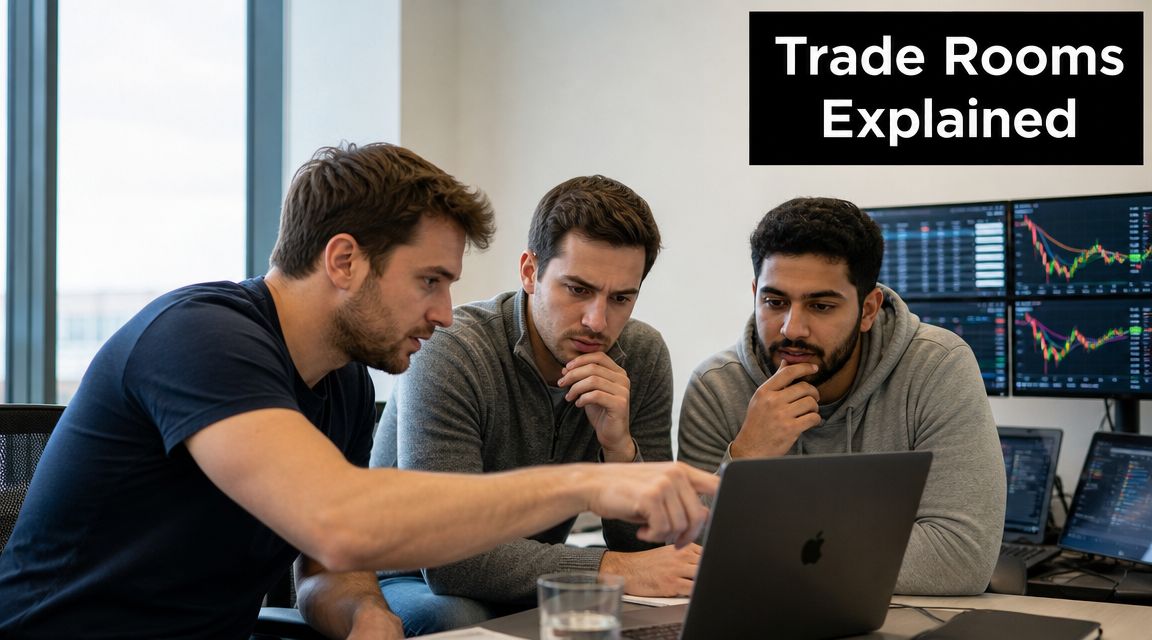
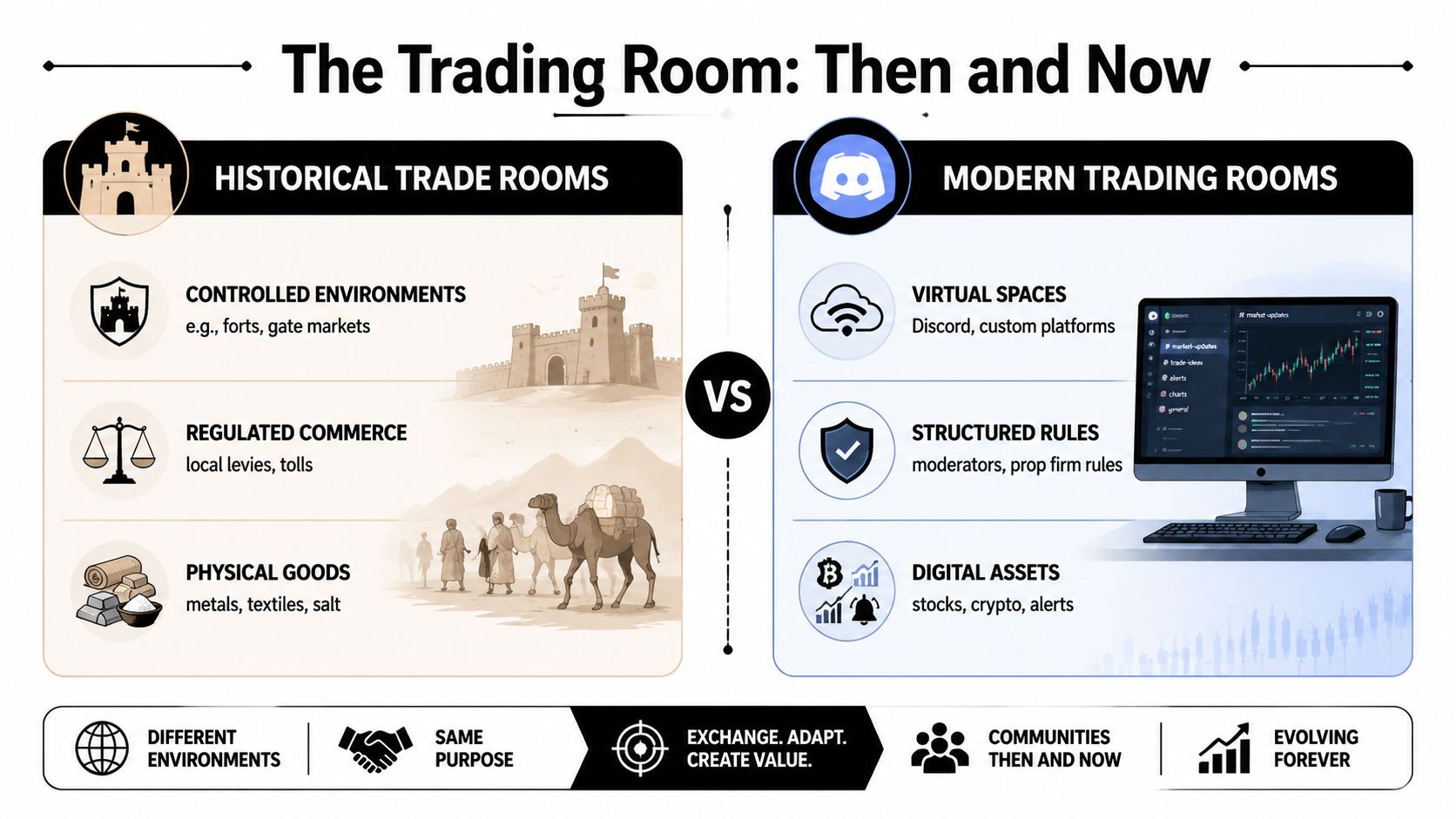
A trade room is a virtual space, usually on a platform like Discord or a private website, where traders gather to analyze the markets together. Instead of trading in isolation, you can watch experienced traders, share ideas, and get feedback from a community.
For beginner to intermediate traders, this can be a powerful learning tool. The main benefits include:
- Live Education: Watching a professional trader analyze charts and manage trades in real-time.
- Community Support: Connecting with peers who understand the psychological pressures of trading.
- Idea Generation: Seeing different strategies and market perspectives that you might have missed on your own.
However, it's crucial to be realistic. A trade room is not a signal service that guarantees profits. Your success still depends entirely on your own discipline, risk management, and decision-making.
Many traders in these rooms are working toward getting funded by a prop firm. To understand this model better, see our guide on what proprietary trading firms are and how they work.
The Different Types of Trade Rooms
Not all trade rooms are created equal. They generally fall into a few categories, each serving a different purpose. Understanding the differences is the first step to finding one that matches your goals.
Live Trading Rooms
In a live trading room, an experienced trader shares their screen and provides live commentary during market hours. You see their charts, indicators, and every trade they take as it happens.
- Best for: Visual learners who want to see a strategy applied in real-time.
- Pros: An immersive "over-the-shoulder" learning experience.
- Cons: Requires you to be present during specific market hours; can be expensive.
- Typical Cost: $50 – $300+ per month.
Signal & Mentorship Rooms
These rooms focus more on providing specific trade ideas and educational content. A moderator will post a trade alert, often with a chart and an explanation of the strategy behind it.
- Best for: Traders who want actionable ideas but can't commit to watching a live stream all day.
- Pros: More flexible; strong focus on teaching the "why" behind trades.
- Cons: High risk of blindly copying signals without understanding them; quality varies significantly.
- Typical Cost: Monthly subscription, often part of a mentorship package.
Prop Firm Communities
Offered by proprietary trading firms, these are support networks for traders in a funding challenge or trading a funded account. They are often free for firm members.
- Best for: Traders actively pursuing a career with a specific prop firm.
- Pros: Highly relevant advice focused on the firm's specific rules (e.g., drawdown limits, allowed platforms).
- Cons: Discussion is limited to the context of that one firm.
How to Spot a Reputable Trade Room
The internet is filled with overhyped trade rooms promising unrealistic returns. A legitimate room will be transparent and focus on education, not just alerts. Here are the green flags and red flags to look for.
Red Flags 🚩
- Promises of Guaranteed Profits: This is the #1 sign of a scam. All trading involves risk.
- No Verifiable Track Record: If they only show wins and hide losses, they are not being honest.
- High-Pressure Sales Tactics: "Limited spots!" or countdown timers are designed to rush you into a bad decision.
- Vague Strategy: If the moderator can't clearly explain the logic behind a trade, they may not have a real strategy.
Green Flags ✅
- Total Transparency: They openly share both winning and losing trades and talk about their performance honestly.
- Focus on Risk Management: Great moderators constantly discuss position sizing, stop-loss placement, and protecting capital.
- Educational Emphasis: The primary goal is to teach you how to trade, not just tell you what to trade.
- Free Trial or Low-Cost Intro: This shows confidence in their service and lets you see if it's a good fit before committing.
Vetting a trade room requires the same diligence as choosing a prop firm. For more on this, read our guide on how to find honest prop firm reviews.
Using a Trade Room for a Prop Firm Challenge
A trade room can be a valuable tool for passing a prop firm challenge, but only if used correctly. Your goal is to use it for insight, not as a crutch.
Adapt, Don't Copy
Never blindly follow a trade alert from a room. The moderator's risk tolerance might be completely different from what your challenge rules allow. A stop-loss that is fine for them could violate your daily drawdown limit and get you disqualified.
Before taking any trade idea from a room, run it through this checklist:
- Does this trade fit my personal strategy?
- Is the risk on this trade within my plan? (e.g., 1% of account)
- Will a potential loss violate my daily or maximum drawdown limits?
Successful traders use trade rooms for confirmation and context. They form their own trade idea first, then look to the room to see if other experienced traders see the same thing.
The Value of Prop Firm Communities
The best resource for a prop firm trader is the firm's own community. Here, discussions are laser-focused on what matters: navigating the challenge rules, mastering the trading platforms like DXtrade or cTrader, and managing a funded account successfully. The advice is practical, relevant, and shared by peers on the exact same journey.
Frequently Asked Questions (FAQ)
What's the best type of trade room for a beginner?
A Signal & Mentorship room is often a great starting point. It balances actionable ideas with the education needed to understand them, without the pressure of a fast-paced live environment. It helps you learn the "why" behind trades, which is crucial for development.
Can I make a living just by copying trades from a room?
No. Attempting to do so is a losing strategy. You take on 100% of the financial risk with 0% of the skill or understanding required to manage it. When the moderator is gone or the strategy stops working, you are left with nothing. Use a room to build your own skills, not to avoid learning them.
What are the biggest risks of joining a trade room?
The biggest risks are psychological.
- Blindly Following: Copying trades without doing your own analysis.
- Herd Mentality: Following the crowd even when it contradicts your own strategy.
- Information Overload: Getting confused by too many conflicting opinions, leading to "analysis paralysis."
A good trade room should reduce your stress, not add to it. If you find yourself making emotional decisions based on the room's activity, it may be time to step back.
Ready to put your trading skills to the test in a professional environment? MyFundedCapital offers the capital and support traders need to advance their careers.
Explore our funding programs and start your challenge today!
