

 AR
AR
 NL
NL
 EN
EN
 FR
FR
 DE
DE
 ES
ES
 IT
IT
 PL
PL
 SV
SV


You've found a prop firm advertising on demand trading, but the phrase leaves important questions unanswered. Does it mean you can start trading immediately, request profits whenever you want, or receive cash in your bank account the same day? This guide separates those promises, explains the rules behind them, and gives you a practical way to compare instant funding with challenge-based accounts.
Introduction to On Demand Trading for Funded Traders
You're ready to trade, but the usual process feels slow. You might be comparing a challenge that could take weeks with an account that offers immediate access, while also wondering whether "on demand" means instant withdrawals or a faster first payout.
That confusion matters because on demand trading can describe two different trader-controlled choices:
- Access on demand, where you begin with an instant-funded account instead of completing an evaluation first.
- Payouts on demand, where you request eligible profits rather than waiting for a fixed calendar date.
Those features can appear together, but they're not the same product decision. An account can offer fast access while applying strict drawdown limits, or advertise on-demand withdrawals while still requiring settlement processing before money reaches your bank or crypto wallet.
A funded account also isn't a promise of personal trading capital without conditions. Prop firms use simulated capital and real market quotes to assess how consistently you follow risk rules. You can lose access by breaching those rules, and trading involves risk of loss. Before choosing a program, it helps to understand how a prop trading firm works and how its account structure affects your strategy.
The sections ahead use simple comparisons, concrete rule examples, payout questions, and execution guidance. By the end, you should be able to ask better questions about instant funding, challenge paths, settlement timing, profit splits, and the risk controls that remain in place after you're funded.
What On Demand Trading Means in Prop Firms
In a prop firm, on demand trading generally means timing is controlled by the trader instead of a fixed calendar. A scheduled account may make you wait for a weekly, biweekly, or monthly payout window. An on-demand structure lets you submit a withdrawal request after you meet the firm's eligibility conditions.
The same phrase can also describe instant funding. Instead of passing an evaluation before receiving access, you activate an account and begin trading under the program's stated rules. These are separate ideas:
- Instant funding concerns when trading access begins.
- On-demand payout concerns when you can request eligible profits.
- Settlement concerns when the requested money arrives.
A useful analogy is the difference between scheduled television and on-demand streaming. Scheduled television decides when the program starts. Streaming lets you choose the start time, but you still need an active subscription and a functioning internet connection. Likewise, on-demand access gives you control over timing, but it doesn't remove eligibility checks, account rules, or payment processing.
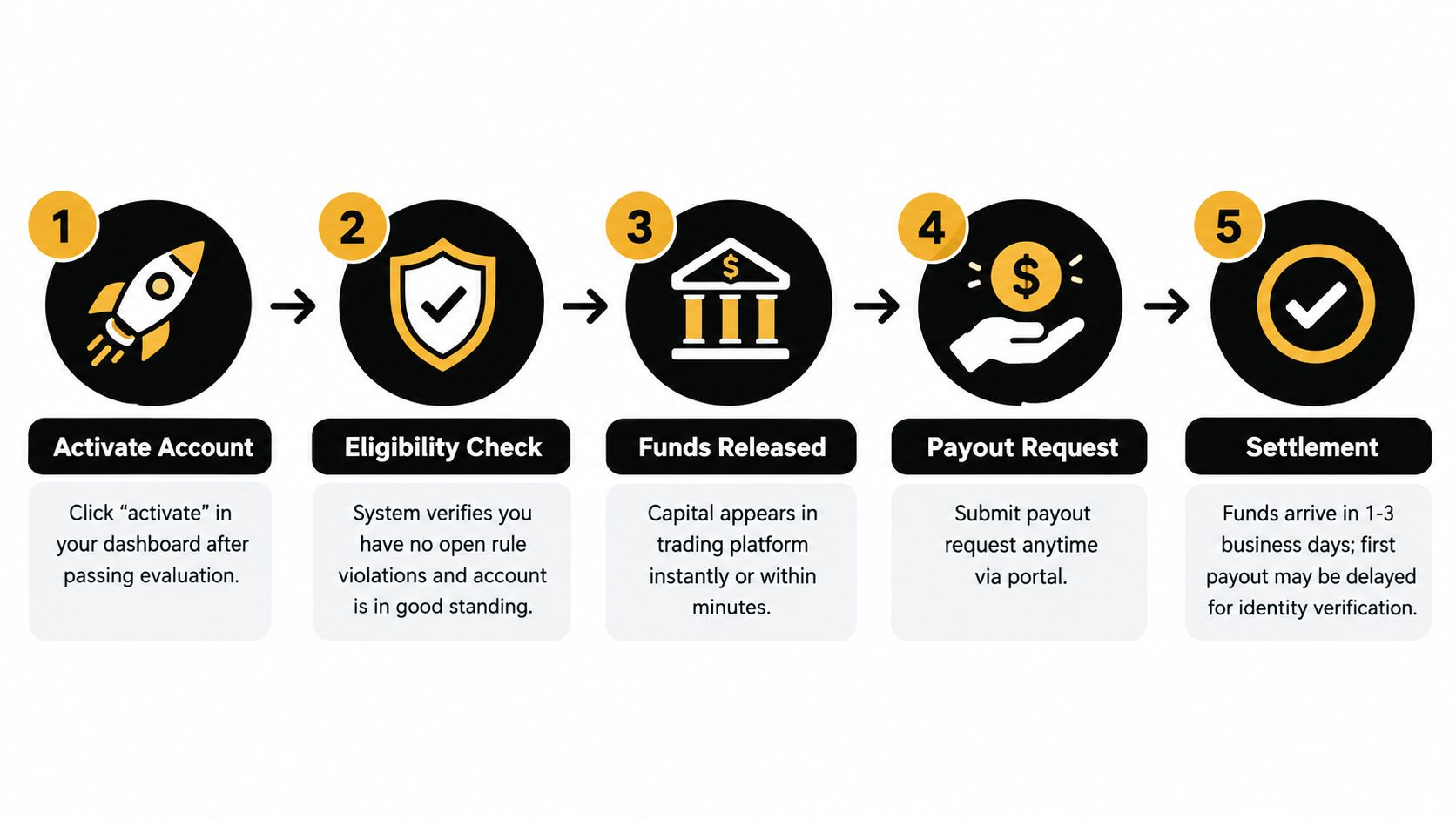
The three questions to ask
When you read a program page, separate the offer into three questions:
- When can I trade? Check whether the account is instant-funded or requires a challenge.
- When can I request money? Look for profit thresholds, verification conditions, open-trade requirements, and payout windows.
- When will money arrive? Confirm the firm's stated settlement range and supported payment method.
The last question is where many comparisons become misleading. A request button can be available at any time, yet the payment may still require review and settlement. On-demand means request timing is flexible, not that profits are guaranteed or that cash appears instantly.
Core idea: On-demand features give you control over when you activate an account or request a payout. They don't remove risk limits, eligibility requirements, or settlement time.
How Instant Funding Compares to Challenge Paths
A trader with a tested strategy may prefer to start trading immediately, while another may want a defined evaluation before receiving funded access. These are different routes to the same broader goal, and the better choice depends on how consistently your method follows the account rules.
A common challenge structure includes an 8% to 10% profit target, a 5% daily loss limit, and a 10% maximum drawdown, as described in this challenge overview. Reaching the target alone is insufficient. You must achieve it without breaching the loss limits, which often remain part of the funded account's operating rules.
Instant funding removes the evaluation target, but it may introduce tighter live-style restrictions, consistency requirements, or limits on certain strategies. The trade-off is straightforward: less pressure to pass an evaluation, with potentially more conditions to follow after access begins.
Instant Funding vs Challenge Funding at a Glance
| Feature | Instant Funding | 1-Step and 2-Step Challenge |
|---|---|---|
| Trading access | Usually begins after account activation and program confirmation | Begins through an evaluation process |
| Profit target | May not use an evaluation target, but check the account rules | Commonly includes an 8% to 10% target |
| Daily loss control | Program-specific and often strict | A common example uses a 5% daily limit |
| Maximum drawdown | Program-specific and may be tighter | A common example uses 10% |
| Best fit | Traders with a tested method who value immediate access | Traders who want a defined evaluation and possible access to larger account paths |
| Main trade-off | Faster entry can come with stricter consistency or strategy restrictions | More steps and target pressure before funded access |
These figures describe a common challenge rule set, not a universal template. Read the exact account page before comparing providers, especially the definitions of daily loss, drawdown, and consistency.
The key comparison has two separate decisions. First, choose whether you want immediate trading access or an evaluation route. Second, check whether the provider lets you request profits on your preferred schedule, and how long settlement takes. An advertised on-demand option may give you control over the request, while review and payment processing still create a delay.
Match the path to your trading style
A scalper may value immediate access, provided the account allows the instruments, order frequency, and execution method the strategy requires. A challenge may suit a trader who wants time to prove the system under clearly stated evaluation rules.
A swing trader should examine weekend holding, overnight exposure, and news restrictions. An instant account with fast payout requests but no weekend positions may conflict with a method built around multi-session trades.
An algorithmic trader should review expert advisor, copy-trading, latency, and automation policies before paying for access. The guide EA ONNX per prop firm can help organize those compatibility questions.
A challenge is not automatically safer, and instant funding is not automatically better. Select the structure your strategy can follow repeatedly without oversized positions or rushed decisions. Before comparing options, review how prop firm instant funding is defined by the provider and compare its access, payout-request, and settlement conditions with challenge accounts.
How On Demand Access and Payouts Actually Work
The operational process usually has two separate tracks. First, you gain permission to trade. Later, you request a payout after satisfying the account's conditions.
Activating access
For an instant-funded account, the process generally looks like this:
- Choose the account type. Confirm the permitted instruments, platform, drawdown method, news policy, holding rules, and payout terms.
- Complete activation. Follow the dashboard instructions and verify any required account details.
- Read the risk panel before placing a trade. Identify the daily loss calculation, maximum drawdown, and any equity-based restrictions.
- Start with a small operating plan. Your first objective should be rule compliance, not rapid account growth.
For a challenge account, the activation step leads into evaluation rather than immediate funded access. You'll need to meet the stated target while preserving the account's loss limits.
Requesting a payout
A payout request usually depends on conditions such as:
- Profit eligibility, including a minimum withdrawal threshold where applicable.
- Account status, with no unresolved rule breach or prohibited activity.
- Open positions, since some programs require trades to be closed before review.
- Identity verification, especially for a first withdrawal.
- Payment method, such as bank transfer or crypto, depending on the firm.
Published prop-firm examples commonly place trader profit shares in the 80% to 90% range, and one industry example cites a $1 minimum withdrawal with a bi-monthly funded-account cadence, as described in this payout structure reference. Those are examples, not universal terms. Your account agreement controls.
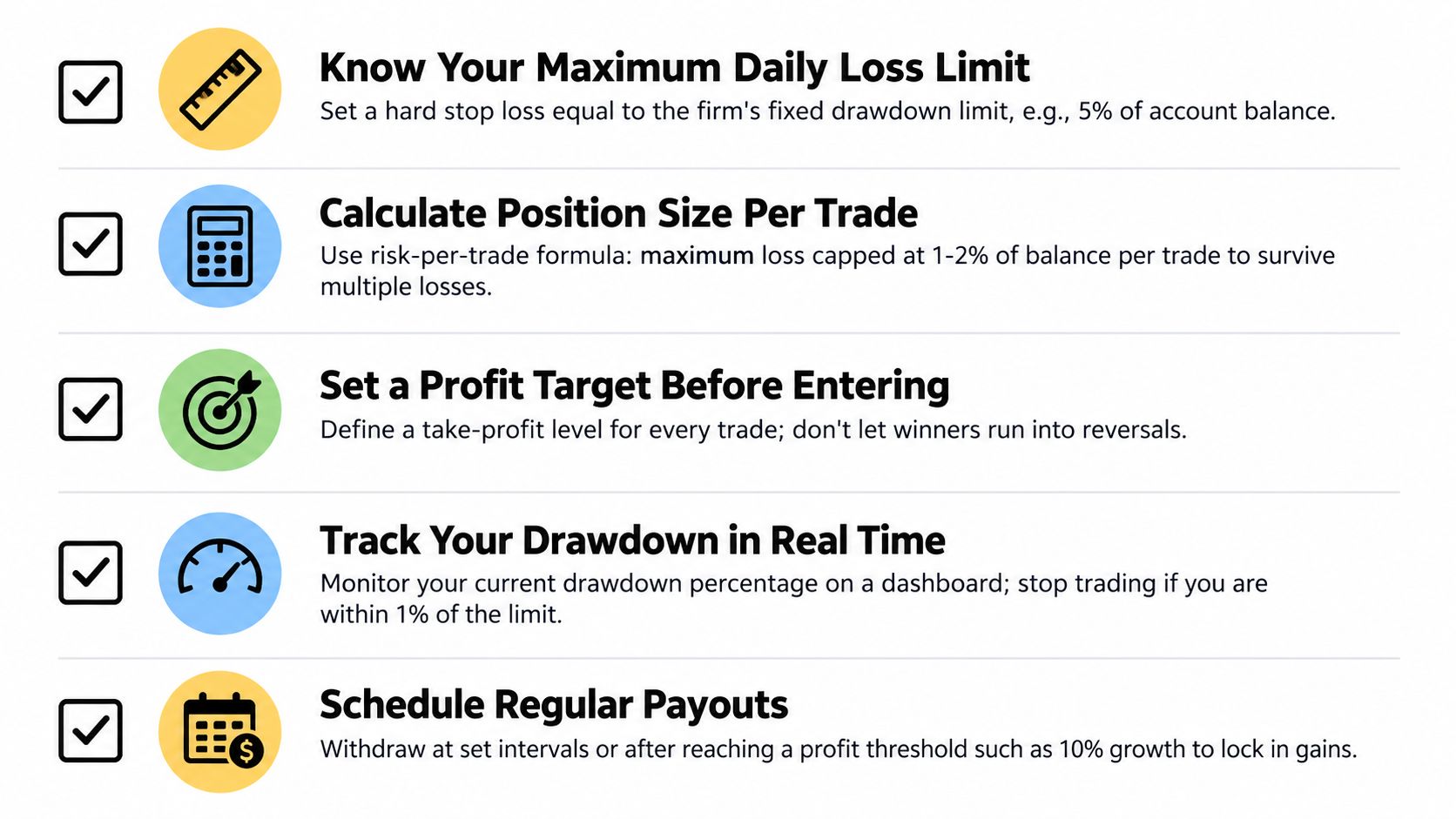
Request time is not arrival time
This distinction prevents many avoidable disappointments. Industry commentary identifies settlement as the practical bottleneck, with processing often taking one to five business days even when the withdrawal request itself is on demand, as noted in this discussion of on-demand payouts.
Some programs also use “on demand” only for the first payout. After that, the trader may return to a weekly or biweekly schedule. Ask these questions before joining:
- Is every payout on demand, or only the first one?
- Does the request start a review period?
- What is the normal settlement range?
- Is there a minimum profit threshold?
- Can I withdraw while holding an open position?
- Are bank and crypto payments both available?
A clear provider should answer those questions in its rules, not leave you to infer the details from a banner.
Pros and Cons of On Demand Trading for Different Traders
On-demand features help most when they solve a genuine operating problem. They can reduce waiting, give profitable traders more control over cash flow, and make account selection more flexible. They can also tempt traders to treat a fast withdrawal option as permission to increase risk.
Day traders and news scalpers
A disciplined day trader may benefit from immediate participation because the trader doesn't need to wait for a scheduled access date. On-demand payouts can also support a planned cash-management routine.
News scalpers need more caution. Fast-payout accounts may restrict news trading, require extra add-ons, or apply consistency conditions designed to limit concentrated event risk. A trader who enters only around major releases should confirm the policy before choosing the account.
Swing and crypto traders
A crypto swing trader may need weekend holding because the market remains active outside traditional weekday sessions. A program with fast payouts but no weekend holding can conflict with the strategy's basic trade structure.
The same issue applies to overnight positions. The payout feature may be flexible, while the trading rules remain restrictive. Don't evaluate the withdrawal policy separately from the holding policy.
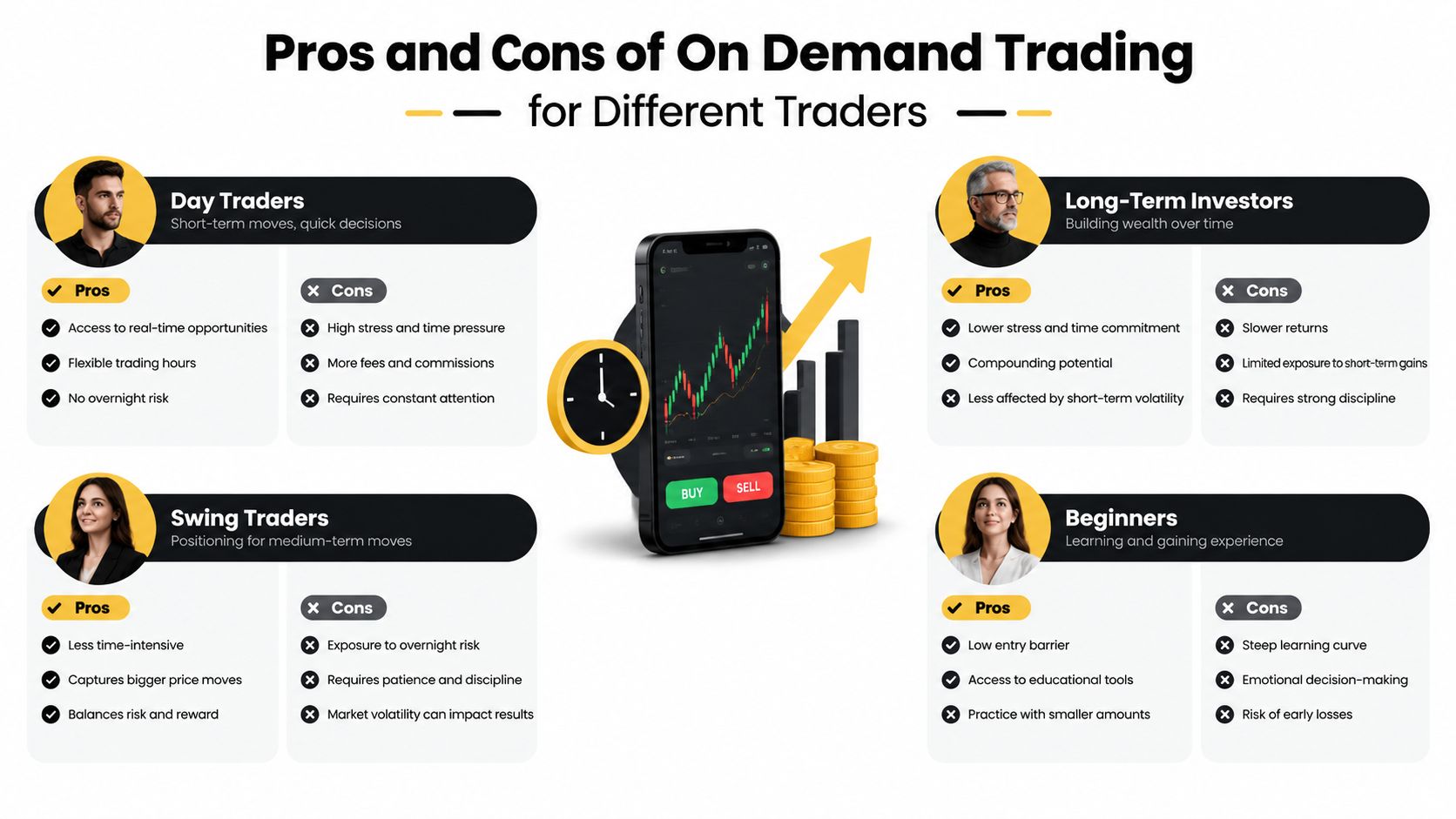
Beginners and algorithmic traders
Beginners often like instant access because it removes the psychological friction of an evaluation. That convenience can become a weakness if the trader hasn't tested position sizing, stop placement, and daily loss behavior.
Algorithmic traders should test the full operating environment. An expert advisor may function correctly in a self-funded account but violate a prop firm's rules through trade copying, prohibited latency behavior, excessive concentration, or restricted news execution.
| Trader profile | Possible advantage | Main concern |
|---|---|---|
| Day trader | Flexible participation and cash-flow planning | Overtrading after a loss |
| News scalper | Rapid execution when permitted | News restrictions and slippage |
| Swing trader | Less dependence on a fixed payout calendar | Weekend and overnight holding rules |
| Beginner | Simple entry into a funded environment | Insufficient preparation for drawdown limits |
| Algorithmic trader | Repeatable execution and monitoring | EA, copy-trading, and consistency restrictions |
The strongest fit is a trader who already has a repeatable process and treats payout flexibility as an administrative convenience. The weakest fit is someone using instant access to bypass preparation.
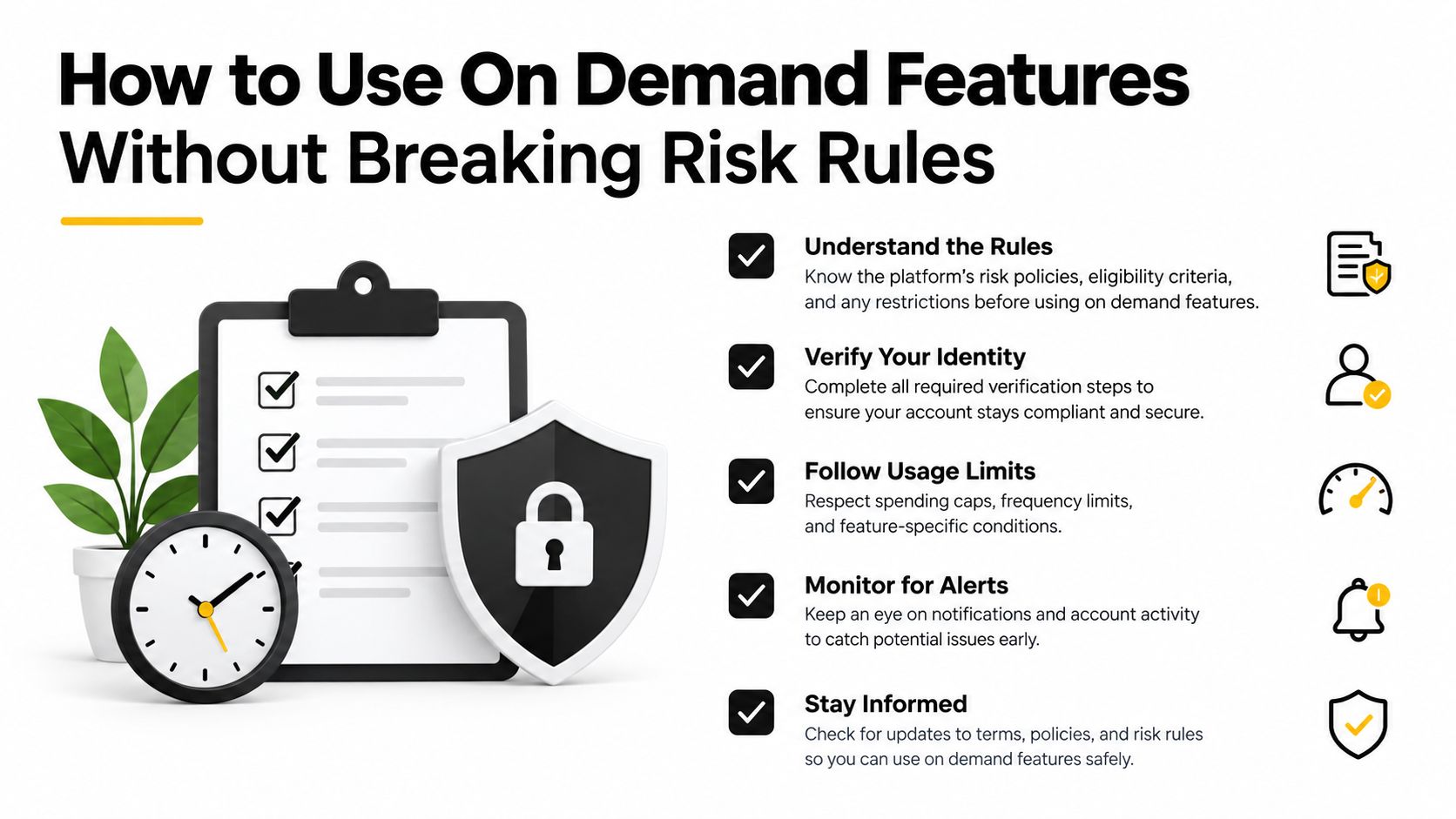
How to Use On Demand Features Without Breaking Risk Rules
Fast access increases the importance of basic risk control. A payout request doesn't protect an account from a later drawdown, and a pending withdrawal doesn't suspend the firm's rules.
Independent prop-firm guidance commonly describes daily loss limits around 2% to 5% and maximum drawdown limits around 5% to 10%, with a daily breach typically locking the account for the day and an overall breach potentially ending access, as explained in this prop-firm risk guide.
Build a daily operating limit
If your account uses a flat 5% daily loss limit, treat that as an emergency boundary, not as a target. Set your personal stop below the firm's limit so spread changes, commissions, and slippage don't push a nearly closed position into a breach.
Track both closed and floating loss if the firm's calculation includes equity. A trader can be profitable earlier in the session and still violate the rule through an open position that moves sharply against them.
Respect execution quality
Market orders demand available liquidity. In a modern limit-order market, resting limit orders supply liquidity while market orders consume it. If the order book is thin, a large marketable order can fill across several price levels, causing slippage even when the quoted spread looks narrow, as described in the BIS discussion of order-book execution.
Use this practical checklist:
- Check top-of-book depth: Avoid sending a large marketable order into a thin-liquidity window.
- Match order type to urgency: Consider limit orders when the spread is tight, and use marketable orders only when queue position or urgency justifies expected slippage.
- Record arrival price: Compare your fill with the price available when you submitted the order.
- Review routing quality: Institutional execution monitoring commonly compares fills with arrival price, opening and closing prices, slippage, price reversion, and spread capture, as discussed by IOSCO-related market-structure guidance.
- Follow the consistency rule: Understand how profit concentration and trade distribution affect eligibility through the firm's consistency rule explanation.
Trading involves risk of loss. On-demand access can improve convenience, but it can't turn an untested strategy into a controlled one.
Frequently Asked Questions About On Demand Trading
Does on demand mean instant cash in my bank account?
No. It usually means you can initiate the request when you meet the program's conditions instead of waiting for a calendar date. The firm may still review the account, complete verification, and process the payment before funds arrive.
Settlement can take business days, and the exact timing depends on the provider and payment method. Treat the request date and arrival date as separate dates in your cash-flow plan.
Is instant funding suitable for beginners?
It can be suitable for a beginner who has already practiced a defined strategy and understands drawdown calculations. Immediate access doesn't remove the need to control position size, manage open risk, or follow trading restrictions.
If you're still changing systems every few sessions, a challenge may provide a clearer testing framework. Neither path removes the possibility of loss or guarantees a payout.
How do profit splits and minimums affect an on-demand withdrawal?
An eligible payout is normally calculated after the firm applies its profit split and checks any minimum withdrawal requirement. Published examples place trader shares in the 80% to 90% range, but each program can set different terms, as covered earlier.
Read the agreement for the exact split, threshold, payment method, and eligibility conditions before you trade for withdrawal income.
What happens if I hit a risk limit while waiting for a payout?
A pending request doesn't normally cancel the account's trading rules. If you breach the daily limit, the account may be locked for the day. If you breach the maximum drawdown, you may lose access entirely, depending on the program's terms.
This article is educational content, not financial advice. Review the rules carefully and use only risk capital you can afford to lose.
MyFundedCapital offers Instant Funding alongside 1-Step and 2-Step Challenge paths, with simulated trading environments, real market quotes, and payout options that can be scheduled or requested on demand under the applicable account rules. Visit MyFundedCapital to compare account types, review the conditions, and decide whether starting a challenge or choosing instant access fits your trading process.
